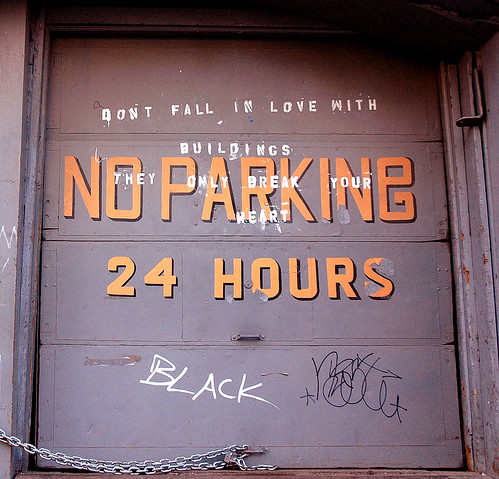
Best of the Urblogosphere: 2007 Round-Up

I went back through all of the Weekend Reading posts from the past year and pulled what I thought were the very best of the best. I've divided things up into two categories: General Urbanism and Place-Specific posts. Descriptions of the selections are followed by their date on which they originally appeared in WR.

GENERAL URBANISM
ITEM ONE: BLDGBLOG on "terrestrial reorganization" during WWII. (April 20)

ITEM TWO: Celsias on why designing cities around cars is such a terrible idea. (May 18)

ITEM THREE: Harvey Feldspar's city-hopping geoblog of the future, from Wired's examination of the future of our mobile society. (June 29)

ITEM FOUR: London architecture criticHugh Pearman on the Tate's megacities exhibit -- a stunning critique of contemporary starchitecture. (July 14)

ITEM FIVE: This Airoots post explores a fascinating artist's village in Mumbai. Organic urbanism at its best. (August 24)

ITEM SIX: NY Mag sets the record straight on Jane Jacobs' legacy. (September 28)

ITEM SEVEN: The Next American City features an article about how violent foreign policy creates more violence at home. (October 12)

ITEM EIGHT: City of Sound reexamines cities as destructive systems. (November 2)

ITEM NINE: Fabulous imagery of re-imagined slums via Subtopia. (December 7)

ITEM TEN: Spacing Wire features this beautiful and concise argument for humanism in the environmental movement. (December 14)


PLACE-SPECIFIC
ITEM ONE: A New York Times feature on the evolution of Curitiba into a poster child for good urbanism. (May 25)

ITEM TWO: Built Environment Blog takes a bike ride through ever-fascinating Brooklyn. (June 1)

ITEM THREE: The Economist goes back to Beijing. (August 24)

ITEM FOUR: Fabulous article from Frieze on the Brazilian megacity of São Paulo. (August 31)

ITEM FIVE: The Lincoln Institute explores post-apartheid Johannesburg. (October 5)

ITEM SIX: BLDGBLOG's rather infamous paean to the wonders of Los Angeles. (October 19)

ITEM SEVEN: More great stuff from Spacing: an Angelino's take on Toronto's messy urbanism. (October 19)

ITEM EIGHT: And finally, an Airoots post on the architectural wonderland of Tokyo's retail scene. (December 7)


If there are any of these that you missed the first time around, I urge you to take a look...they're great reading, start to finish. Have a wonderful, safe, and happy new year! See you in 2008.

(Photo from Non-Photography.com. The original full-color version can be viewed by clicking the photo.)

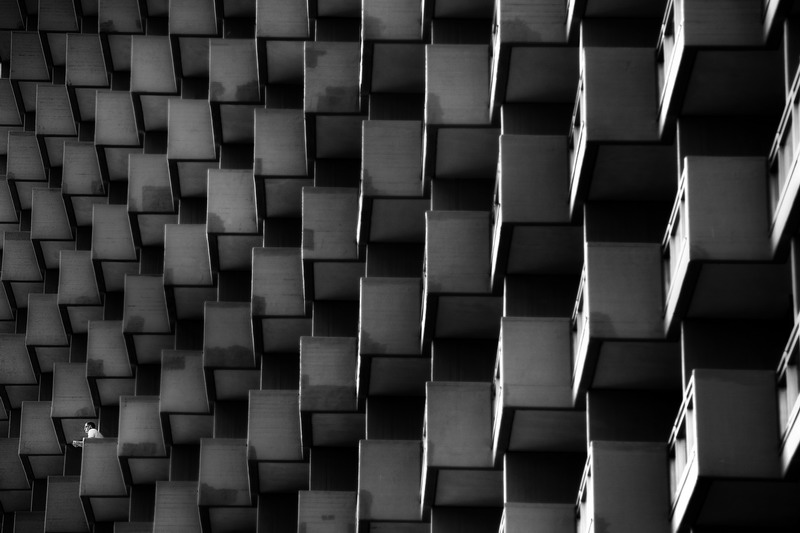
Urbanffffinds 011


WEEKEND READING: December 21-28, 2007

Check back on Monday for a round-up of the past year's most interesting Weekend Reading Items. But for now, check out the current crop:

ITEM ONE: WorldChanging on the importance of voluntary simplicity. The article is not directly about cities, but the ideas that it presents are certainly integral to the reimagining of cities as sustainable places.

ITEM TWO: AHI's blog examines a decidedly different vision for the city of the future.

ITEM THREE: Jay Walljasper's new blog, The Ecopolitan, kicks off at National Geographic's site.

ITEM FOUR: TNAC on The Independent's recent list that names London as the current World Capital.

ITEM FIVE: GPS message-in-a-bottle locative art. Pretty cool stuff.

ITEM SIX: The City Room on Hollywood's fascination with the destruction of New York, which Ed Koch cheekily refers to as "edifice envy."

ITEM SEVEN: Lots of dreamy, really wonderful images of the UK over at BLDGBLOG - like the one pictured above.

Have a wonderful weekend, everyone!

The Suburbanization of Walt Disney World

"It was really nice. I loved being able to walk around to everything and not have to worry about traffic or parking. We could just leave the hotel and catch a bus and ride it right to the parks, and then if we wanted to go somewhere else we could take the monorail. Everything was just really easy to get to."

That is an (imperfectly reproduced) comment from my mom during a conversation we had about y family's recent trip to Walt Disney World in Orlando, Florida. I've been home for the holidays, and it was the first chance I'd had to really hear about their trip. It's certainly not the first time they've been to WDW -- in fact, it was their fourth (I was along for the first two trips, for the record). But this time -- and I have a feeling that blogging over this past year had something to do with this -- I found renewed interest in hearing about the same parks I'd visited and heard described so many times before.

What struck me, as you may have already guessed, was how very...urban WDW sounded in her description. For those who aren't familiar with the resort, the Disney corporation's largest theme park is located on a sprawling megalot southwest of Orlando. Four theme parks, three water parks, a huge shopping center, golf courses, a sports complex, and an obscene number of hotels are sprinkled around this huge land reserve, with everything of interest to tourists being conveniently connected to public transit. Well, "public" for paying resort guests.

WDW is often considered a poster child for the kind of dull, controlled, paternalistic environments that urbanists rail against. The word "Disneyfication" refers to a renovation which scrubs up and de-authenticates an existing place. Disney is soulless, and its theme parks are the most blatant manifestation of this. There is a megalomaniacal insistence -- nearly palpable when you're visiting the parks -- that your every move is being anticipated and manipulated.

Still, there are some interesting parallels between these theme parks and the urban environment. The walkability and transit connectivity certainly mimic the benefits of urban areas. There is also a diversity of experience that is often lacking in suburban places. As mentioned above, Disney is extremely careful to make sure that you only see and hear what they want you to see and hear in their parks, but that is not to say that there aren't variables in what you decide to do and see. In a way, this is true of all cities. Cities offer a wider range of experiences than a theme park, but there is always a limit on what you can see and do, whether they are legal, physical or otherwise. You can't climb a mountain in Chicago; the city is as flat as paper.

It was interesting, then, to hear that Disney had implemented yet another constraint on guests' experiential variety and the experience of some very loyal guests -- the 'rents, again -- had been less satisfied with their overall experience. While they still had a great time, the resort's new pre-paid meal plan system was apparently taking some of the excitement out of this already super-controlled environment. Mom again:

"With the meal plan, you have to reserve your spot in a lot of restaurants, especially for dinner. We saw a lot of people getting turned away from restaurants because they were booked up months in advance. It used to be fun, when we'd go, to be able to just walk around and enjoy the park and, if we found a place that looked interesting, just eat there. Now, you have to book your meals 180 days in advance, which isn't as exciting."

In an effort to make things easier for guests, Disney has actually made their parks a little less pleasant. Especially with a theme park, controlling a guest's experience of a place -- through as many of the five senses as possible -- is important to creating a memorable themed experience. But if there is too much effort on the part of the party controlling that experience, it can actually be detrimental to the guest's overall impression. It's a delicate balance that urban designers and planners could likely learn from. For certainly, the same thing must apply to cities. So how much of a city should be controlled (through zoning, height restrictions, traffic controls, and other legislation) and how much should be left up to residents to shape? Cities are a much more participatory place than theme parks; this only makes this question of balance more important.

Urbanffffinds 010

I had to venture out into a small blizzard to find a wi-fi spot for this week's Urbanffffinds. Now that's dedication!


Have a happy holidays, everyone. Where will be back on December 26th.

WEEKEND READING: December 15-21, 2007


Welcome back to another Weekend Reading session, everybody! We have another good batch this week, but if you've only got a little time, make sure to check out Items One and Two.

ITEM ONE: A spectacular piece in The Walrus' Cities Special Issue on suburbia, commute times, and the economics of happiness. Don't miss this one!

ITEM TWO: Simmons Buntin, founder of Terrain, blogs at TNAC on the role of beer in creating the urban-rural society.

ITEM THREE: Some interesting musings on gentrification from a recent transplant to Brooklyn.

ITEM FOUR: Airoots on high-rise squatting in Mumbai.

ITEM FIVE: Megacities all over the world are starting their own climate change initiatives, including one Cuban city that's using horse-drawn carriages for mass transit!

ITEM SIX: The Economist on the Bali climate talks.

ITEM SEVEN: Planning a trip to Rotterdam this February? Make sure to check out The Mobile City conferrence on the 27-28th.

While I have your attention, I want to mention that I've just started blogging over at The Next American City's blog, The Street. I'll be covering all things related to leisure and public life in American cities. If you're interested, you can check out my first post here.

(Photo from Flickr user sarako. The original full-color version can be viewed by clicking the photo.)

Welcome to Lagos...


I'm cheating tonight and throwing up a video. It's a good one, though. Enjoy!

Chicago vs. Pittsburgh: Conclusion

Tonight's post is the last of three in a blogging debate, in which Jim Russell of The Burgh Diaspora, who guest posted at Where last month, and I will discuss the relationship between Pittsburgh and Chicago, and which city relies more heavily on the other.

After Monday and Tuesday's conversation between Where and The Burgh Diaspora, Richard Florida became an impromptu (but welcome) third party to the debate; responding to my conjecture from yesterday and Dr. Florida's musings on Chicago's inherent geographical disadvantages in the globalized marketplace, Jim Russell came up with the following nugget of vocabularial wonder:

"Pittsburgh's bet on Chicago might be a bad one. The network economy springing from the migration of human capital could result in a cul-de-sac for global connectivity...both cities should seek to diversify their connectivity portfolios. No city is a standalone cash cow. Chicago is not a world onto Pittsburgh, nor should it be." (Emphasis added)

Tonight, we wrap up the "blog duel" with some conclusions; what have we learned from this exchange?

The concept of the "cul-de-sac for global connectivity" strikes me as a key takeaway here. The world has always, to some extent, operated regionally. The size of the regions that we are expected to follow and respond to has changed dramatically over the course of human history; where mankind's regional interests were once tied directly to the changing seasons and animal migration patterns, we now take in news at all times from across the globe. We belong to multiple tribes that move in different directions, at different speeds. We follow our neighborhood, our state or territory, our country, and our specialized circles of interest around the world.

But as cities become more closely woven through globalization, it is regionalism that becomes a threat to places like Chicago. I found Dr. Florida's suggestion that Chicago maintains no global geographic advantage particularly interesting because that very point highlights the exact problem posed by the rise of the global city: it has become very easy, in contemporary culture, to assume the inevitability of places like Chicago, which have in fact gained their prominence for very regional reasons. The loss of importance of physical regions and the diminished need for literal proximity represent a very basic but worldview-altering paradigm shift; Chicago is important in terms of American and especially Midwestern economics -- it rose as the transportation and distribution hub of the country -- but without increased efforts toward economic and connectivity diversity, it might just wind up as the Pittsburgh of the global megacity hierarchy.

Thanks again to Jim Russell for proposing this week's debate. Make sure to check out The Burgh Diaspora -- a must not just for Pittsburghers, but for anyone interested in learning more about diasporic networks in the global urban age.

(Photo found on FFFFOUND!. The original full-color version can be viewed by clicking the photo.)


Links:
Chi-Pitts Globalization (The Burgh Diaspora)

Chi-Pitts, or Vice-versa (Richard Florida and the Creative Class Exchange)

Diasporas, In and Out (Richard Florida and the Creative Class Exchange)

Chicago vs. Pittsburgh: Round 2

Tonight's post is the second of three in a blogging debate, in which Jim Russell of The Burgh Diaspora, who guest posted at Where last month, and I will discuss the relationship between Pittsburgh and Chicago, and which city relies more heavily on the other.

Yesterday and today, in arguing Pittsburgh's heavier reliance on Chicago, The Burgh Diaspora made the following points:

(1) "Pittsburghers are using their extended network and doing all the heavy lifting concerning the connectivity between the two cities. On the other hand, I suspect that a Chicago located firm looking for opportunity discovers Pittsburgh through Pittsburghers, not via transplants to the City of Bridges."

(2) "Chicago needs the talent developed in Pittsburgh...However, Chicago is also an impressive producer of human capital. If Chicago retained all of its local graduates, then would the city need Pittsburgh at all? Like Pittsburgh, Chicago's research universities are world class. Furthermore, Chicago attracts global human capital in ways Pittsburgh has not...Chicago does not actively seek Pittsburgh talent, but Pittsburghers still move there as a result of established migration patterns[.]"

But these two passages, when read together, play off each other in a way that suggests that Chicago's reliance on Pittsburgh and other domestic second-tier cities plays a very major role in Chicago's establishing itself as a global city in the first place.

Let's start by looking at the second statement. Assuming that it were able to retain the talent developed at universities like U of Chicago, Northwestern, Loyola, and UIC, Chicago would indeed be sitting pretty. So would Pittsburgh, if it were able to retail all of the graduates of Pitt, CMU, and Duquense. This is, especially in a fluid global economy, impossible. As sociologists have recently documented, a new phase is being added to the life cycle for young people in developed countries: the odyssey. Young people have a tendency, once they have their diploma in hand, to strike out into the world, seeking their proverbial fortunes.

This creates a diasporic network of people across the country and the world with strong roots in a community other than they one in which they are living. As its title suggests, this is exactly what The Burgh Diaspora covers in depth: Pittsburgh's diasporic population, often considered to be one of the most extensive such networks. This is where cities like Pittsburgh, Cleveland, and Milwaukee, traditionally viewed as demographic "losers," gain a foothold. As the process of globalization continues to make centralization less of a necessity and more of a luxury, second-tier cities not only provide the cheaper business climate than their megacity counterparts (though, ironically, Pittsburgh is currently burdened by byzantine economic policies), they also become the default choice for smaller start-ups, making second-tier cities even more important incubators for the kind of talent needed to keep a megacity economy chugging along.

Back to the first of Burgh Diaspora's points: Pittsburgh's network, now, provides it with a unique opportunity to lift smaller businesses looking for a less overwhelming (read: risky) market in which to develop their product. Pittsburgh is able, through its extended diasporic network in Chicago, to earn free word-of-mouth advertising from its expatriate sons and daughters that could potentially drive these smaller companies east to the Appalachians. In the end, the Pittsburgh market is not as important to Chicago companies as the Chicago market is to Pittsburgh companies; I'll concede this. But in a global marketplace, Chicago's larger companies do need Pittsburgh's smaller ones to stay ahead of the international competition.

(Photo from Flickr user scoobyfoo. The original full-color version can be viewed by clicking the photo.)


Links:
IntoPittsburgh: Chicago (The Burgh Diaspora)

IntoPittsburgh: Chicago II (The Burgh Diaspora)

Chicago vs. Pittsburgh: Round 1

Tonight's post is the first of three in a blogging debate, in which Jim Russell of The Burgh Diaspora, who guest posted at Where last month, and I will discuss the relationship between Pittsburgh and Chicago, and which city relies more heavily on the other.

Nowadays, anyone following urbanism, economics, public policy, or related fields will have certainly heard of the theory that we are entering into an age of global urbanism where cities all over the world will be competing directly with each other for talent. Talent, we are told, will be more and more valuable as society becomes more technologically advanced, shifting even more heavily toward an international information economy. What you know, essentially, will become what you're worth. In this economic environment, megacities like Chicago will no longer merely be competing with New York, Washington DC, and San Francisco for talent; soon (already, many would say) Chicago will have to go head to head with London, Paris, Buenos Aires, Cape Town, Mumbai, Tokyo, Shanghai, Sydney, and on and on.

This is a fairly logical progression of events. The major city has always acted as a magnet throughout its history in human civilization. People come to the city to get a job, to prove themselves, to make their fortune. The individual reasons are myriad, but the inspiration is the same: people come to the city to improve their quality of life. It doesn't always work out that way, but that's the basic impetus. Chicago, then, has long needed Pittsburgh -- and other cities like it -- to sustain itself. The larger the city, the more daunting it is to dream-chasers and immigrants. Medium-sized cities, then, are a prime source of population for larger cities.

Without Pittsburgh, in the literal sense, Chicago would not crumble and blow away; to think so would be naive. But Pittsburgh is a part of a group of cities that, together, have allowed Chicago to experience its recent -- and rather stunning -- revival over the past two decades. As post-industrial Western megacities like Chicago, New York, or London began to try to pick themselves up after losing manufacturing jobs in the 1970s and 80s, they began to rely on what you could call innovation-intensive fields like biomedicine, design, information technology, and (of course) the arts. These are highly specialized fields, and ones that many traditional middle class workers were not trained or educated to particpate in. Megacities, then, needed to draw in new talent from surrounding smaller cities.

Here's where Pittsburgh gets the upper hand over Chicago. As a mid-sized city, Pittsburgh is large enough to provide a genuinely urban lifestyle while not overwhelming the newcomer. As a bonus, the city also happens to be an important center of higher education, with two of the nation's best colleges (U of Pitt and Carnegie-Mellon) located in the Oakland neighborhood of the city. Generationally speaking, this works in the city's favor because it becomes an excellent place for people to move from a smaller city to start a family, where the parents can take advantage of the lower cost of living and provide for their kids, who can then more easily take advantage of nearby educational resources. Pittsburgh is, for all intents and purposes, a creative class factory.

This happens around the country. Pittsburgh, Cleveland, Cincinnati, Milwaukee, Minneapolis, Saint Louis -- all of these mid-sized cities have traditionally fed job-seekers into Chicago. Today, the competition is national, and Chicago draws more than ever from Seattle, Portland, San Antonio, Birmingham, San Diego, Denver, et. al. As the stakes are raised in coming decades, Bordeaux, Liverpool, Fortaleza, Adelaide, Fukuoka, Busan, Medellin, and Alexandria will all enter the mix. And not in the sense of traditional immigration, which creates ethnic communities, but in the sense of global creative class migration, which could create massive gentrified (or at least economically stable), internationally diverse areas in cities around the world.

Western society already operates as a sort of imperfect meritocracy. As this becomes more true, Chicago will need places like Pittsburgh more and more as it works to maintain and build its competitive creative core. Pittsburghers have the option to stay put; Chicago needs to convince them not to. It has to prove, however possible, that it can provide a better life. The burden lies with larger city.

(Photo from Flickr user -Nicole-. The original full-color version can be viewed by clicking the photo.)


Links:
The Burgh Diaspora

Urbanffffinds 009


US Election 08: The Mayors Speak

The Nation and the Drum Major Institute for Public Policy recently did a video-survey of big-city mayors across the US to find out what they thought about the current state of the US and its cities, the current presidential administration, and the 2008 that's now in full swing here in the States. Of the ten mayors surveyed, all have interesting things to say, but there are two issues that get an especially high level of attention. They are:

1) Urban crime problems -- or, more specifically in many cases, gun control and illegal drugs.
2) The need for a presidential administration that takes cities seriously, as opposed to the standoffish relationship established by the Bush White House, which the mayors almost universally decry, outright.


What this seems to suggest is that day-to-day life for most Americans has little or nothing to do with the "hot-button" issues that presidential candidates are so concerned about. Abortion, gay marriage, and the Iraq war, while all important in their own ways, are by no means the issues that have the greatest impact on this country, yet they receive a greatly disproportionate amount of attention in the media because they are easily polarized issues, and thus much easier to sell. Meanwhile, people struggle every day with crime, education, drugs, and economic issues that go largely unaddressed.

At least, that's what the people in charge at the local level are saying. And how many people do you know that live their lives internationally, or even nationally for that matter?

Many of the mayors interviewed in the series speak fondly of the work they are doing as a part of the US Conference of Mayors, a group that has only increased in importance as the Bush Administration as proven itself to be utterly incapable of remembering that there is an actual country full of people that they are trying to "defend" with their wars overseas. What is especially interesting is how several mayors commented explain the stark difference between the ways that the Clinton and Bush administrations dealt with the USCoM: Clinton met with each mayor individually and attended group sessions, while GW has dropped in on a handful of meetings.

The videos each run about 4-5 minutes, and the series is worth an hour of your time. If you only have a few minutes, try one of the following, which I found to be highlights:

"Frankly, the Federal government has become largely irrelevant to most of the significant work that we're doing ... My city is stronger because we have different values than the Washington values that have been pushed onto us." -- Minneapolis, MN Mayor T. R. Rybak

"You just do not get a sense that cities are a priority in the current administration, and perhaps not a priority with many of the candidates running ... [With] the lack of investment in our own country and the lack of investment in our cities, in essence we are losing the hearts and minds of the American people." -- Rochester, NY Mayor Bob Duffy

"We shouldn't take for granted that the infrastructure that we built 100 or 75 years ago can withstand the climate shifts, or the economic shifts, can withstand the pressure on that infrastructure forever ... Clearly, we need an urban agenda. We need an agenda the speaks to the issues of where people are congregating for most of their lives, working, living, and learning." -- Atlanta, GA Mayor Shirley Franklin

"Mayors have to be pragmatic, it's part of the job ... Ultimately, I think that's what any presidential agenda has to get to, is the point where we start solving problems instead of just throwing money at them."
-- Denver, CO Mayor John Hickenlooper


Links:
Campaign in the City: Mayors on the Issues (The Nation)

Drum Major Institute for Public Policy

US Conference of Mayors

WEEKEND READING: December 8-14, 2007

Oh, this is an exciting week. There is a lot of really fantastic reading for you, if you are interested.

ITEM ONE: A short but stunningly effective piece at Spacing Wire on the need for humanism in the environmental movement proves that, sometimes, you really can say the most with the fewest words. It's a must-read.

ITEM TWO: The Burgh Diaspora puts out a call to all Rust Belt bloggers (and citizens).

ITEM THREE: Critical Spatial Practice takes a look at the history of labor struggles in urban America.

ITEM FOUR: Airoots goes gangbusters on Tokyo retail and high-end boutique architecture. This is another must-read.

ITEM FIVE: Does Marseille hold the key to Europe's future? The Smithsonian mag thinks so.

ITEM SIX: David Adjaye's Whitechapel Idea Store gets the Flickr treatment from Life Without Buildings.

ITEM SEVEN: And to finish up this wonderfully weighty edition of WR, a good, old-fashioned traffic joke that will at least inspire a chuckle.

Have a great weekend, and enjoy the reading!

(Photo from Flickr user hampshiregirl. The original full-color version can be viewed by clicking the photo.)
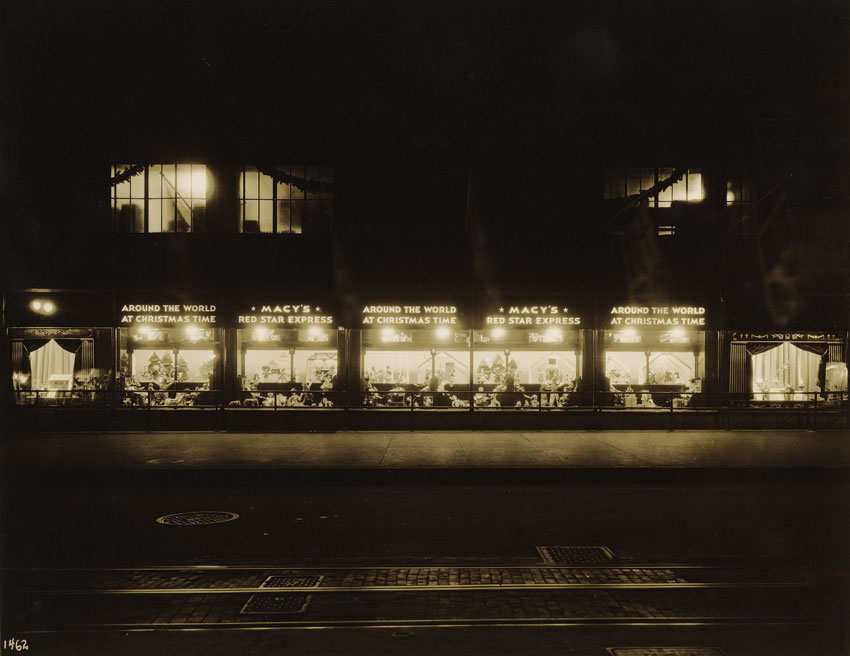
The Dream Remains the Same

A recent post over at TNAC's blog, The Street, suggests that it may be time to change the American Dream. But what is the American Dream, exactly? It's a well-worn turn of phrase (were it a turn in the road, the guardrail might be out from being hit so many times), and while people usually use "American Dream" as slang for "house in 'burbs, lawn, two cars, spouse, 2.5 kids, dog," I would argue very strongly against this interpretation. The American Dream is not about houses or property or ownership -- heck, it's not even about money; it's about "new hopes, new dreams, and a better way of life for the future."

That quote was taken from an animated short produced by the Walt Disney Company in the 1950s. The subject was, surprise surprise, the future of superhighways. The Disney folks imagined a tomorrowland where automobiles provided the ultimate in high-tech freedom and mobility, populations were dispersed over "vast metropolitan regions" and the family unit was supported and enhanced by the great amounts of leisure time left over from avoiding the hassles of urban existence. On top of that, a global system of superhighways was to connect all nations and peoples and increase cross-cultural communication and collaboration. Oh, how glorious it looks on that little YouTube screen.

The present, as we are well aware, looks slightly different. Private vehicles do provide freedom and mobility, in a way...even if much of that free time is spent in the car, staring at a bumper. As a result, we've given up on that whole "extra time with the family" thing; in fact, divorce rates have soared as our population has spread out, stretching marital relationships to their breaking points by removing the basic social frameworks that might allow spouses to have some much-needed time apart outside of the workday (since both work full-time to pay for the oversized McMansion and the two SUVs).

Then again, that scenario is as well-worn as the term "American Dream." Still, the Dream itself is in no need of an overhaul. We would do well, perhaps, to wrestle it out of the arms of marketing-types still using it to pitch the 1-Acre Lots For All, Ford Chevy Ram MegaCharger bullshit. But the American Dream is as honest and straightforward and bright today as it ever was. You can see it in the modern sustainability movement in the same way that you can see it in Disney's adorably retro vision of the superhighways of tomorrow: the American Dream is about change. More specifically, it's about things changing for the better, and about people having the freedom to enjoy and participate in the process of change. Society and culture are driven -- and have always been driven -- by the masses. The dream of a brighter future took the "American" moniker from the fact that the United States was the first modern nation to do away with the European monarchal system. Change will always happen since the people will demand it; the US was one of the earliest countries to make that its raison d'etre.

In the eternal quest for the elusive "brighter tomorrow," we will continue to make mistakes. We will have disasters and wars, and terrible things will happen. People will die, dictators will rise and fall, and the oceans might rise up to claim some of our cities. But we will continue to evolve with the world around us. So the American Dream is in no need of modification. It is always a good idea to stop along the path and shake off some cobwebs, but hope for something better is the essence of what makes us congregate, collaborate, and create.

Cities are based on this principle; at their core, they rely on change. Cities lose buildings and parks and whole districts; much like any living organism, old cells must be shed to make way for the new. While it is sometimes painful, change will always happen, and as the largest, most interactive manifestations of mankind's ambition, cities will have to change for the good and the bad, just like we do. In short, you can't curse the suburbs; you'll just run out of breath. Instead, try to imagine what the next batch could look like. Try to imagine a brighter tomorrow while accepting that the suburbs will be a part of it.

More on this soon, as a review of Paul Lukez's Suburban Transformations is forthcoming.

(Photo from Flickr user brassplayer. The original full-color version can be viewed by clicking the photo.)


Links:
Changing the American Dream (The Streets)

Magic Highway USA (Part IV)

Magic Highway USA Publicity Stills (Paleo-Future)

Urbanffffinds 008


WEEKEND READING: December 1-7, 2007

Back to business as usual this week for Weekend Reading. Thanks again to Colin for taking over during November, and thanks once more to all of the guest bloggers who helped to keep Where chugging along during NaNoWriMo!

ITEM ONE: It's BLYGAD 2.0! Tumble Like You Give a Damn, folks.

ITEM TWO: The Architectural League of New York has put out a call for entries to its Young Architects Forum competition for 2008.

ITEM THREE: In the past, little attention was paid to South America and its blossoming cultural scene. Not much has changed, there, but Line of Sight dug up a great article from a 1916 New York Times on the subject.

ITEM FOUR: Subtopia has a post called "Squatter Imaginaries" that contains some of the coolest images you'll ever see. (photo credit)

ITEM FIVE: Giant scale model of a partially destroyed downtown = kickass display for your living room.

ITEM SIX: The Future of Cities on what Jane Jacobs might have thought of Facebook.

ITEM SEVEN: Things Mag starts a recent post off with some interesting ruminations on destruction and redevelopment in the UK. Much link love follows.


'Till next week, happy surfing.

(Photo from Flickr user shadeofmelon. The original full-color version can be viewed by clicking the photo.)

Architect Disconnect

While I do try very hard to keep things positive in Where posts, occasionally something comes along that's so gratuitously heinous that I just can't help but rail against it. That is the case with College Squeeze's recent post on the "20 Ugliest Colleges in the USA."

To wit:

"It does have a nice quad and trees, but seriously. Who cares about trees?" No one. No one at all.

"Sure, it’s full of smart people, but it’s just a brick campus." Hilarious.

"For once, I’d just like to see a building that was intentionally designed trying to be beautiful, but just failed badly." Because most buildings are designed to be ugly, you see.

"I haven’t actually been to Carnegie Mellon, just heard horrible things about it and Pittsburgh." Brilliant technique! Masterful analysis!

"And…oh my, a cottage." And...oh my, an idiot.

"At least Yale tried to make their buildings architecturally interesting by pouring acid all over them." Better architecture through chemistry!

I love good snark -- crave it, even -- but when it's done poorly it tends to make reading feel like having your molars drilled. And this? This is bad. If I were guessing, based on basic grammar and mechanics (not to mention a total lack of aesthetic focus and an embarrassing misuse of architectural vocabulary) I'd put good money on the author being a college freshman with an obnoxiously over-descriptive Facebook page. The explanations for each entry on the list are so self-indulgent that you'll actually grow a year younger just by reading them. (Sorry, Joan Rivers...you'll still look old). Worst of all, they're just not funny. Well, not in the way they were intended to be. As evinced above, the writing itself is quite entertaining.

But what really got my attention -- and that of the folks at Chicagoist, from whence I procured the link -- was this paragraph on the #9-ranked campus, IIT:

"This is the third 'institute of technology' on the list. They need to get better architects at these schools. The low-rise buildings are so nasty and dull that they feel like a blast from the past. Some serious renovation is in dire need at this school. Only the Main building is okay, but the rest just falls short with its flat, square-ish design that feels like an office complex. Of course all of their pictures focus on the Main building, because the rest is just not camera-worthy."

Emphasis added by yours truly.

The Chicagoistas and I were all thrown by the author's utter disregard for architectural history. It's one thing to dislike the Miesian aesthetic, or the Koohlaasian. I hate Koolhaas! Who doesn't? But to say that IIT needs "better architects" is a bit...well the word "ludicrous" comes to mind.

That was my initial reaction, at least. Then my mind started to wander, and I got to thinking a lot about how public opinion affects architecture and legacy. Architects, planners, designers, and those of us who care about what is done by the aforementioned parties have a way of sealing ourselves off from the general public. So it can come as a shock sometimes when we find out that buildings hailed within the architectural community aren't held in high public esteem. And that, in turn, raises the question of what makes a "great" building. Yes, yes, art is subjective and there is no such thing as a building that pleases everybody. But who gets to determine what constitutes "great" -- the learned (obsessive?) few, or the ignorant (honest?) masses?

Sorry if the tone in this one was overly personal...I can be a bit self-indulgent myself, I suppose.

(Photo from Flickr user Hagen Stier. The original full-color version can be viewed by clicking the photo.)


Links:
IIT: Get a "better" architect (Chicagoist) (I just can't bring myself to link directly to the actual College Squeeze post...you can find a link at Chicagoist if you want to read it.)
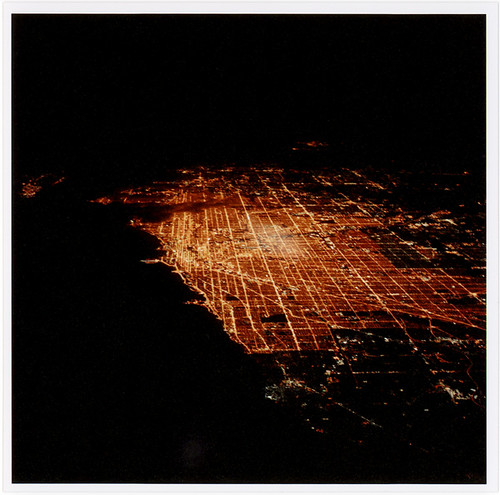
The Craig Hartman Interview - Part II

This is the second part of Where's interview with Craig W. Hartman of SOM San Francisco about the firm's Treasure Island redevelopment plan. You can find the first part HERE.

----------------------------------


Where: Thanks for bringing up the neighborhood context, because that's exactly what I wanted to talk about next; you've provided my segue for me. The SOM San Francisco site has a description of the Treasure Island (TI) project and it goes into some of the details [of this plan], and one of the terms that keeps popping up in that is "island life." I got a kick out of that, because there's this idea of island life and, traditionally, I think you kind of think of the Caribbean -- you've got the drink in one hand and you're laid out on the beach and there are palm trees. There is a very relaxed and social connotation to "island life"...I'm interested in how you're creating community on this little island, because it is separate from the main city. As much as it has been integrated through transit, it's going to be sort of off on its own in some ways. So how is community built, and how is that urban lifestyle cultivated through the way that the site is designed?
Craig Hartman: That is really the crux of the issue here, and an interesting question, because I don't think anyone can really know what the nature of social and cultural life will eventually be on the island. The idea is to understand the unique culture of San Francisco and to try to find a way to transplant that to this island. And yet the island is a place apart and it’s culture is obviously going to morph into something that has its own character. I think most people would agree that one of the qualities of San Francisco culture is a very strong spirit of inclusiveness. I think there is an ethos held by the majority of the people who live here that accepts different lifestyles, and that an ethos that really honors the public realm; maybe even to give preference to the public realm over private interests. And there is certainly an ethos here that values environmental stewardship.

The social and cultural life of the island will evolve in a way that reflects the values of those who live there. What we are trying to do is to make the place one that provides a very rich set of public spaces that are consciously designed to encourage this idea of social connection and, hopefully, social inclusiveness. There are some very basic, pragmatic things being done about diversity of housing types that will cater toward a wide variety of demographics: of young single people, of families, wealthy people and people who have low and middle incomes. The idea is to make this a mix of the sort one would find in a real city, not an artificial, gated community with a single monoculture.

So we're trying to find ways in the planning of this island and the design of its architecture to enhance those qualities. That's what we mean when we talk about an urban ecology. We need to consider how we [can be] good stewards of the natural environment, but at the same time, we also want to think about the anthropological quality of this place, and that has to do with the culture. So on Treasure Island we are trying to weave the two together into a holistic ecology that brings together the natural environment and human culture.

And yes, "island life" as you suggest, brings Margaritaville to mind, but the intent is to make an authentic place that recognizes its unique place at the beginning of the 21st Century and in the middle of San Francisco Bay.


W: One of the big principles behind public space right now that's really getting a lot of attention is the idea of deliberately designing for a mix of different uses, too. In addition to designing for a large variety of people, you want it to be spaces that are used at all times of the day and night. Are these pocket parks a way of trying to make this -- I don't want to say a 24-hour neighborhood, because that has it's own cheesy connotations -- but was there an attempt to create social spaces that kept this neighborhood going at all times of the day and night, essentially?

CH: Yes and a lot of this is going to be evolving over the long gestation period of the island’s development period. Right now we are marking the basic intentions. As for the design, some of these parcels of land will be developed by various different developers. There will be many different architects involved over time. So all of these ideas will be evolving. Right now, we're trying to set in place a very strong framework that encourages certain things to happen. In terms of the smaller neighborhoods, the idea is that there will be a provision for flexible community space that provides a place for people to come together for various informal activities. These could range from someone setting up a fruit stand on a Saturday morning to providing a place for community gatherings or a barbeque or smaller retail-oriented spaces. Basics like dry cleaners or a shoe shop or coffee shops will be provided within smaller spaces spread throughout the neighborhood parks. This is an experiment that will be tested over time, to see how much and what kind of life these parks should have.

The development will also incorporate retail and entertainment -- restaurants, cafes, boutiques along grocery and produce and other neighborhood serving retail – in concert with the historic buildings along the Marina side, which faces Yerba Buena Island. The intention is to allow the neighborhoods to be fairly quiet places in the evenings with just the right balance of life, while having the high activity entry zone on the southeast corner of the island where everyone, residents and visitors alike, arrive. One of the challenges of broad mixed use is that the developer’s analysis has shown that this island cannot support a significant amount of office space. Therefore, [the plan] is heavily weighted toward residential. There will be some professional office space, but not a lot. I am sure that as excitement builds when the project starts there will be more interest by cultural institutions as well.


W: Let's step in a slightly different direction and talk about the architecture of the buildings on the site. You said that this is going to be developed over a long period of time, probably by different developers with many different architects, so...are there architectural guidelines for what's going to be built, or is it kind of a "design as you will" attitude, or how is that being approached? Because there's definitely a pretty solid aesthetic to the renderings that have been produced so far. It's very modern, with the crystalline towers...

CH: I worked on a series of ideas which we translated into a drawing for an exhibition that Darrin Alfred of SFMOMA and Julie Kim curated for the AIA in September called Street Cred. It was a speculative rendering of one of the streets on TI that does convey ideas I hope will be carried through in the island’s architecture. The drawings illustrate buildings that have a very strong orientation to the street. I worked with Tom Leader on the environmental ideas and you'll notice that the landscape favors a kind of riparian aesthetic that's much wilder, or natural, than what you might think of as usual in more formal urban landscape architecture. It is my personal belief that the defining architectural aesthetics must have an authenticity which includes the issues we have been discussing regarding setting and place and especially recognizes its temporal setting – that is, the beginning of the 21st century and contemporaneous aesthetics. How specific the base developers and the master plan architect can be in terms of the aesthetics of the island is going to be something that will be evolving. From a personal point of view, I am not a great believer in rigid architectural guidelines. As an architect, I've often found them unnecessarily constraining. Often they rigidly define a singular set of ideas frozen at a point in time and don't allow for the kind of contemporary spontaneity that happens when things are built over years or decades.

The architecture of great cities has an organic quality that incrementally develops. So the goal here will be to find a way to encourage a kind of familial overlay but with it variety. The important thing is that all the work be ambitious architecture. To achieve that requires recruiting the best and most talented design architects to work on the various components over time. It should be a rigorous process. I hope I qualify for a piece of it….


W: So the renderings that exist now, where there are generic buildings for the low-rises for the most part, there are the high-rises as well, which certainly have a more distinct look to them -- the main tower is what I'm thinking of, really -- so are those designed to be built as they look here or are those just massing studies or examples of what could be.

CH: Well they are massing studies, but they are inspired by a set of ideas that are consistent with the overall island design. These renderings represent a very clear attitude about the relationship between architecture and the natural environment. The low-rise buildings are designed to shelter public space from the wind. The height and scale are related to the scale of the spaces they define. We are working on making very narrow streets to create a sense of intimate public space and maximize the potential for social interaction. Most of the people on the island, approximately 75%, will be housed in these lowrise homes.

The mid-rise buildings are the ones that are typically positioned at each of the neighborhood parks we discussed earlier. These small towers mark each neighborhood cluster on the skyline, providing an overall sense of identity and place. These towers are intentionally placed on the north and west sides of these parks to allow the maximum amount of sunlight in the public spaces while providing a wind buffer. And the shape of the towers themselves, if you look at the plan, is a lozenge shape or kind of a rounded trapezoidal footprint. It's like a sailboat, with the bow pointed into the wind. We are presenting the smallest face to the west to let the wind slip by the building with minimum disturbance. Tall buildings can create what we call a "sail effect," where the face of the building that is the leeward side tends to lower wind pressure and bring wind down into public spaces. We have positioned these buildings on the island to minimize any negative effects of wind at the pedestrian scale.

Finally, the tall buildings as shown in the drawing are shaped in a way that is meant to convey a very organic aesthetic. The intent is to create towers that might be more aligned with a cyprus or a redwood than with a machine-made object. We are able to do this because our computers today allow us to analyze structures in ways that are much more supple and nuanced than we ever could have fifteen or twenty years ago. Consequently, we are able to create what was shown on that rendering: the form of an exoskeleton that provides for the seismic bracing of a tall building while allowing for a great deal of glass around the perimeter so we can have as much light as possible inside the building.

The shapes of the buildings will be tested further. The intent is to develop a language that reinforces the basic tenets of the island plan. The aspiration should be for a level of authenticity that can serve as an example to inspire those architects who come after us rather than writing down a set of rules that they have to follow. The most critical issue is to achieve a uniformly high level of architectural excellence, not architectural uniformity. This comes back to the need to consistently select the best design architects – and the need for a mechanism or process to make sure that happens over the course of the island’s development. It should be a highly sought-after honor in the 21st century, as it was for example during the last half of the 20th in Columbus, Indiana, to be selected to design a building at Treasure Island.

W: So it's more of a general aesthetic design than the hard and fast architectural code that, actually, the suburbs get a lot of flak for.

CH: Exactly.


W: The one question I wanted to ask to wrap up would be that I read something about this having some level of approval from the city...is it the plan that was approved?

CH: The basic land concept was approved by the TI Development Authority and has been very well received by virtually all stake holders and the public. But the process continues….

W: Alright. So what is the general status of the project right now?

CH: The general status is that is the negotiation process with the Navy regarding the transfer of the land is continuing. But I understand it is coming to a final resolution, so we are now re-starting again our detailed planning studies to take it to the next stage.

----------------------------------


Thanks again to Craig for doing this interview. Where is looking forward to seeing this project break ground!!


Links:
The Craig Hartman Interview - Part I

Bending the Grid (SOM) (photo credits)

The Craig Hartman Interview - Part I

The following interview, in which SOM San Francisco design partner Craig W. Hartman, FAIA, discusses his firm's plan for the redevelopment of San Francisco's Treasure Island, was conducted in two parts. The first two questions asked by Where, as well as Mr. Hartman's first answer, have been copied directly from an email exchange. We then switched to a telephone conversation, which begins here with Mr. Hartman's second answer. The interview will be posted in two parts that do not correspond with the change in conversation methods, but rather split the text into two even halves.

----------------------------------


Where: As big-ticket and high-profile as SOM's proposal for the redevelopment Treasure Island (TI) is, it looks like it belongs on its site in the way that all great projects do; from what the renderings show, it's the kind of development that, when finished, could become a part of the city in a way that that makes one wonder what the place was like before the project was built. But what's most fascinating about TI is the fact that, even in a city with such incredibly rich architectural and cultural traditions, the site seems to have lacked traditional contextual cues. So what was the starting point for designing of this development?

Craig Hartman: The starting point wasn't a question of aesthetics – or even architecture. The question was what have we learned, collectively, about intelligent forms of human settlement that should be applied to this place? What are the possibilities when a community is developed as a singular idea as opposed to incremental growth? Can we conceive a holistic urban ecology that goes beyond sustainability – sustaining existing conditions - to be regenerative? Can we plant the seeds of an ecology that brings together stewardship of the natural environment, diversity (not only human but species diversity) along with social and cultural vitality and what kind of urban and architectural form would support these aims? In short, given the chance to start from tabla rasa, what might a 21st Century neighborhood representing the values of San Francisco look like?

The setting is an inversion of [what] might be typically thought of as urban context. The site itself is synthetic - a recycled manmade artifact in which the earth's topography is an artificial flat plane and the structures, for the most part, conceived as temporary shelter. The island was built contemporary with the Bay Bridge as a manmade extension of Yerba Buena Island. Some of Treasure Island's fill came from the tunnel cut through Yerba Buena. The island's first wave of architecture was the temporary fantasy created for the 1939 International Exposition and the second, also intended to have a short shelf life, consisted of the structures created to accommodate the Navy's occupation in World War II.

So the real "contextual" influence was the vast horizontal plane of the Bay, the City of San Francisco skyline to the south and the drama of the weather pattern sweeping through the throat of the Golden Gate and across the island on a daily basis. Wind, fog and sun are the determinants, along with the physical reality of the subsurface geology and the desire to create a place that is compact and walkable - highly accessible to mass transit, culture and urban amenities on one hand and a variety of open space on the other. To achieve this required an interweaving of low-rise and tall buildings, a variety of open space typology and a fine grain of streets and pedestrian pathways.


W: I know that "context" has become something of a dirty word...or at least a word that has sort of lost most of its meaning in architecture since no one can really seem to agree on what it means. This is lamentable, I think, since the concept itself has been forsaken for a semantic argument, and sometimes it feels like the whole idea of a buildings responding to the sites on which they're built gets waylaid in the process. At any rate, the strength of the TI plan is that it draws from its surroundings without trying to mimic them. One of the most interesting things about the plan is the way that the wind patterns were used to determine the organization of the buildings and the open space, and how the grid would be canted. (The architectural romantic in me loves the concept of a "city shaped by the wind"). I'm interested to know how the other intangible factors that you brought up -- sun, fog, geology, even the cultural values of San Francisco -- helped to define the physical environment in the project.

CH: I agree that context doesn't have a lot of currency in architectural discourse at the moment, and it's not really surprising because contextualism in the [1990s] got branded as a style, an architectural style, and it became a crutch, as these styles often do. Specifically in the case of contextualism, in my observation at least, it became a code word for a lukewarm architecture that tepidly reflected history rather than authentically addressing its place, and I think the outcome of that was that originality and innovation really took a backseat to timidity. So I agree with that point but I also would suggest that the work we're doing at Treasure Island is based upon context, but context that has a larger meaning and is more broadly considered. Context might be considered both as physical and cultural, and the physical landscape includes the natural as well as the built environment.

The other point that I would make before getting into the specifics of context for TI is that by now, at the beginning of the 21st Century, we've learned some lessons from the past about forms of building, the effects of consumption and the nature of human habitation. Buildings consume the majority of energy production and emit the majority of the carbon dioxide in the world - and the second [largest source of these things] is our cars and transportation. Add those two things together with sprawling, consumptive patterns of development and we get the environmental crisis that we have today. So clearly, if we address the questions of the way we settle and the way we move we can begin to address our major climate problems. All those things were part of the consideration of context for this island


W: You talked earlier about what you referred to as a "regenerative urbanism." How does TI take architecture that step from sustainability to actually being a regenerative urban place?

CH: Well that would be, perhaps, a hopeful term rather than an absolute metric. I think most environmentalists would say that it's very difficult to make an urban environment truly regenerative because "regenerative" would suggest that you're not sustaining merely current conditions but, through the work that is being produced, you've actually initiated a mending or healing of the environment. Treasure Island has been inhabited by the Navy since the early 1940’s. Their use of the island has been very pragmatic, based upon the most expedient and efficient operational pattern of the time. Militaries throughout history have not exactly been noted for their gentle use of the land. Like perhaps most of us, the Navy was not very mindful of consequences of certain material use, the way that rainwater runs off the island into the Bay and not really mindful of the energy that is consumed, because all of those resources were thought to be plentiful and... [Searches for the right word]

W: Self-replenishing.

CH: Exactly. And we now know that all of these things have a finite quality, or that they are part of a system that is recycled continuously. So what we tried to do here is to take this manmade island and bring it to a level that it had never achieved before. This includes naturally cleaning water that strikes the surface when it rains through bioswales in the earth, purifying it by a natural means. It also includes minimizing water that is consumed on the island, maximizing recycling of water that is used and being certain that all water that does make it back into the Bay is clean. [We are also] generating produce on the island with organic farms and in the process, making a place that supports a diversity of species that includes not only a healthy environment for humans but also supports the widest possible variety of others; birds, animals, reptiles and so forth. It's meant to be an incremental example of the way that we can coinhabit urban spaces with nature and with a wide and varied organic diversity – people, plants, animals. And this urbanistically, the goal is a vital human social and cultural diversity.


W: Im interested by the way that you talk about integrating the two halves of the [built environment] and the natural environment because there's a lot of public space on the island in your plan, and the density of the built areas is really high which allows -- I think -- more than half of the island to be left open, right?

CH: That's correct.

W: And I thought when I was reading about it initially that it was really interesting that nowadays [in] most developments the centerpiece will be a mall or a commercial district, and it's always retail, retail, retail, kind of like a drum beat. What I thought was really interesting about TI is that most of the public space is not really oriented toward commerce but more toward...natural settings. Was that something that was [done consciously]?

CH: That was absolutely a guiding principal when we got into this. We had the opportunity of coming into this project relatively late in the process in terms of the design. There had been a previous design for the island that was based upon a lower density [with] housing spread out across the island and a kind of greensward that wound through the middle. It wasn't meant to be suburban but I think that was the outcome. My colleagues and I at SOM were asked to join the team when an additional development entity was added to the team and after the project had gone through a lengthy public review process in which many issues had been raised. We joined an existing team that included SMWM, architects and planners and CMG, landscape architects along with an array of high level engineers including civil and Arup who focused on sustainable engineering and transportation strategies. Also added at that time were BCV architects who focus on retail and Hornberger Worstell who focus on hotels.

There are many stakeholders and interested parties whose opinions a perspectives must be considered in any San Francisco project, and especially one of this scale, prominence and importance. There are official agencies specifically set up to govern and critique the development, beginning with the Treasure Island Development Authority and the TI Citizen’s Advisory Board along with City Agencies such as the Planning Department and the Department of the Environment and various California State jurisdictional bodies. There are also advocacy groups and concerned citizens. A consistent concern shared by all was that the future of this island needed to be based upon sustainable urban principles. So pretty late in the process, only about a year ago, when we got involved with this we benefitted, really, from what had been a lot of critique -- very constructive critique, I think -- by the community, and that really helped. It gave us the ability to have some leverage in the process. The development team was very much aligned with these principles and wanted to make it happen.

Perhaps the most important concept we brought to this is the making of a very compact urban space focused on mass transit and aquatic mass transit -- the ferry. We repositioned...the ferry key on the west side [of the island], as close as possible to San Francisco’s Ferry Terminal as opposed to the back side, where it had been proposed. Then [we worked] to really densify or compact the housing through the selective use of tall buildings placed to focus density for social purposes or for ease of access to transit. This concept allowed us to have the great park.

The park is different from the parks of the 19th and 20th century, to a certain extent, in the sense that it has multiple uses and characteristics, from natural and wild to cultivated and urban and is not only recreational but also has pedagogical and productive elements. There is a structured recreational area, but structured recreation requires a lot of irrigation, so that is also compact and designed in a way that it can be multi-use. We also worked on making parts of the island productive – a 20 acre organic farm that visitors can actually walk through and experience as a “farm to table” pedagogic tool. Then vast amounts of [the green spaces] are simply wild lands that are shaped to allow natural systems to operate, like tidal pools that support a diversity of species types. So that was a guiding goal here: to minimize, as much as we possibly could, our ecological footprint, and maximize the environmental potential.


W: I thought it was really interesting that, in addition to there being a lot of it, it doesn't seem like the [green space is] just tacked on. It's worked all throughout the project and sort of integrated throughout the entire island, and I thought one of the most interesting ways that manifested itself is in the rotated grid and how the landscape is used as a buffer for the wind. That struck me as really interesting and I was wondering if you might talk more about that.

CH: That's a very good observation. This island is a beautiful setting -- an unbelievable setting -- so the views from the island are extraordinary. But it also suffers the brunt of all the major weather coming in from the Pacific, right through the Golden Gate passage. There are very powerful photos of the fog coming through that passage and sweeping across the Bay but you have to spend a lot of time on the island to really understand the effects of constant wind. It's a very uncomfortable feeling so at the very beginning the idea was to make this place habitable in a comfortable way and to look to nature and traditional agrarian techniques for ways creating calm and sheltering occupied spaces.

The first thought was to simply create the quality of sand dunes on the westerly side that would reflect the wind upward. We found that that does have an effect, but it's a fairly micro impact. And we are doing that - creating a shaped topography on the west side that creates localized calm areas. I think its very interesting, especially the way Kevin Congerland of CMG developed the idea as a clearly manmade geometry that operates as dunes and swales do in wild landscapes.
But in the urban areas, the neighborhoods, the technique we found most effective was to place the buildings themselves so that they sheltered the public spaces on the leeward side. Through work with RWDI, the wind consultants, we found that there is roughly a 15:1 relationship between the height of an object and the distance from that object that one could expect relative calm on the leeward side.

The first and most obvious fact is that the wind is coming from the west and the island is tilted upward to the north by approximately 32 degrees off of due north. So that creates this angle that you see as the main organizing structure in the island's grid plan. We have turned all of the major streets in that direction and have placed the buildings so that they are creating buffers along that edge. Borrowing from agrarian traditions in which wind rows – trees - are used to create sheltered areas to protect croplands which you see in our own country and also in Europe. We've simply taken this idea and extended it through the urban space to the open space as a wind buffer. So, on one hand, its nature and on the other, architecture, that does the work the work of creating calmed and sheltered public space. To further this concept, we staggered the streets in the other direction so that we're not creating wind channels.

This shifted, or bent grid, orients the principal public spaces and streets to the south, bringing the maximum amount of sunlight directly onto these spaces for the maximum hours of the day. That's a very important thing, to have sun in these spaces, because the wind and fog is so prevalent, resulting in cool temperatures most of the time. The fortuitous thing is that the 32 degree angle, directly to the south, also opens view corridors directly onto the city of San Francisco. It creates a really powerful connection between the island’s public spaces and San Francisco’s skyline.


W: So the view down those streets looks straight at the city, then. The view down the street would kind of frame San Francisco.

CH: That's correct. The angle frames the city, and brings high south sun on the island streets. Perhaps the other point worth mentioning is your comment about how the green space is woven through the urban, the wild and the organic, agrarian parts of the island. That was a very conscious idea, to create a purposeful set of varied and interwoven public spaces including an art park, urban spaces, organic farm and wild lands, all linked to the windrows. One of the most important for the social life of the island is a series of small urban parks we have cut into the neighborhoods. These are small -- approximately a half-block -- in size. With their scale and the placement, the intention is to create a social nucleus or focus for smaller-grained neighborhoods throughout the larger community. So the neighborhoods and the island’s social life become an integral part of the island’s environmental and ecological agenda.


----------------------------------


Tomorrow Where will feature Part II of this interview, in which we delve into the social and community aspects of the TI design, as well as the architecture. Don't miss it!

Links:
Bending the Grid (SOM) (photo credits)

Urbanffffinds 007


The Linkdump

NaNoWriMo 2007 is officially over! Congrats to all of the participants around the world who made it past the 50,000 word mark before midnight last night. As for me, I crossed the finish line around 11:30pm. Now I'm trying to catch up on my reading from the past month. Here's a quick jolt of urbanism for all you lazy folks spending Sunday in bed with a laptop and a latte. Happy December, everybody!

Contemporary World Tour goes to Brasilia {} dezeen scopes out the Wind Dam {} The difference between community and "associations, citizen committees and commissions" {} Coney Island wasn't broke, but they fixed it anyway {} A great piece on Jean Nouvel (or: Rupe hasn't killed the WSJ yet) {} The Antisuburbanites {} Toronto embraces its ugliness {} Invisible Landmarks in LA {} GOOD on Homeboy Industries {} Age-old rule #834: Don't understand it? Call it a gimmick! {} Check out the clusters on this map {} Belfast murals at WebUrbanist {} Sarcasm, light rail, and overbearing parents {} Digital Urban calls for a Second Earth {} Who's squatting the squatters? {} The corporatization of Universities {} Bad planning Mixtape {} The World Edition on architecture in Bucharest {} The Urban Planning Generation {} Commercial Revitalization Conundrums {} 26 Different Endings {} Incredible Nonphotography (photo credit) {} Guerilla culture in Paris via Spacing Wire {} Bannerman: The Willy Wonka of Weaponry {} Getting serious about agriculture {} Obama's urban agenda {} Cheering congestion in Sydney {} Gentrification: flood or forest fire? {} Mobile Metrix {} Report from Pakistan {} Downtown revitalization goes Hollywood {} Brazil halves extreme poverty {} Neighbors Project's 7 Rules for talking about gentrification {} The Happiness Project on the benefits of wandering {} Jane Jacobs podcast! {} The best sites for urban photography {} Milwaukee's industrial legacy is fading {} Wikiurbanism {} Miss Representation strikes again {} The City Fix (great transportation blog, added to sidebar) {} Cool Town on Trendwatching's 8 trends for '08 {} Integrating transit and land use