
Showing posts with label são paulo. Show all posts
Showing posts with label são paulo. Show all posts
6.25.2008

4.28.2008
The Linkdump
 Weekend Reading has been on hiatus, along with the rest of this blog, for the past three weeks. That was unfortunate, as there was a ton of great reading material online during that time. If you find yourself with some reading time over the next few days, check out some of the following posts and articles.
The art and architecture of arcologies || Lessons from those who've never seen a city || A note to the Midwest: Change or Die || Four artistic ruminations On Cities || Digital Nomads: the podcast interview || Amazing Title Award goes to "Growing Pains for a Deep-Sea Home Built of Subway Cars" || Stepsister cities: not always ugly, but usually forgotten || Tatlin's Tower as archetype || Beautiful drawings of Buenos Aires' architecture || Nigel Coates takes the stage in Milan (Yay! Where loves Nigel Coates!) || Manaugh presents erudite posts on noise pollution, cloud writing, and video game architecture || Justin Davidson on Nouvel's brillaint 53 W 53rd || A fascinating look at Sao Paulo's growing (!) traffic problem || Four conditions for exuberant diversity || When architecture is freer than the people who use it || Baghdad: feral metropolis on the dunes || Why homeownership may not be the best option || Coolest green building ever || The Earth is making music (Incredible) || Rich Florida on The Big Sort || Phototour of a "constructive riot" || A wiki route planner for urban explorers || The chronicles of an adventuresome boulder || If you still need more proof that cities are living things, look no further... || Dubai's Palm runs into big problems (Raise your hand if you're surprised) || The Bowery Boys explore the history of NYC as a video game setting || An example of "new urban hieroglyphics" || How urban nomads are changing architecture || Design as economic salvation in BsAs

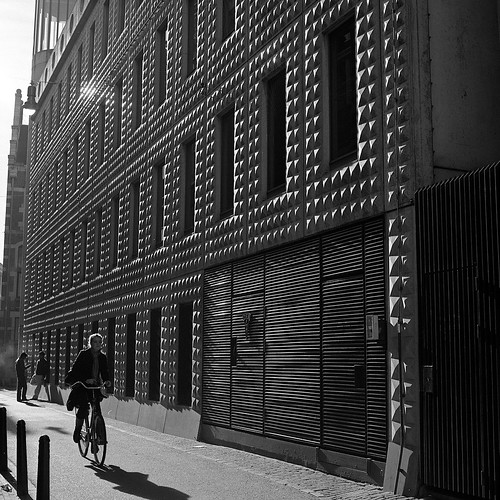
(Photo from FFFFOUND! The original full-color version can be viewed by clicking the photo.)
3.30.2008
Urbanffffinds 024




3.14.2008
WEEKEND READING: March 8-14, 2008
 Lots of good stuff this week, but Item One is a must-read for everyone.
ITEM ONE: This week marked the (unfortunately early) end of South Central Tour, a fantastic, photo-rich blog documenting an epic trip through South and Central American cities with two infamous street artists, Above and Ripo. Take a look back through the group's stops in Rio, São Paulo, Buenos Aires, Santiago, and a bucketload of other cities. (Photo credit)
ITEM TWO: Speaking of South American cities, here's a great article on the idealism, overpopulation, and developing crime problems of Brasilia.
ITEM THREE: Kazys wins for title of the week -- "Take the bus to the internet." The post doesn't disappoint.
ITEM FOUR: Another literary excerpt from Archidose, this one examining the struggle between technology and nature in architecture and urbanism.
ITEM FIVE: Space & Culture provides some great links about "desire lines."
ITEM SIX: Another eloquent commentary on how cities can be used to combat global warming. (Via Civic Nature).
ITEM SEVEN: Karrie Jacobs goes searching for the soul of Times Square, with interesting (and, of course, beautifully-written) results.
Traffic has been abnormally high lately at Where; thanks for the great week. Now you have a great weekend.
1.13.2008


12.31.2007
Best of the Urblogosphere: 2007 Round-Up
 I went back through all of the Weekend Reading posts from the past year and pulled what I thought were the very best of the best. I've divided things up into two categories: General Urbanism and Place-Specific posts. Descriptions of the selections are followed by their date on which they originally appeared in WR.
GENERAL URBANISM
ITEM ONE: BLDGBLOG on "terrestrial reorganization" during WWII. (April 20)
ITEM TWO: Celsias on why designing cities around cars is such a terrible idea. (May 18)
ITEM THREE: Harvey Feldspar's city-hopping geoblog of the future, from Wired's examination of the future of our mobile society. (June 29)
ITEM FOUR: London architecture criticHugh Pearman on the Tate's megacities exhibit -- a stunning critique of contemporary starchitecture. (July 14)
ITEM FIVE: This Airoots post explores a fascinating artist's village in Mumbai. Organic urbanism at its best. (August 24)
ITEM SIX: NY Mag sets the record straight on Jane Jacobs' legacy. (September 28)
ITEM SEVEN: The Next American City features an article about how violent foreign policy creates more violence at home. (October 12)
ITEM EIGHT: City of Sound reexamines cities as destructive systems. (November 2)
ITEM NINE: Fabulous imagery of re-imagined slums via Subtopia. (December 7)
ITEM TEN: Spacing Wire features this beautiful and concise argument for humanism in the environmental movement. (December 14)
PLACE-SPECIFIC
ITEM ONE: A New York Times feature on the evolution of Curitiba into a poster child for good urbanism. (May 25)
ITEM TWO: Built Environment Blog takes a bike ride through ever-fascinating Brooklyn. (June 1)
ITEM THREE: The Economist goes back to Beijing. (August 24)
ITEM FOUR: Fabulous article from Frieze on the Brazilian megacity of São Paulo. (August 31)
ITEM FIVE: The Lincoln Institute explores post-apartheid Johannesburg. (October 5)
ITEM SIX: BLDGBLOG's rather infamous paean to the wonders of Los Angeles. (October 19)
ITEM SEVEN: More great stuff from Spacing: an Angelino's take on Toronto's messy urbanism. (October 19)
ITEM EIGHT: And finally, an Airoots post on the architectural wonderland of Tokyo's retail scene. (December 7)
If there are any of these that you missed the first time around, I urge you to take a look...they're great reading, start to finish. Have a wonderful, safe, and happy new year! See you in 2008.
(Photo from Non-Photography.com. The original full-color version can be viewed by clicking the photo.)
10.19.2007
WEEKEND READING: October 13-19
 It has been a busy week in the blogosphere. That makes for a fat WR list!
ITEM ONE: Wikipedia's impressive list of urban squares ranked by area. This is the kind of thing that the internet was invented for.
ITEM TWO: A post at Line of Sight covering the delightfully wacky buildings of Argentine architect Francisco Salamone. (Photo credit)
ITEM THREE: BLDGBLOG's got a crush on Los Angeles...
ITEM FOUR: ...and over at Spacing Wire, an Angeleno has a crush on Toronto.
ITEM FIVE: Kazys Varnelis with an interesting take on the city vs. suburb debate.
ITEM SIX: Interesting post at IAdotO about Emotional Architecture (with the added bonus of a link to a free online version of the book The Emotion Machine).
ITEM SEVEN: Antonio Gaudi's got a Brazilian doppelgänger.
ITEM EIGHT: International Listings' take on the Top 100 Architecture blogs -- a good resource with lots of blogs both old and new. Where comes in at #100 thanks to good old-fashioned alphabetization. ;-)
Have a great weekend, everyone!
9.27.2007
Empty Cities
 Speaking of Singapore (as I was earlier today), the August/September 2007 issue of Polar Inertia features a series of photographs of momentarily abandoned commercial spaces taken throughout the island metropolis by Heman Chong. As the photographer explains: "The idea for this series is to document shops in shopping malls in Singapore at moments when they are completely empty. The eerie emptyness presented in the photos is a spectulative essay on the fantasy of walking through shopping malls and not encountering anyone. This photographs are taken without any prior consent from the owners or any kind of setup or planning. Considering the density of the city (4.5 million citizens on a really small island full of shopaholics), its practically an impossible feat at times."
The photos in "The Abandoned Singapore," as the set is titled, really do a wonderful job of capturing a very eerie, almost post-apocalyptic feel. After three or four pics, you start to feel uneasy...somewhere around ten or twelve, a shiver runs down your spine. By the time you reach the supermarket image above, you'll want to look out your window just to make sure that there are still people walking around; that you haven't woken up on a deserted planet.
That feeling reminded me of a post at Interactive Architecture dot Org that I read earlier today about digital architecture and "information pollution" (you would think there'd be a convenient portmanteau there...I've tried, though, and nothing quite rings true). The post made mention of the now near-legendary law passed at the beginning of this year in São Paulo which banned all advertising -- or what the mayor called "visual pollution" (much less interesting term, that) -- from the city's notoriously cluttered streetscape. IAdotO explained how "the city of approximately eleven million people, South America’s largest, awoke to find a ban on public advertising. Every billboard, every neon sign, every bus kiosk ad and even the Goodyear blimp were suddenly illegal."
I am thoroughly bemused with the way this event has been described in the media (where I'm guessing IAdotO picked up the language), as that is at least the fourth or fifth time I've seen the word "awoke" used in referrence to the day the law went into effect. Paulistanos were apparently came home after a night out celebrating the new year and were lulled to sleep by the buzzing of a thousand tubes of neon and argon, their rooms glowing dimly from the ambient light of a million backlit fiberglass logos filtering through the thin curtains...only to awake the next morning to find that the sinage had simply disappeared. Ad Rapture!! Millions of golden arches and blue half-torn movie tickets and silver apples snatched up into the clouds in a blast of white light, never to be seen again (or at least not until they land in a tech dump in Guiyu). É impossível!
My brain is wandering now, because it's late...but isn't that a fantastic image? I really do love it.
We end tonight with a more tangible image from another set from Polar Inertia; the zine has a compillation of photo collections from the LA/SoCal area, including a set from March of 2006 called "Oblivion." Photographer David Maisel depicts Los Angeles in unnerving inverted black and white. It gives the city a sort of desolate, alien appearance...and it's gorgeous. Maybe this is how LA was supposed to be viewed all along...

Links:
Polar Inertia
- The Abandoned Singapore
- Oblivion
MediaArchitecture - Media Urbanism (IAdotO) (Oh, do read this one! I sort of did it a disservice by pulling one tiny, irrelevant detail from a very solid post, so I am counterbalancing that by insisting that you follow this link).
9.06.2007
Typing Utopia
 An excerpt from the article on São Paulo highlighted in last Friday's Weekend Reading post:
But while the city of enlightened tropical urbanism – housing blocks with masses suspended over open breezeways, free-form plantings, walls of vertical wood blinds, beautiful decorative ceramic brises-soleil and elaborate mosaics – is occasionally visible [in São Paulo], it was overtaken by incremental failures to live up to the promise. The sunny future imagined in the 1950s succumbed to the repression of the 1960s and ’70s and the economic disasters and neo-liberalism that followed. Today the disparity between inconceivably rich and unimaginably poor is creating a new cityscape. A simmering low-grade siege mentality has become an everyday fact of life, and as a result the city is gradually obscuring its confidence behind multiple layers of improvised urban fortification and strategies of avoidance. Sampa is increasingly segmented, festooned with surveillance cameras and a boggling variety of gates, barriers, photoelectric tripwires and enclosures defended by an army of private security guards. If left unchecked, warns Brazilian anthropologist Teresa P.R. Caldeira, this metastasizing de facto topography of exclusion and suspicion will lead inevitably to the implosion of modern public life and the values of civil society.
This evolving mess, which nobody planned and no one wants, is the crux of Angela Detanico and Rafael Lain’s Utopia font. Trained as graphic designers and practising as artists, the duo have created a pictographic alphabet (which can be downloaded from their website4) in which the upper case is represented by silhouetted glyphs of Niemeyer or Niemeyeresque architectural icons and the lower case by some of the more grimly prosaic elements of contemporary Sampa. Using the font, typing even the most harmless text can become an exercise in creating unintended disorder and blight. In the end, the reality of the street scrimmage between public and private trumps the best intentions of any planner.
Welcome to CyberSampa:

Links:
Detani Colain
8.31.2007
WEEKEND READING: August 25-31, 2007
 Even though blog posts in the urbanism 'osphere have been down recently (blame last minute summer vacations and the start of the fall semester) the quality of articles and posts has been pretty high. This week was another good one.
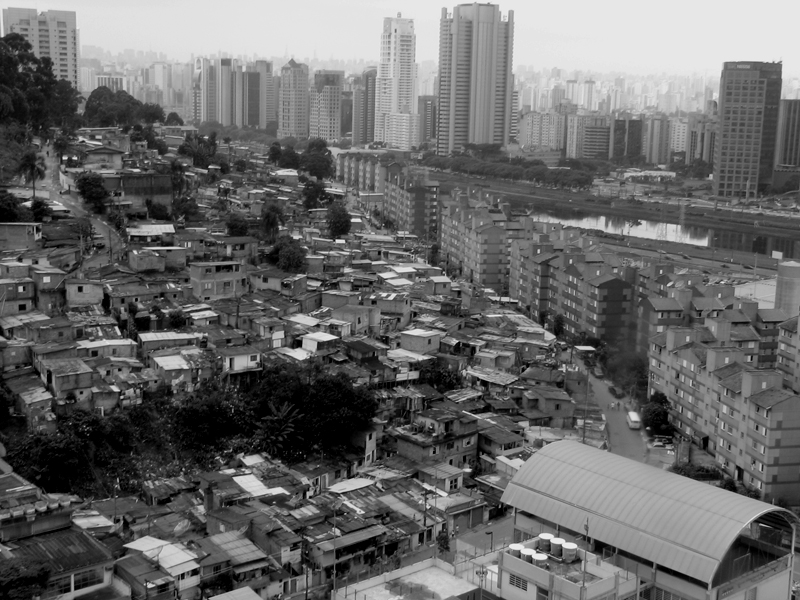
ITEM ONE: A large, thorough, and eye-opening account of life in the hypercity of São Paulo.
ITEM TWO: Some interesting musings on the shallow nature of the shockingly new city of Shenzhen and the loss of culture in China.
ITEM THREE: anArchitecture discusses the emerging problem of shrinking cities -- in Second Life.
ITEM FOUR: The difference between Tokyo and Little Rock? Broadband access. (Well, that's one difference, anyway).
ITEM FIVE: Spacing Wire marvels at the way design and art seem to be woven through every aspect of life in Barcelona -- right down to the (gorgeous) lightposts.
ITEM SIX: Police crack down on Geneva's squats, and airoots fears for the future of the city's underground culture.
ITEM SEVEN: Miami is in a bit of a pickle. 23,000 condos for sale, with another 25,000 under construction. Talk about market oversaturation...
Have a great weekend!
(Photo from Flickr user mariana_dias.)
7.10.2007
An Homage to Things
Due to my mostly net-less vacation last week, I am seriously behind on my posting, so there are quite a few excellent (dare I say totally rad?) articles that I know I'm never going to get around to writing about. I have always liked things magazine, so to help clean out my Google Reader, I'm basically going to ape their style. Because I can.
If humanity simply vanished tomorrow, what would happen to our cities? Scientific American thinks that, at least in Manhattan, the subways would quickly fill with water, causing the streets above to buckle, effectively becoming rivers. Why? Apparently the island was once home to 40 different streams, though all water runoff is now diverted underground. “There are places in Manhattan where they’re constantly fighting rising underground rivers that are corroding the tracks. You stand in these pump rooms, and you see an enormous amount of water gushing in. And down there in a little box are these pumps, pumping it away." (via CitySkip)
In other water-related news, a quarter of a small Kansas town was wiped out by an oil-enhanced flood. It's like the Exxon-Valdez in the middle of the Great Plains. Up on the Great Lakes, however, things are clear and blue out at Azkaban, the forlorn perch from which Built Environment Blog surveys the Chicago skyline as one takes in Earth from the moon. Meanwhile, atlas(t) has kicked off its Galleon Trade Edition, planning stops in Mexico, California, and the Phillipines.
Time for a Conscious Urbanism triple shot. A DC blog, Rebuilding Place in the Urban Space, writes about a New York effort to convert schoolyards into public parks / New York's Streetsblog, meanwhile, is writing about London's potential street-decluttering, which sounds an awful lot like what happened Sao Paulo / Speaking of London, the BBC reports that the UK government is planning to allow locals to have a say on where public funds are spent...which, coincidentally, is being modeled after a Brazilian program. / Dickens could not have come up with a better name than Hazel Blears.
In Seattle, urbanism guru Jim Diers laments the city's move away from the more neighborhood-focused way of planning he helped jump-start / Where are the Star Planners?, wonders Robert Goodspeed over on Planetizen's Interchange blog / The LA Times (they had a good week) asks why starchitects are shunning socially-conscious design / Prosper lets loan-seekers join online communities in a rather innovative way.
Speaking of innovative, UC Berkeley journalism professor Paul Grabowicz is developing a video game to help locals learn about the rich history of Oakland's 7th Street jazz and blues club scene. Grabowicz: "Our game defines an important local community and focuses on a very important aspect of that community. In essence, we have used a video game to recreate this community." / With all the recent talk about digital urbanism, I completely forgot to mention Digital Urban, a blog that covers the recreation of the physical world in virtual reality.
Steven Varnelis' blog, "the longest running single-person blog in architecture," has a new feature called Netlab Dispatches / Inhabitat covers the fabulously whimsical Cumulus Light Canopy by Steven Haulenbeek / With its new LED display, the CN tower can be seen over 100 miles away in Rochester, NY (via Architectural Record) / Philly has 60,000 vacant parcels (the highest per capita in the country) / The Tate's Global Cities exhibit features super-high-density urbanity (via Spacing Wire / Cities as Innovation Engines at the CEOs blog / Alive in Baghdad gives voice (and video coverage) to the war zone metropolis' citizens (via WorldChanging.com)
If humanity simply vanished tomorrow, what would happen to our cities? Scientific American thinks that, at least in Manhattan, the subways would quickly fill with water, causing the streets above to buckle, effectively becoming rivers. Why? Apparently the island was once home to 40 different streams, though all water runoff is now diverted underground. “There are places in Manhattan where they’re constantly fighting rising underground rivers that are corroding the tracks. You stand in these pump rooms, and you see an enormous amount of water gushing in. And down there in a little box are these pumps, pumping it away." (via CitySkip)
In other water-related news, a quarter of a small Kansas town was wiped out by an oil-enhanced flood. It's like the Exxon-Valdez in the middle of the Great Plains. Up on the Great Lakes, however, things are clear and blue out at Azkaban, the forlorn perch from which Built Environment Blog surveys the Chicago skyline as one takes in Earth from the moon. Meanwhile, atlas(t) has kicked off its Galleon Trade Edition, planning stops in Mexico, California, and the Phillipines.
Time for a Conscious Urbanism triple shot. A DC blog, Rebuilding Place in the Urban Space, writes about a New York effort to convert schoolyards into public parks / New York's Streetsblog, meanwhile, is writing about London's potential street-decluttering, which sounds an awful lot like what happened Sao Paulo / Speaking of London, the BBC reports that the UK government is planning to allow locals to have a say on where public funds are spent...which, coincidentally, is being modeled after a Brazilian program. / Dickens could not have come up with a better name than Hazel Blears.

In Seattle, urbanism guru Jim Diers laments the city's move away from the more neighborhood-focused way of planning he helped jump-start / Where are the Star Planners?, wonders Robert Goodspeed over on Planetizen's Interchange blog / The LA Times (they had a good week) asks why starchitects are shunning socially-conscious design / Prosper lets loan-seekers join online communities in a rather innovative way.
Speaking of innovative, UC Berkeley journalism professor Paul Grabowicz is developing a video game to help locals learn about the rich history of Oakland's 7th Street jazz and blues club scene. Grabowicz: "Our game defines an important local community and focuses on a very important aspect of that community. In essence, we have used a video game to recreate this community." / With all the recent talk about digital urbanism, I completely forgot to mention Digital Urban, a blog that covers the recreation of the physical world in virtual reality.
Steven Varnelis' blog, "the longest running single-person blog in architecture," has a new feature called Netlab Dispatches / Inhabitat covers the fabulously whimsical Cumulus Light Canopy by Steven Haulenbeek / With its new LED display, the CN tower can be seen over 100 miles away in Rochester, NY (via Architectural Record) / Philly has 60,000 vacant parcels (the highest per capita in the country) / The Tate's Global Cities exhibit features super-high-density urbanity (via Spacing Wire / Cities as Innovation Engines at the CEOs blog / Alive in Baghdad gives voice (and video coverage) to the war zone metropolis' citizens (via WorldChanging.com)
5.22.2007
Conscious Urbanism: Slowing Down Our Cities

I grew up in Suburbia, and my mother once asked me, "Why on earth would you want to move to the city? It's so busy and noisy and crowded." To which I responded: "I love it when you answer your own questions."
Still, there are times when the urban environment can get a little overwhelming. While I love it dearly, I'll be the first to admit that the nature of a dense environment can be -- and is -- exploited on many levels. Take, for example, advertising. The high concentration of people in high-density city neighborhoods provides advertisers with a sizable market for visual ads. High-traffic transit lines and highways provide the same kind of mass viewership. Think, for a minute, about how many billboards you pass on your walk, ride, or drive to work each morning. Try actually counting them tomorrow.
This visual noise has been attracting a lot of attention lately, it seems. Beijing's mayor, for example, is speaking out against proliferating ads for high-end luxury goods in the growing Chinese capital. Meanwhile, on the literal opposite side of the globe, Sao Paolo made headlines by enacting an ordinance that forced the removal of all of the city's outdoor advertising. The massive billboards that once formed the city's urban landscape -- even served as its landmarks -- have fallen like scales from the city's eyes, to paraphrase one NPR commentator's description. Now, apparently, the city has been exposed to some of its more unsavory elements; the 'boards dispensed with, impoverished favelas have been exposed along high-traffic routes. (And you'll have to forgive me this indulgence, but knowing the very vertical nature of Sao Paolo, I keep picturing stacked slums sandwiched between office towers. It's a bit fantastical, and neither here nor there, but I wanted to share nonetheless.) According to one reporter from the city, it's like walking through an entirely new city.
The fight against excessive urban ad-age is taking place Stateside as well. Los Angeles' famously commercialized cityscape is littered with illegal ads that were recently legalized due to some shady political maneuverings. Meanwhile many of New York's rapidly gentrifying neighborhoods are seeing their historic charm "draped like a giant burrito in enormous vinyl signs" in the words of Kevin Fry, the president of Scenic America.
This brings us to the issue of visual noise, a highly potent but often overlooked piece of the overstimulation experienced in cities. Many of us take the sinage around us for granted; in a hypercommercial society, it's hard not to. But the effect of all of this sinage is a decreased capacity for independent thought. We are constantly bombarded by images of things that we should want, near-subliminal messages (thanks to the aforementioned taking-for-granted) that hold us in a state of distraction. The mayor of Beijing's argument illustrates the deeper problem associated with this phenomenon: increased advertising, especially for high-end goods and services, increases tensions between social classes, the haves and the have-nots.
Vinicius Galvao, the aforementioned Paulistano reporter, describes the current situation in his city thusly: "It's amazing, because people on the streets are strongly supporting that. The owner of the buildings, even if they have to renovate a building, they're strongly supporting that. It's a massive campaign to improve the city. The advertisers, they complain, but they’re agreeing with the ban." And while it's impossible to say for sure without being there, his description makes it sound like the urban pulse of the city has been calmed somewhat. Perhaps, even, slowed.
Part of the fear of density in people comes from a fear of intensity. Cities are busy, noisy, crowded places. And while some people will always thrive on that, modern cities are large enough to provide a wide variety of different environments. Density, however, is an extremely important part of creating sustainable, high-quality urban environments. Thus, it is inspiring to see support growing for "humane density." Neither Too Slow Nor Too Smart, a paper by Richard Bender and John Parman, calls for a sensible, regional approach to population density. Another quote for you: "[We need to] fall in love again with a region that, for many of us, captured our hearts when we first set eyes on it, tasted its delicious food, savored its wine, walked its captivating streets. We know what it is and what it can be. Something this beautiful demands our indulgence, our generosity, and our commitment. We know how to treat it well, and yet we have so often failed to do so. Time to change."
While these words were written about the SF Bay Area, they can easily be applied (perhaps with a few alterations) to most major cities in the world. People choose to move to cities for many reasons, but they generally have the same reason for staying (given the option to leave): they fall in love with the place. And while there will always be a high concentration of activity in urban centers, cities extend far beyond their cores. Residential neighborhoods could benefit greatly from a general calming; be it through the removal of visual clutter, or just more careful planning. There is no reason that density cannot be calm and enjoyable; we just have to slow it down.
(Photo from Flickr user H111.)
Links:
Beijing mayor blasts billboards promoting luxury (Breitbart.com)
Clearing the Air (NPR)
Billboards vs. A 'Greener' America (Washington Post Writers Group)
City of Panic (Occupied London)
Neither Too Slow Nor Too Smart
Subscribe to:
Posts (Atom)