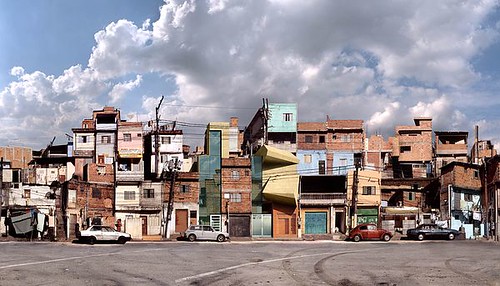
Showing posts with label jane jacobs. Show all posts

4.28.2009

In Jane's Footsteps


Get your walking shoes out. This weekend (May 2 and 3) is the annual Jane's Walk, dedicated to everyone's favorite grassroots urbanist. Inspired by Jane Jacobs' close attention to the everyday experience of urban life as it unfolds on the ground as a basis for understanding and acting upon the city, volunteers will lead free walking tours in over 200 neighborhoods in North America, and for the first time, in India (where PUKAR will lead the way). Organized by the Centre for City Ecology in Canada and by the Center for the Living City in the US, Jane's Walk included over 6000 participants last year, its second in existence. Many tours focus on the built environment, but others touch on local culture, history or crucial planning issues. It's not too late to lead your own...

The walks celebrate Jacobs' simple and groundbreaking idea that in order to figure out what will work for cities, one has to look at how people actually experience the city at ground level and plan with people at the center, rather than on the basis of car traffic, utopian models or scientific formulas. Not a formally trained planner herself, Jacobs' principles (higher densities, mixed uses, short blocks) are now the ABC's of the field. More importantly, her promotion of community-based planning as a counterpoint to top-down master-planning was responsible for a vast paradigm shift. It's no accident that Where readers voted her seminal treatise, The Death and Life of Great American Cities, into the top position of our list of best books for the novice urbanist.

To what extent have Jane's footsteps left a lasting imprint? According to Hilary Ballon, an architectural historian at NYU quoted in the NY Times' City Room blog, this is a "'golden moment for the rebirth of city planning... after a long period of tremendous suspicion about the viability and value of a master plan' — suspicions fueled by a perception of 'evil top-down planners who didn't understand what neighborhoods needed.'" She was introducing a talk on April 15 by Daniel L. Doctoroff, deputy mayor until early 2008, on PlaNYC, what he called '"one of the most sweeping, most comprehensive blueprints for New York ever undertaken."

Based on the premise that New York's population is expanding rapidly, its infrastructure is aging, and its environment is at increasing risk from climate change, PlaNYC lays out a detailed framework for meeting goals in the arenas of land, water, transportation, energy, air and climate change. The plan was created after a four-month public outreach process, including consultation with advocacy groups and town hall meetings in all five boroughs. With characteristic NYC bravado, the plan claims to be a model for city planning in the 21st century.

Are we indeed witnessing the rebirth of far-reaching master-planning, but with new features? Is this a happy medium: planning for tomorrow while making residents' needs and voices central? Or are Jane Jacobs' views on the importance of keeping our feet on the ground and involving communities being diluted to token community outreach meetings?

(Flyer from the Center for the Living City. Photo of Jane by Maggie Steber, Planning Magazine, 1986, sampled here.)

3.06.2009

Introducing Urbanism: Top Books for Curious Novices


In January, I asked Where readers and contributors what books they’d recommend to introduce the basic concepts of urbanism to curious, non-expert friends. I asked for a short list of accessible, concise books.

Since the initial query more than 30 titles have been suggested. Because I was already familiar with only a handful of the books, I headed to the library to get better acquainted with at least some of the other suggestions.

Based on that library visit, on posted comments from readers, on behind-the-scenes advice from Where contributors and my interpretation—from my own very amateurish (and American) perspective—of what counts as “accessible” and “concise,” here are five books about the basics of urbanism that I’d now recommend to relatively clueless, but curious friends.

Almost all of the links in this post connect to Google Book Search.

The Top 5

1. The Death and Life of Great American Cities by Jane Jacobs (1961). At about 450 pages, “concise” is probably not the most apt description of this book. But, as this is the single best written, most accessible, most compelling book I’ve ever read about cities, I’m willing to forsake the concision criterion even in my first recommendation. If you want to know what can make cities pleasant, safe and interesting places to live, read this book. If you want to read one of the best non-fiction prose stylists of our time, read this book. It’s a classic, and deservedly so. As one Where reader put it: “It’s a great book for explaining why we care about all of this.”

2. The Option of Urbanism by Christopher Leinberger (2007). While not as fun to read as The Death and Life of Great American Cities or The Geography of Nowhere (see below), this slender volume briskly highlights difference between drivable sub-urban development and walkable urban development, and does a good job of explaining the benefits of walkable city neighborhoods. It’s good primer on the basics of density, zoning and the hidden subsidies fueling drivable sub-urban development.

3. The Geography of Nowhere by James Howard Kunstler (1993). This book is an exploration—and excoriation—of the rise of suburbia and sprawl. It also explains how the more traditional patterns and places of city life and country life are superior to the “geography of nowhere.” Accessible and ferocious.

4. Cities Back from the Edge by Roberta Gratz, with Norman Mintz (1998). According to a Where reader, this book is “in the spirit of Jacobs” and discusses “how existing cities can be improved with citizen participation in contrast to destructive master plans.” The book is filled with lots of specific ideas about how to improve downtown areas, all of them lavishly illustrated with real life examples from successful efforts in dozens of cities.

5. How Cities Work by Alex Marshall (2000). Squarely aimed at the lay person, this book seeks to discover what forces shape places and cities—and finds that one of the most powerful forces is political choices, particularly those having to do with transportation policy. A Where reader gave this recommendation: “It’s not comprehensive, of course, but it’s a good snack, possibly the kind that could interest a person in a larger meal.”

A Tall Stack of Other Suggestions

Many other titles were suggested. They’re all listed here in no particular order, with quoted comments—when available—from the Where readers and contributors who recommended them.

Cities of Tomorrow by Peter Hall is “a great history of urban planning, knowledge of which is essential for understanding modern cities.”

The Last Landscape by William Whyte “focuses on the benefits of relatively dense urban form.”

Good City Form by Kevin Lynch is a “very engaging overview of urban history and theory” with “compelling ideas for developing vibrant cities.”

The Granite Garden by Ann Whiston Spirn “introduces thoughtful ways of improving the relationships between cities and the ecosystems in which they’re built.”

Building Suburbia by Dolores Hayden covers the sociology and history of suburbia. “It's written in a way a layperson…can understand.”

Till We Have Built Jerusalem: Architecture, Urbanism, and the Sacred by Philip Bess “does a nice job” explaining “exactly why urban design matters.” It may not be a simple primer, but “a few of the chapters are perfect intros to the subject.”

The Old Neighborhood: What We Lost in the Great Suburban Migration, 1966-1999 by Ray Suarez is an “excellent introduction to the challenges experienced in aging, post-industrial cities, including Chicago, Cincinnati and Philadelphia.”

Building the Dream: A Social History of Housing in America by Gwendolyn Wright is “an essential resource for understanding the social movements and political processes that have shaped urban/suburban cultural landscapes.”

The Culture of Cities by Louis Mumford is a “great classic” by an “exceptional writer.” The book includes introductions to the ideas of Ebenezer Howard and Patrick Geddes, two influential early modern urban planners.

Crabgrass Frontier by Kenneth Jackson “does a great job of explaining how we ended up with the urban landscape we have,” and is “very accessible, too.”
http://books.google.com/books?id=On0iJsl0HY4C

The Power Broker by Robert Caro, while “not short at all, reads like a novel” and “illustrates the state of city administration and urban planning during the past century better than anything else I’ve ever read.”

Delirious New York by Rem Koolhaas and “On Liberty” by John Stuart Mill are good to read together because Koolhaas’s book “provides an essential perspective on why contemporary urbanism discussions are where they are today,” and Mill’s essay is a “classic for anyone who wants to learn about living with other people, things and places.”

Who's Afraid Of Niketown? by Friedrich von Borries “investigates the contemporary effect of global corporations on public space and urbanism.”

Books, essays, articles by J.B. Jackson because his “short, easily digestible” work “looks at cities and other environments in such a different way,” and “inspires people to think beyond the clichés.”

Psychogeography by Will Self is an “interesting anecdotal urbanist book.”

Nature's Metropolis: Chicago and the Great West by William Cronon is “longish,” but provides historical perspective on urbanism issues.

The Essential William H. Whyte as a substitute for the out of print City: Rediscovering the Center by William H. Whyte.

"Junkspace" an essay by Rem Koolhaas.

A Better Place to Live: Reshaping the American Suburb by Philip Langdon.

Poetics of Cities: Designing Neighborhoods that Work by Mike Greenberg.

The Living City: Thinking Big in a Small Way by Roberta Gratz.

To Scale: One Hundred Urban Plans by Eric Jenkins.

American Project: The Rise and Fall of a Modern Ghetto by Sudhir Venkatesh.

Off The Books: The Underground Economy of the Urban Poor by Sudhir Venkatesh.

(Photo from Flickr users danlorentz and docman. The original full-sized color version can be viewed by clicking the photo.)

1.26.2009

Brief Interviews with Hideous Cities

Urbanism, like any field, has its own dogmas, orthodoxies and raging controversies. It's both art and science, it affects almost everyone on a daily basis (whether they realize it or not), and it overlaps with a vast array of related disciplines.

In short, urbanism has a lot in common with language.

People have been calling attention to this similarity for ages--Christopher Alexander's pattern language is a prime example--but David Foster Wallace may have unknowingly revealed the most useful facet of the relationship in his essay "Authority and American Usage," by probing the conflict between linguistic Descriptivism and Prescriptivism. Prescriptivists are those who believe in objective, fixed rules to guide the usage of language; Descriptivists, on the other hand, seek to define a language by how people actually use it. DFW ultimately concludes that the English language depends upon the former group, although any would-be Prescriptivist must establish credibility before publicly defining what's right and wrong.

It turns out urbanism has its own versions of Prescriptivism and Descriptivism: Professional planners, architects, academics, media and city administrators tend to develop consensus about what makes cities work. Density, mixed-use development, and transit become components of an urbanist orthodoxy; a freeway through a vibrant neighborhood troubles the urban Prescriptivist in the same way an "ain't" irks the English teacher.

Meanwhile, every urban dweller is routinely playing the twin roles of critic and planner in many small ways. Cities are created by the sum of individual choices to live in certain neighborhoods, shop at certain stores or occupy public spaces, and everyone forms an opinion about what's good and bad in their own urban environments. Urban Descriptivism would hold that these millions of collective actions and opinions are right, whether experts agree or not--even if those actions produce strip malls, car culture and isolation.

Urban Descriptivism is probably more interesting, and it's certainly easier. Robert Venturi and Reyner Banham have glorified the neon signs, freeways and sprawl of LA and Las Vegas, choosing to find beauty in those environments because they’re already there anyway. Venturi may have coined the Descriptivists’ mantra when he wrote, “Main Street is almost all right.” Their approach teaches us to treasure someone else’s trash, enhancing the urban experience without necessarily building anything.

Clearly, each extreme has severe flaws: One leads to hubris and utopian fantasies; the other ignores social pathologies in favor of intellectual entertainment. Hence DFW’s conclusion. We can’t assume those planning our cities are credible just because they’re making the plans. But we need rules and guidance—an entirely hands-off approach will create interesting cities with multitudes of serious problems.

Maybe this is why urbanists keep returning to Jane Jacobs. She reconciles these approaches in The Death and Life of Great American Cities by merging a Descriptivist’s eye for the way cities actually are (not how they should be) with a Prescriptivist’s desire to make cities better—by nurturing what’s already good in those cities rather than trying to recreate them. David Foster Wallace writes that every language needs its authorities; Jane Jacobs tells us that stepping outside and thoughtfully considering one’s surroundings are the first steps toward becoming an authority on the language of urbanism.


(Photos from Flickr users jamessmke and Roadsidepictures. The original full-sized versions can be viewed by clicking the photos.)

1.10.2009

Barack & Jane


Spotted on Beyond DC, a video of President-elect Obama from a town hall-style gathering back during the election season in Toledo, Ohio. Not only does he speak at length about the importance of building strong cities and metropolitan areas in the economic recovery process, he starts off by praising Jane Jacobs, calling The Death and Life of Great American Cities "a great book." Kind of amazing to see and hear; certainly gives this urbanist hope for the future. Now let's see if he delivers. Ten days to go...

9.17.2008

Jane

Do people actually read Jane Jacobs anymore, or has she become a misappropriated symbol for old-guard thinking in the same way that she was misappropriated as a symbol for David-vs-Goliath preservationism? Even Kazys now suggests that we throw her out in the face of gentrifying and demographically inverting cities -- things that make her core arguments for variation, limited regulation, and localism more relevant than ever. Her most revered book is nearly 50 years(!!!) old, he exclaims. What good could she be to us now?

Token Jacobsism.

5.02.2008

WEEKEND READING: April 26-May 2, 2008

It's back! Did you miss it? Hooray for Weekend Reading.

ITEM ONE: First things first -- Jane Jacobs' birthday is coming up this Sunday. In her honor several cities around the US and Canada are hosting "Jane's Walks," free guided neighborhood tours. Whether or not you are living in a Jane's Walks city, make sure to get out and stroll around your neighborhood at some point this weekend.

ITEM TWO: Attributos Urbanos presents an awesomely thorough glossary of contemporary urbanism terminology. (via atlas(t))

ITEM THREE: CEOS for Cities on how homogeneity hurts innovation.

ITEM FOUR: NASA releases spectacular high-res images of cities at night, seen from outer space. (via The Map Room)

ITEM FIVE: Straightforward title for a great Planetizen post: Neighborhoods Are Building Blocks of Civic Life.

ITEM SIX: Jetson Green takes a look at deconstruction (material salvaging) and the green benefits. Video included!

ITEM SEVEN: We'll wrap up with some more watchable goodness. 'But it's supposed to be reading,' you say? Rules are made to be broken. Check out Peter Zumthor discussing his absolutely brilliant thermal baths in Vals (pictured).


(Photo from Flickr user Bau TW. The original full-color version can be viewed by clicking the photo.)

12.31.2007

Best of the Urblogosphere: 2007 Round-Up

I went back through all of the Weekend Reading posts from the past year and pulled what I thought were the very best of the best. I've divided things up into two categories: General Urbanism and Place-Specific posts. Descriptions of the selections are followed by their date on which they originally appeared in WR.

GENERAL URBANISM
ITEM ONE: BLDGBLOG on "terrestrial reorganization" during WWII. (April 20)

ITEM TWO: Celsias on why designing cities around cars is such a terrible idea. (May 18)

ITEM THREE: Harvey Feldspar's city-hopping geoblog of the future, from Wired's examination of the future of our mobile society. (June 29)

ITEM FOUR: London architecture criticHugh Pearman on the Tate's megacities exhibit -- a stunning critique of contemporary starchitecture. (July 14)

ITEM FIVE: This Airoots post explores a fascinating artist's village in Mumbai. Organic urbanism at its best. (August 24)

ITEM SIX: NY Mag sets the record straight on Jane Jacobs' legacy. (September 28)

ITEM SEVEN: The Next American City features an article about how violent foreign policy creates more violence at home. (October 12)

ITEM EIGHT: City of Sound reexamines cities as destructive systems. (November 2)

ITEM NINE: Fabulous imagery of re-imagined slums via Subtopia. (December 7)

ITEM TEN: Spacing Wire features this beautiful and concise argument for humanism in the environmental movement. (December 14)


PLACE-SPECIFIC
ITEM ONE: A New York Times feature on the evolution of Curitiba into a poster child for good urbanism. (May 25)

ITEM TWO: Built Environment Blog takes a bike ride through ever-fascinating Brooklyn. (June 1)

ITEM THREE: The Economist goes back to Beijing. (August 24)

ITEM FOUR: Fabulous article from Frieze on the Brazilian megacity of São Paulo. (August 31)

ITEM FIVE: The Lincoln Institute explores post-apartheid Johannesburg. (October 5)

ITEM SIX: BLDGBLOG's rather infamous paean to the wonders of Los Angeles. (October 19)

ITEM SEVEN: More great stuff from Spacing: an Angelino's take on Toronto's messy urbanism. (October 19)

ITEM EIGHT: And finally, an Airoots post on the architectural wonderland of Tokyo's retail scene. (December 7)


If there are any of these that you missed the first time around, I urge you to take a look...they're great reading, start to finish. Have a wonderful, safe, and happy new year! See you in 2008.

(Photo from Non-Photography.com. The original full-color version can be viewed by clicking the photo.)

12.07.2007

WEEKEND READING: December 1-7, 2007

Back to business as usual this week for Weekend Reading. Thanks again to Colin for taking over during November, and thanks once more to all of the guest bloggers who helped to keep Where chugging along during NaNoWriMo!

ITEM ONE: It's BLYGAD 2.0! Tumble Like You Give a Damn, folks.

ITEM TWO: The Architectural League of New York has put out a call for entries to its Young Architects Forum competition for 2008.

ITEM THREE: In the past, little attention was paid to South America and its blossoming cultural scene. Not much has changed, there, but Line of Sight dug up a great article from a 1916 New York Times on the subject.

ITEM FOUR: Subtopia has a post called "Squatter Imaginaries" that contains some of the coolest images you'll ever see. (photo credit)

ITEM FIVE: Giant scale model of a partially destroyed downtown = kickass display for your living room.

ITEM SIX: The Future of Cities on what Jane Jacobs might have thought of Facebook.

ITEM SEVEN: Things Mag starts a recent post off with some interesting ruminations on destruction and redevelopment in the UK. Much link love follows.


'Till next week, happy surfing.

(Photo from Flickr user shadeofmelon. The original full-color version can be viewed by clicking the photo.)

12.01.2007

The Linkdump

NaNoWriMo 2007 is officially over! Congrats to all of the participants around the world who made it past the 50,000 word mark before midnight last night. As for me, I crossed the finish line around 11:30pm. Now I'm trying to catch up on my reading from the past month. Here's a quick jolt of urbanism for all you lazy folks spending Sunday in bed with a laptop and a latte. Happy December, everybody!

Contemporary World Tour goes to Brasilia {} dezeen scopes out the Wind Dam {} The difference between community and "associations, citizen committees and commissions" {} Coney Island wasn't broke, but they fixed it anyway {} A great piece on Jean Nouvel (or: Rupe hasn't killed the WSJ yet) {} The Antisuburbanites {} Toronto embraces its ugliness {} Invisible Landmarks in LA {} GOOD on Homeboy Industries {} Age-old rule #834: Don't understand it? Call it a gimmick! {} Check out the clusters on this map {} Belfast murals at WebUrbanist {} Sarcasm, light rail, and overbearing parents {} Digital Urban calls for a Second Earth {} Who's squatting the squatters? {} The corporatization of Universities {} Bad planning Mixtape {} The World Edition on architecture in Bucharest {} The Urban Planning Generation {} Commercial Revitalization Conundrums {} 26 Different Endings {} Incredible Nonphotography (photo credit) {} Guerilla culture in Paris via Spacing Wire {} Bannerman: The Willy Wonka of Weaponry {} Getting serious about agriculture {} Obama's urban agenda {} Cheering congestion in Sydney {} Gentrification: flood or forest fire? {} Mobile Metrix {} Report from Pakistan {} Downtown revitalization goes Hollywood {} Brazil halves extreme poverty {} Neighbors Project's 7 Rules for talking about gentrification {} The Happiness Project on the benefits of wandering {} Jane Jacobs podcast! {} The best sites for urban photography {} Milwaukee's industrial legacy is fading {} Wikiurbanism {} Miss Representation strikes again {} The City Fix (great transportation blog, added to sidebar) {} Cool Town on Trendwatching's 8 trends for '08 {} Integrating transit and land use

11.02.2007

WEEKEND READING: October 27-November 2, 2007

Colin will be taking over this feature next week...many thanks to him in advance. I'll be busy, novelling away until December.

ITEM ONE: City of Sound on Dresden, Los Angeles, and destructive urban systems. (Photo credit)

ITEM TWO: A great article from the NY Times City Room discussing society's inept politicization of Jane Jacobs.

ITEM THREE: Airoots on the organic growth of outer Tokyo.

ITEM FOUR: Planetizen interviews Seattle neighborhoods guru Jim Diers, now sprinkling some urban pixie dust in Australia and New Zealand.

ITEM FIVE: Why do we travel? City of Faded Elegance on human curiosity.

ITEM SIX: WorldChanging examines the pressing need for a dramtic increase in green building practices between now and 2030.

ITEM SEVEN: Digital Urban maps the top 25 Web 2.0 companies -- 19 of which are located in the San Francisco-San Jose CSA.

Happy Friday, everyone!

9.28.2007

WEEKEND READING: September 22-28, 2007

Lots of good reading for this weekend. Don't miss Item Six if you're a fan of absurd humor.

ITEM ONE: Deputy Dog (photo credit) went all out on this post about where different vehicles go once they are decomissioned. Kind of makes me wonder if there's a forest of defunct CTA train cars somewhere in Chicagoland...

ITEM TWO: According to APTA, "when compared to other household actions that limit carbon dioxide (CO2), taking public transportation can be more than ten times [more effective] in reducing this greenhouse gas."

ITEM THREE: I *heart* Jane Jacobs, but I really strongly do not *heart* how her message has been co-opted and bastardized over the years. This wonderful and succinct piece from New York magazine sets the record straight. (Found via Neighbors Project's excellent daily Neighbor News report -- a must-read for anyone interested in gentrification!)

ITEM FOUR: A trust fund for affordable housing, first proposed in the 1980s, may finally be on its way to becoming a reality. (Here are some more good ideas about the subject).

ITEM FIVE: Wendy Waters speculates about an urban baby boom over at All About Cities.

ITEM SIX: Some guerilla urban art on the CTA trains that'll give you a good laugh. Cut, paste, and try it in your city. The more ridiculous, the better!

ITEM SEVEN: Can Second Life actually improve real-world physical environments? Here's the first compelling argument I've read that says "yes."

Have a great weekend!

(Photo from Flickr user shadeofmelon.)

7.17.2007

The Witold Rybczynski Interview


Last week, I posted a review of Witold Rybczynski's new book, Last Harvest: How a Cornfield Became New Daleville. After talking to a rep at Scribner (who had sent me the book back in June) I got in touch with the author, who agreed to do a Q&A about the book. The following took place over a series of emails this past weekend.


======================================


Where: Thanks again for agreeing to do this Q&A for Where. So to start out, in my review of Last Harvest I took issue with your statement that "For the first time in history urbanization does not mean concentration" on the grounds that it undermines the difference between urban and suburban environments. What's your take on that terminological disagreement?

Witold Rybczynski: Urbanization traditionally brought with it a whole set of particular advantages. By living together in dense concentrations, city dwelllers had access to a set of services, amenities, institutions, and goods that were distinct from what was available to those living in non-urbanized areas, i.e. the countryside. It seems to me that today technology has, for the first time, vastly diminished the advantages of concentration. Of course, mid-town Manhattan still offers unparalleled advantages, but the way of life in an average American city is no longer as vastly different from the way of life in suburban and rural areas as it once was. People may still choose to live in one place or another, but unlike in the past, concentration no longer offers decisive advantages in education, communications, employment opportunities, availability of goods, culture, and so on. It is not I who have undermined the difference, but society.


W: But does the decentralization of most cities really diminish the difference between urban and suburban neighborhoods? I would argue that it makes the contrast between the two stronger, more readily apparent. Decentralization has not cheapened urban environments...as the recent "revitalization" of many cities has shown, suburbanization has led to an increased appreciation of the distinct advantages that urban places offer. I guess, at this point, it would be good to have you explain what "urban" signifies to you.

WR: Think of the difference between "town" and "country" one hundred years ago. It was absolute and affected what you ate, how you lived, the amenities to which you had access, and much more. I would argue that today the differences between amenities, resources, etc. available to someone living in an exurb outside Denver or Pittsburgh, and living in downtown Denver or Pittsburgh, while they have not disappeared, are slight. The fact that information, medical care, education, entertainment, and so on have dispersed is significant. I am not aruing that there are no differences at all, but rather that they have, for most people, diminished to the point of being trivial. Nor is the balance weighted to the city, as it once was. Suburban Philadelphians, for example, have more choice in department stores or food stores, than those living in Center City. On the other hand, we all have equal access to Netflix and Amazon.

At this point in our history, urban means all of us who live in metropolitan areas, downtown, city neighborhoods, suburbs, and fringe areas.

I think that the "urban" that you describe, and which is what is described in the so-called "renaissance" refers to those who live in downtowns, who are generally either young professionals or retired people, and a small number of empty nesters. This is probably not more than 5 percent of the total city population.

Center City Philly has about 70,000 residents (very large for a US downtown), while the city has 1.5 million, so 5% is conservative, for most cities.


W: In a recent interview with Business Week, you were asked whether New Urbanism and Neotraditional Developments like New Daleville were in the vein of Jane Jacobs' brand of urbanism and you confirmed that you did, indeed, believe them to be very similar. I agree to an extent -- they do aim to achieve many of the same things Jacobs championed. But Jane focused heavily on density as a critical aspect of successful urbanism (and, from what I remember, did not think much of New Urbanist development), so how do you reconcile the extremely low (by compairison to her professed ideal) densities of these developments with the fact that they claim to aim for a rather Jacobsian ideal?

WR: Jacobs definitely espoused density + a mixture of uses. In “The Death and Life of Great American Cities” she wrote almost exclusively about Greenwich Vilage, which is an extreme example of both. I don’t think you have to interpret Jacobs literally to be influenced by her, and like almost all town planners post-DLGAC, the New Urbanism movement has found inspiration in her writing. It is true, as Robert A. M. Stern pointed out in his recent adress to the CNU convention in Philadelphia a few months ago, that the accomplishments of New Urbanism have had more to do with suburbs than with city centers so they have usually been built at lower densities. That has partly to do with the market in the 1980s, when New Urbanism started. Today, a few developers have figured out how to do high-density, mixed-use and we are seeing more new construction along those lines (Atlantic Yards, for example).

Incidentally, all ideas in urbanism that start out as ideologies (Charles Mulford Robinson’s city beautiful, Howard’s garden city, Jacobs, McHarg, DPZ) get severely compromised by the time they have gone through the sausage machine of the market. In the 1960s, did Jacobs imagine that her Village would become an expensive enclave? I doubt it.


W: The Village is certainly not what it was in the 1960s, but that has a great deal to do with people rejecting the aesthetics and isolation of the suburbs. The prices of places with a strong sense of place are rising specifically because of characterless development, which is what New Urbanism aims to change. It makes sense, then, that most of the successful NU developments would be outside of the urban core, but the one thing that the oft-cited examples (Seaside, Newpoint) share is a great attention to detail. After observing the development of New Daleville and comparing the outcome with other NU developments you've seen, how important do you think this attention to details is to successful New Urbanism?

WR: Attention to exterior detail in neotraditional developments is important. Partly it has to do with establishing a sense of place, partly with the houses being close to the street, hence more visible. I think that equally important is a marketing issue. Neotraditional development is not cheap to implement, since there is landscaping, street details, money spent on the public realm, usually a more expensive permitting process. The builder finds himself in the position of selling a house on a small lot for the same price as a house on a large lot. To offset the competitive disadvantage, builders have found that spending more on design and details of construction makes the house more attractive to buyers. The details at New Daleville included metal porch roofs, porch columns, solid front doors, often with side-lights, shutters, decorative moldings. The overall effect is to make the house appear more solid. The discovery that people will accept higher density in return for a sense of place and good design was one of the key discoveries of Seaside.

Incidentally, prices in places with a strong sense of place are not always higher. There are plent of attractive old villages that are languishing. Location is still an important factor. The first generation of neotraditional developments were in booming real estate markets—that helped a lot. At New Daleville, prices were initially set high (in the hope that people would pay more for detail), but as the market slow-down set in, prices were lowered significantly. This has had a positive effect on sales, and New Daleville now has the lowest prices in the area. But profits are lower than they were initially.


W: Speaking of money, much of the hesitation of the residents of Londonderry toward New Daleville seemed to have come from the fear of how increased density would affect land values in the area. How have things played out in the months since you finished Last Harvest?

WR: I think the general resistance to development from communities arises from the fact that new residents will mean more traffic on the roads, more children in the schools (hence higher schol taxes), and of course, development means the loss of views of open landscape, which is what originally drew people to the rural location. This is quite irrespective of density, except that lower density means less of all the above, so if development must take place, folks would prefer that density be as low as possible.

The other issue is that everyone wants their neighbor’s house to be more expensive than their own—not cheaper. So people are very resistant to having new housing that will cost less than what is already there. That is why it is so difficult to build affordble housing—nobody wants it in their neighborhood. By the way, New Daleville consists only of detached single-family houses. When I asked the developer, Joe Duckworth, about this, he said that he could have included town houses, but that would have made getting approval even more difficult, so he didn’t risk it.In Last Harvest I describe a town meeting at which Joe mentions that the future houses at New Daleville will cost about $200,000, which satisfied the neighbors. In fact, the New Daleville houses started at $340,000 when the sales office opened, although prices have now dropped to about $270,000. This is still more than the price of existring houses, so it is unlikely that New Daleville will negatively impact surrounding land values.


W: It's sort of ironic that two of the three worries that you listed as being associated with higher density in the suburbs -- increased automobile traffic and loss of natural open space -- are two of the biggest concerns of urbanists regarding suburban and especially exurban development, yet the two sides view these problems from slightly different angles. All of it, as you note in your book, gets lumped together as "sprawl." This seems to support your claim that sprawl is actually a myth, a scapegoat for change.

WR: As I wrote in Last Harvest, sprawl is always perceived as somebody else's fault. I think there are serious issues to be addressed in a country with a growing population and technologies that permit decentralization--and plenty of space--but the concept of sprawl has not so far proved useful in resolving the issues. It seems destined to reinforce entrenched positions, rather than finding a solution. Which is a shame. We need another model, that permits discussion rather than merely argument.


W: Any ideas of what that might be?

WR: I don't. But I do hope that it will be based on something other than prejudice, misinformation, and self-interest. Actually, replacing one simplistic model by another would not achieve much. I'm hoping that readers of Last Harvest come away with an appreciation of the complexity of the community building process. That would be a start.


Links:
Witold Rybczynski talks to Diane Brady of Business Week

6.29.2007

WEEKEND READING: JUNE 23-29, 2007


It's that time again, folks. The weekend is here at last, and it looks like it might actually be a nice one in Chicago. If you're supposed to get crappy weekend weather, these links might actually be useful!

ITEM ONE: Mayor Daley wants Chicago to host the Olympics in 2016, but there are a few hurdles left to clear. Unfortunately for him, many of them happen to be the Windy City's citizens. (Via No Land Grab.)

ITEM TWO: The first Jane Jacobs awards are given to two urban innovators in New York.

ITEM THREE: The best book this year about San Francisco? SFGate thinks it's "The Suburbanization of New York".

ITEM FOUR: Wired features an article that serves as a great follow-up to yesterday's post on the Dawn of Digital Urbanism. (Via The Map Room.)

ITEM FIVE: This is even better -- an imagined glimpse of geo-blogging DC, Berlin, Dubai, Mumbai, and Torino in 2017. (Photo credit to Wired.)


Adios, compadres. Have a great weekend.

6.11.2007

(Still) Made Here: Support


The last of the three subtrends of (Still) Made Here has a much more straightforward connection to urbanism. Support is about "the importance of community...[and] supporting one’s neighborhood, one’s city, one’s region, to regain a sense of place and belonging and to safeguard future access to the special and original, vs. the bland, the global and the commoditized." What the Trendwatching.com folks are talking about here is brand loyalty, with geography as the brand.

A big part of creating an attractive public identity for a neighborhood involves canceling out worries about the perceived hassles and drawbacks of urban life. One of the main complaints about urban life (and suburban life as well) is that traffic and congestion will make life more difficult. While city governments can encourage walking and transit usage all they want, this is not enough. Creative solutions must be found to make life at least seem simpler.

Pop to the Shops, which is covered more thoroughly in the TW report, is one of these such solutions. This online service allows residents of select cities in South Wales to shop at small local businesses for fresh food and other products and have them delivered straight to their door. On top of chipping away at perceived congestion problems by eliminating a shopper's time spent traveling to and from the grocery store while simultaneously raising the quality of the food they are eating, this service rather brilliantly taps into the story component from the previous subtrend. Even after the novelty wears off, living in a neighborhood where fresh produce and milk are delivered to your doorstep every few days still earns bragging rights. In other words, it's something that people will tell their friends about, and something that their friends will then look for themselves.

Support for independent, locally-owned businesses has always been a part of urban life. In The Death and Life of Great American Cities, Jane Jacobs described patronizing the shops that were owned and operated by her neighbors. Neighborhoods are only as strong as the communities that are formed within them. Communities, then, are joint ventures between groups of people who live within close proximity to each other to make something beautiful out of their surroundings. Again, I'm getting overly clinical, but if you consider all of the people in a community to be partners within a joint venture, it becomes easier to see why stengthening ties between the residential and commercial interest-holders is a vital part of creating the kind of place where people want to be.

People take to local stores. Coffee shops, restaurants, convenience stores -- all of these things become very important (if taken-for-granted) pieces of their neighborhoods' urban fabric. This happens because no one is going to brag about their neighborhood Starbucks or McDonald's. Well, I suppose there are probably exceptions to that rule, but I'd be willing to bet that the number of exceptions is by no means large enough to create buzz around a city neighborhood. So to promote local businesses in any way -- especially by helping them to compete with global conglomorates by connecting them to their customers through the internet -- is to improve the health of the neighborhood overall.

======================

To sum up this little exploration of the (Still) Made Here trend, I've paraphrased the questions posed by TW's editing team to entrepreneurs to make them more applicable to the marketing/public perception problems facing many urban neighborhoods. These are questions that, I hope, can be used by neighborhood groups to examine what people like about their neighborhood, how to tell its story in a captivating and compelling way, and how to get that story out there, into the proverbial ether. "Asset-based" planning has been a part of the planning vocabulary for a while now. The next step is to realize the potential of the intangible -- the cultural story of a place -- to neighborhood revitalization. And so:

Who might enjoy knowing more about our neighborhood, and would be interested in accessing our neighborhood's history, from an eco or ethics angle? How could we embed our cultural story to the public's perception of our neighborhood?

Is there an opportunity in creating a bold statement piece (manifesto, etc.) or turning an aspect of our neighborhood's current reputation into a distinctly local play, including a compelling local story? Who can we partner with to help us highlight this part of our neighborhood's story?

Can we promote unique and obscure local businesses, helping our neighbors to tell our cultural story to others in a more compelling way? Should we create new and/or innovative services that do this, if many local businesses are similar to those found in other, nearby neighborhoods?


Links:
(Still) Made Here (Trendwatching.com)

Pop to the Shops

Part I: Eco and Ethics

Part II: Story and Status

5.04.2007

WEEKEND READING: April 28-May 4, 2007


First things first: Were she still alive, today would be Jane Jacobs' 91st birthday. Unfortunately, and I say this with no sap or cheese involved, the world lost one of its greatest urban thinkers this past April. Oh Jane, you are missed.

Moving on to lighter things...well actually, that was a small lie. This week saw two stories that suggested that maybe Floridian developers are sort of missing the point about walkable, sustainable neighborhoods. 800,000-acre developments and medieval farming communities...ooooh, progressive. Forgive me if I wear my disgust on my sleeve here...

CEOs for Cities had their national conferrence this week in San Jose, California. This led to more than a few blog posts, my favorite of which feature Chicago Architecture Foundation prez Lynn Osmond talking about the Bilbao-esque effect that Millennium Park has had on the Windy City. The experiential playground is certainly a type of park that I would love to see replicated in other cities...with new and equally innovative projects, of course. Though artists will undoubtedly have trouble topping the Bean.

A well-worded and humorous post over at a blog called 13th Floor From Governing that served as partial inspiration for yesterday's Where post. Silly yuppies...grit is for skids. Skid rows, that is.

Sorry. That was a pun. It won't happen again.

Debate over the destruction of Marcel Breuer's Cleveland Ameritrust Tower (covered in the very first non-introductory post of this blog) rages on.

Meanwhile, Urban Paradoxes has shaken its path, so to speak. This already great blog, in plainer terms, has shifted its focus and will now be "[documenting] (in word and picture) the urban life, both the price that urban living extracts and the benefits it provides through as many eyes as possible; [seeking] to understand the paradoxes of urban life without offering condescending solutions or empty accolades." Rock on.

And finally, this little nugget of terror out of El Paso, Texas, that includes one of the most spectacularly awful quotes I've ever read from a public official about public spaces: "It would be great for El Pasoans to go to a Starbucks downtown."

So there you have it. The good, the bad, the ugly. And then, the very ugly. Happy Friday, everyone.