Showing posts with label authenticity. Show all posts

1.22.2009

Wherever you go, there you are.

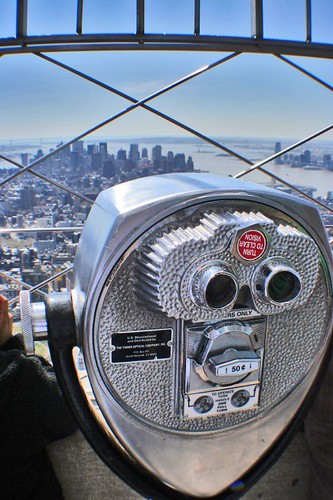
It struck me the other day, while reading one of Springwise's increasingly frequent posts on the mass customization of travel, that the types of travel apps and sites being developed right now to personalize the urban travel experience could have a profound impact not just on how we visit cities, but on how cities themselves function, as well.

Urban travel has long been a two-sided coin, with time in a new city being divided (in different ratios, depending on the tourist) between the standard landmarks like the Empire State Building or the Forbidden City, and the day-to-day urban world that exists on the edges of guidebooks; think of Brooklyn back in the 1990s, or Beijing's fast-evaporating hutongs today -- places to which people are drawn to observe a quotidian rhythm different from their own: to experience the spectacle of the extraordinary-ordinary.

The Postcard City and the Real City are invariably pitted against each other in a battle for the urban tourist's limited time. But as cities grow bigger and bolder on our increasingly urban planet, it seems fair to assume that greater and greater numbers of tourists will make their way down the streets of cities that they do not call home; as such, the traditional landmarks and attractions will become more and more crowded, making the prospect of tooling around lesser-seen corners of the metropolis an increasingly attractive option for visitors.

The aforementioned trend blog has spotted some real doozies lately: a site that allows you to navigate cities by mood (Could Yelp-like testimonials about certain blocks, streets, parks, or even whole neighborhoods define or even change the mood of a given place?); another that uses personal data to create personalized guidebooks (Would the diversity of interests force travel publishers to re-think the meaning of the term "attraction?" I.E. cyclists' internationally competitive quests to speed up the steepest slopes could reboot the way a whole subculture navigates hilly cities like San Francisco, Pittsburgh, Guilin, and Lisbon); and another that helps you track down a hot scene at the last minute with crowdsourced GPS data (Anybody up for an impromptu, flashmob-style block party?)

By making wandering off the beaten path more enticing, the customization of the urban tourism experience has the potential to distribute visitors more evenly around the city than old-school printed-paper guides, with their restricted map insets and hyper-selective restaurant listings. But does this dispersal of small-time explorers legitimize or cheapen the Real City? It seems to echo ongoing arguments about gentrification; after all, while the presence of individual tourists at specific sites is fleeting, their combined influence can be very powerful over time. And, while the carving of initials into a famous landmark is a time-honored tradition (as old as the very idea of landmarks), tourists will soon be able to carve their very presence into a city in the unpredictable paths that they cut through it, shifting not only the way that other visitors, but the very citizens of the city in question, navigate and experience a place.

(Image from Flickr user LondonSLR. The original full-sized versions can be viewed by clicking the photo.)

12.02.2008

Time to Reassess the Boxscape

Home in suburban Milwaukee for the Thanksgiving holiday this past weekend, I was finally dragged, kicking and screaming, into my very first Super Wal-Mart. From an urbanist's perspective, it was horrifying; one massive indoor space with a seemingly endless procession of aisles filled with every piece of crap you could imagine, stretching off to -- literally, it seemed -- the horizon. Indoors. It was the diametric opposite of "finely-grained." But the experience got me on the newly-minted bandwagon of architects and planners wondering aloud about how big-box and chain retail might be better integrated as metro areas shift and change over the coming decades. Redemption is not impossible for such places.

Last month, Wendy Waters wrote about new research from the University of Alberta that suggests that the presence of large, indiscriminate retailers like Wal-Mart can actually improve independent retail in the area by forcing owners to re-strategize and become more specialized in what they offer consumers. This makes plenty of sense: business owners that do nothing in the face of increased competition are hardly the kind of flexible, dynamic people that add to a local economy; nor are their businesses likely to be the ones that add to local character, which is often one of the most loudly mourned of the assumed casualties when big boxes come to town.

Wonkser (and long-time Where blog crush) Ryan Avent made another recent argument in defense of chain retail, suggesting that it strengthens urban economies and brushing off the argument that chains kill local retail:

Should we be upset when new chains move in? No, not really. There are reasons that chains do well nationally, namely, convenience and price. We should hold chains to high design standards, but there’s no reason to deny local residents access to chain retail. I have seen folks argue that chains are bad because they take profits elsewhere, but this is essentially an autarkic argument–that we’d be better off doing everything for ourselves. Obviously, that’s not the case. Successful businesses provide value for consumers, and preventing those businesses from operating here would deny consumers that value. Sometimes scale economies are important, such that national chains can deliver sharply lower prices. This is good for local consumers, who should be free to decide when they want to spend their money on independent retail and when they just want the best deal available. Moreover, many District [of Columbia] firms benefits from national and international business. A local only model leaves everyone poorer...

...It’s important to remember that chains can complement indie business. Some folks want to spend their money at an indie home furnishings store and save money by shopping at Giant. Others want to save money on their furniture by shopping at Target, and go all out at a local organic grocer. It takes all kinds.

Avent also makes the case in his post for the densification of areas looking to increase commercial vibrancy. In urban areas, where parking is scarce, businesses must draw on the local population for revenue; thus, independent retail flourishes in densely populated areas; the residential use must come first. It follows, then, that anyone looking to increase the diversity of businesses in an area currently starved for independent, specialized retailers should focus on increasing residential diversity. Re-thinking big box stores like Super Wal-Mart will require a residential component of some sort. We've been seeing this type of thinking slowly take shape as malls have begun incorporating condos over the past decade or so; more recently, strip malls have started looking at residential retrofits as a solution to waning consumer interest.

I can't help but wonder what it might be like to live in, around, or on top of a reclaimed Wal-Mart. The idea that the suburbs of today will look vastly different a few decades from now is an enticing one, but it's still difficult to imagine what, exactly, they might look like. Hopefully, as urbanists, we can learn to stop avoiding these stores entirely (I know I'm not the only one who does it) and start thinking more constructively about their future uses. The sooner the better, it would seem.

(Photos from Flickr user austrini, and from bustler.net. The original full-sized versions can be viewed by clicking the photo.)

11.18.2008

O'Reilly Talks San Francisco Values


I haven't been to San Francisco yet myself, and I have heard tell of their massive homeless population, but this all seems a bit...skewed. Especially considering the source. It's an interesting piece of propaganda, though, and it speaks volumes about the far right's conception of cities. What I find most interesting is the attempt to paint New York as tame and orderly in opposition to San Fran's off-the-wall liberal madness. Seems to say more about New York than it actually does about San Francisco.

Thoughts?

11.17.2008

The Next, Next Street Art

Street With A View is a performance/digital art hybrid (I know! So rad!) coordinated by a small team of artists, residents of Pittsburgh's North Side, and Google. The artists thought up the idea to create vignettes in the city's streets that would be coordinated with when Google's Street View camera car would drive down those same streets. They tapped local residents to act out a series of scenes, coordinated with the Googleheads, and the rest is history.

SWAV's staged "interventions," as the team refers to them, point out an interesting possibility for street art. Referring to an earlier post on the subject, tech like RFID chips and barcodes will make digital graffiti a more ready possibility in the future. SWAV highlights one of the many ways that this type of art could be achieved: take a 360˚ photo (of which there are plenty freely available through Street View for an enterprising hacker), doctor it, and attach it to an RFID chip installed inconspicuously nearby. Set it up with an automatic trigger, and any passersby with an iPhone or a Blackberry will be treated to an alternate reality version of the place that they're walking through.

Aside from the potential for humor, there is political potential here as well. Think of preservationists looking to impress upon people the importance of preventing the destruction of historic structures; take the current, well-publicized battle over St. Vincent's in Manhattan, for example. A skilled digital artist with a penchant for quirky 1960s-vintage low-rises could create a digital, 360˚ recreation of the intersection of 7th Ave and 12th Street in which to-scale renderings of the 300 and 233 foot towers planned by the adjacent hospital replaced the distinctive O’Toole Medical Services Building. Passersby could get a better sense of the scale and blandness of the new development than they ever could from a wallet-sized picture in the Times.

Inverting the perspective, SWAV says some interesting things about Google's Street View feature as well. When examining the interventions on the Google Maps website, try to imagine what a normal user, unaware of the SWAV project, might think when encountering the digital parade. At the same time that it makes Google Street View more fantastical, SWAV also makes it, in a way, seem a bit more real. Certainly moreso in examples like the moving truck or the garage band practice. Add to that the impromptu "meta-interventions" staged by locals unaware of the project until it was happening, and the lines between reality and digital representation get delightfully blurry.

To ponder: If people become more aware of the Google Street View camera car and scenes like those staged by SWAV become more common (which seems very plausible, I think), what role does the Street View feature take on? Its parallel reality becomes heightened; humor and politics are woven into the scenery, and become as valid as the built environment that the feature was intended to represent. In addition, what does a more theatrical representation on the web mean for the real place being represented? If one were to walk down Sampsonia Way in Pittsburgh -- a charmingly "Pittsburgh" kind of street -- would it seem boring? Less authentic or interesting than its Street Views counterpart? Does the digital city draw from the real city, or add to it?


(Photo from Street With a View. The original full-sized color version can be viewed by clicking the photo.)

2.22.2008

WEEKEND READING: February 16-22, 2008

You know how once a month or so Weekend Reading starts off with me getting all excited and writing something along the lines of "OMG you guys this week is SO GR8!! Read all of these they are AMAZIN! FURRILZ!"? Well, this is one of those weeks.

Read all of these. They are amazing. For reals.

ITEM ONE: Tijuana's enterprising spirit influences the design of a new affordable housing project in Hudson, NY.

ITEM TWO: Airoots features another great post about resistance to the Dharavi Redevelopmet Project in Mumbai, this time focusing on the efforts of the fiercely independent neighborhood of Koliwada.

ITEM THREE: Hayley Richardson on the obnoxious futility of twenty- and thirtysomethings bemoaning the loss of "authentic New York," a place that most of them never really knew in the first place.

ITEM FOUR: All About Cities pulls some great Lewis Mumford quotes, including the following gem: "The chief function of the city is to convert power into form, energy into culture, dead matter into the living symbols of art, biological reproduction into social creativity."

ITEM FIVE: A spectacular and almost disturbingly detailed map of London, reimagined as an island. (Photo credit)

ITEM SIX: Part IV highlights some recent articles about the Untergunther, a subgroup within les UX, which is itself a group of people "who are on a mission to uncover and exploit the city’s neglected cultural underworld."

ITEM SEVEN: AdaptiveReuse.net is a blog about creative adaptive reuse projects around the world (natch).

See, what did I tell you? That's some good stuff right there. See you next week!

12.26.2007

The Suburbanization of Walt Disney World

"It was really nice. I loved being able to walk around to everything and not have to worry about traffic or parking. We could just leave the hotel and catch a bus and ride it right to the parks, and then if we wanted to go somewhere else we could take the monorail. Everything was just really easy to get to."

That is an (imperfectly reproduced) comment from my mom during a conversation we had about y family's recent trip to Walt Disney World in Orlando, Florida. I've been home for the holidays, and it was the first chance I'd had to really hear about their trip. It's certainly not the first time they've been to WDW -- in fact, it was their fourth (I was along for the first two trips, for the record). But this time -- and I have a feeling that blogging over this past year had something to do with this -- I found renewed interest in hearing about the same parks I'd visited and heard described so many times before.

What struck me, as you may have already guessed, was how very...urban WDW sounded in her description. For those who aren't familiar with the resort, the Disney corporation's largest theme park is located on a sprawling megalot southwest of Orlando. Four theme parks, three water parks, a huge shopping center, golf courses, a sports complex, and an obscene number of hotels are sprinkled around this huge land reserve, with everything of interest to tourists being conveniently connected to public transit. Well, "public" for paying resort guests.

WDW is often considered a poster child for the kind of dull, controlled, paternalistic environments that urbanists rail against. The word "Disneyfication" refers to a renovation which scrubs up and de-authenticates an existing place. Disney is soulless, and its theme parks are the most blatant manifestation of this. There is a megalomaniacal insistence -- nearly palpable when you're visiting the parks -- that your every move is being anticipated and manipulated.

Still, there are some interesting parallels between these theme parks and the urban environment. The walkability and transit connectivity certainly mimic the benefits of urban areas. There is also a diversity of experience that is often lacking in suburban places. As mentioned above, Disney is extremely careful to make sure that you only see and hear what they want you to see and hear in their parks, but that is not to say that there aren't variables in what you decide to do and see. In a way, this is true of all cities. Cities offer a wider range of experiences than a theme park, but there is always a limit on what you can see and do, whether they are legal, physical or otherwise. You can't climb a mountain in Chicago; the city is as flat as paper.

It was interesting, then, to hear that Disney had implemented yet another constraint on guests' experiential variety and the experience of some very loyal guests -- the 'rents, again -- had been less satisfied with their overall experience. While they still had a great time, the resort's new pre-paid meal plan system was apparently taking some of the excitement out of this already super-controlled environment. Mom again:

"With the meal plan, you have to reserve your spot in a lot of restaurants, especially for dinner. We saw a lot of people getting turned away from restaurants because they were booked up months in advance. It used to be fun, when we'd go, to be able to just walk around and enjoy the park and, if we found a place that looked interesting, just eat there. Now, you have to book your meals 180 days in advance, which isn't as exciting."

In an effort to make things easier for guests, Disney has actually made their parks a little less pleasant. Especially with a theme park, controlling a guest's experience of a place -- through as many of the five senses as possible -- is important to creating a memorable themed experience. But if there is too much effort on the part of the party controlling that experience, it can actually be detrimental to the guest's overall impression. It's a delicate balance that urban designers and planners could likely learn from. For certainly, the same thing must apply to cities. So how much of a city should be controlled (through zoning, height restrictions, traffic controls, and other legislation) and how much should be left up to residents to shape? Cities are a much more participatory place than theme parks; this only makes this question of balance more important.

11.26.2007

Connectivity Wherewithal (Guest Post by Jim Russell)


Where is Pittsburgh? Capturing the essence of a place is not easy. Manufacturing a place may be impossible. But the location of a place is relatively straightforward, yes? I'm here to tell you that where Pittsburgh is might surprise you.

Where is Real Pittsburgh? Answering that question will bring out the connoisseurs of place as well as Pittsburgh aficionados. I suspect most of those experts would dig up an authentic Pittsburgh rooted in nostalgia and steeped in local lore, "You know you are in Pittsburgh when..."

I'm skeptical of place mythology. When I lived in Vermont, a friend visiting asked to see the "true" part of the state, not the countryside overrun with New York City refugees seeking utopia. I brought him to a trailer park in Bolton and told him that the state tree should be the satellite dish, not the sugar maple. My decidedly unromantic view of Vermont did not sit well with my visitor.

If you want to see where a place in the United States is today, then eat at a national chain restaurant at an interstate interchange in some suburb of the central city. Multinational corporations would love to homogenize your experience, but they will ultimately fail. A local McDonalds is as good an indicator as any as to where you are.

However, McDonalds is globally a place unto itself. There is an identifiable McDonalds experience and a strong sense of place, regardless of context. The places that exist in more than one location serve as my muse for the Burgh Diaspora blog. My posts are about Pittsburghs (and other "places"), wherever they may be.

The geography that gets me up in the morning is the landscape between places, how connected locations form a unique experience that has all the characteristics of place. I have argued that Authentic Pittsburgh is found in the parking lot tailgate of a Steelers away game or at a Steelers bar in a city far from Heinz Field. In these places, Pittsburgh is preserved.

Globalization, often mischaracterized as the destruction of geography, redefines a place in terms of connectivity. You can map these relationships and easily comprehend how each city has its own profile. A city's global network is how I would define a place and the essence of Pittsburgh is found in the locations of the region's expatriates.

------------------


Big thanks to today's guest blogger, Jim Russell, the blogger behind The Burgh Diaspora. Check out Jim's blog for a more in depth exploration of the process of "realizing a new geographic understanding of Pittsburgh."

10.11.2007

Public and Private Spaces

While they are best known for Park(ing), San Francisco group Rebar recently completed another interesting project called COMMONspace in which they visited POPOS (short for Privately-Owned Public Open Spaces) around San Francisco and staged some bizarre stunts in order to highlight the fact that these places were, despite common perception, open for public use, whatever the public determined that to be (within the law). Their self-described objective was to ask of these public places, "How public?"

From a recent article on the project in The Next American City: "'We partnered up with [performance and activist group Snap Out Of It] and said, 'Let’s just get in there and energize these spaces,' which appeared to us to be underused by the public and constrained by the psychogeography of downtown,' says [Rebar member] Blaine Merker -- in other words, the very fact that these spaces are located in the business district gives the public the idea that access and certain behaviors are prohibited."

Security guards, surveillance cameras, and the business attire of the crowds of office workers in San Francisco's financial district had all created the illusion of exclusivity in these decidedly un-exclusive places. POPOS were the result, after all, of a law that aimed take advantage of new commercial construction by requiring developers to include public areas for the enjoyment of all San Franciscans. But citizens were not enjoying these spaces because the physical environment, while perhaps attractive, was hardly welcoming in the way that a park or plaza might be.

I have to wonder, reading this, what effect corporate advertising has on public spaces. This is largely due to a recent post at Spacing Wire that pointed out the absurdity of Canadian communication megacorp Rogers spraypainting advertisements for Myspace Mobile onto sidewalks in public parks.

"Big businesses like Rogers (and the ad company responsible for implementing the campaign) should act like responsible corporate citizens. Sadly, these companies take advantage of [the City of Toronto's] over-stretched staff. They are fully aware that City will not invest the time or energy to prosecute them. But when teenagers get caught with a spray-paint can in hand, they’re arrested and eventually ordered to take part in community services."

The Spacing team also pointed out that this was the same park where Audi placed advertisements thinly veiled as sculptures earlier this year. Rogers and Audi are certainly not alone when it comes to corporations willing to bend the rules in public places in order to create "authentic" or edgy advertisements for their products. (While I can't comment on their legality, I have seen multiple "graffiti ads" around Chicago for various companies). But what do these infringements say about the role of corporations in the public realm?

Whether they are spraypainted on random surfaces or screwed onto fake art, logos undoubtedly have some effect on the psychogeography of a place that is supposed to be the unfettered domain of the common citizen. In the same way that cameras and guards create a "you are being monitored" feel in POPOS, logos and advertisements that encroach on public places seem to say "you are still on our turf." When private corporations take over public spaces and undermine the legal entities that care for those spaces, they claim the public for the private. These seemingly harmless infringements say some disturbing things between the lines.

I'm not trying to sound paranoid, and I am aware that this is a small problem at present. But it is certainly something worth keeping an eye on. After all, when private entities claim psychological domain over public spaces, we start down a slippery slope.


Links:
Challenging the Commons (The Next American City)

Rogers thinks the sidewalk is my space (Spacing Wire) (Photo credit)

6.07.2007

(Still) Made Here: Story and Status


While yesterday's post examined the (Still) Made Here trend from the Eco and Ethics angle, today's looks at another subtrend that Trendwatcher.com's editors call Story and Status. In their words: "An obvious example of the link between locality and story/status is the perception of location-specific quality."


Location-specific quality is hardly a new concept in urbanism. However, it is most commonly used to attract tourists. Think about the French Quarter with its penchant for decadence, or Temple Bar's hybrid cultural/drinking scene, or Ginza with its blinking, frenzied energy. The previous references are to New Orleans, Dublin, and Tokyo, respectively, though the fact that you most likely didn't need clarification there speaks to the success of these places in positioning themselves as authentic and unique. But places like these can sell their story with minimal effort; they are veritable monoliths. Perhaps they just got lucky, but that's neither here nor there. What other neighborhoods must figure out is, "how can what is already here or has been here in the past help this place to become better in the future?"

In TW's report, the first part of Story and Status is titled "Inspiring global production trends: quality made here." The case studies include high (percieved) quality goods made by companies such as Ermenegildo Zegna and Rolex. These companies operate smaller factories or workshops, overcoming the challenge of higher production costs for skilled labor and materials by charging much higher prices than the competition for their product because they have earned a reputation for quality. So if we set up an analogy where neighborhoods are the factories and workshops, and a distinct "sense of place" is the product (I admit this is a cynical way to view communities, but bear with me), then the high production costs are the ills associated with aging architecture and infrastructure.

City neighborhoods are already status symbols in most places. If you live in Los Angeles, for example, you can identify yourself as being from The Valley, Hollywood, or Watts and get completely different reactions. By associating ourselves with a certain place, we are associating ourselves with the cultural story that has been created about that place, and that cultural story is the quality that will allow a place to overcome its challenges. To increase investment in a community, neighborhoods can focus on the most exceptional aspects of their local culture (which can be just about anything) in order to craft a favorable cultural story. And in a society where "individuality is the new religion" (credit TW) it seems that marketing a neighborhood's most unconventional aspects would be the best way to go about promoting it.

Here, though, we come to the problem of gentrification and one of its most infamous side-effects: culture drain. When neighborhoods become popular for their distinct local culture, the fear is always that scads of yuppies, hipsters, and other fad-crazed demographic groups will invade, price out current residents, install a Starbucks and a Gap, and erase the culture that made the neighborhood popular in the first place. It's Chinatown as "CHINATOWN". Also: it's gross. Also also: it has happened far too many times already.

The second part of Story and Status is "Purchasing ingredients for a story." And this, I'm afraid, is where I'm at a loss for compairisons. City neighborhoods cannot go out and purchase a unique history (though they can work toward creating one in the future by fostering progressive and creative communities. Keep Austin Weird would be one famous example of this sort of long-term planning.) Instead, cities must do what is commonly referred to as Asset-based Planning, taking, as suggested above, existing assets and positioning them as engines for neighborhood revitalization.

The "Purchasing ingredients" section does provide this interesting quote: "[We've] seen a rising interest in the truly different, the obscure, the undiscovered and the authentic. These new status symbols thrive on not being well known or easily spotted. They don't tell a story themselves, but require their owners to recount the story." So unconventional neighborhood features, then, can be used to either puff up a place's civic reputation or can be kept vague and slightly mysterious in order to give residents a sort of edge. (This would certainly explain all of that whining New Yorkers do about how they miss the good old days, when getting mugged was part of the daily routine.) Or whole neighborhoods could, themselves, be the quietly tucked-away spots that provide residents with secret satisfaction (though I'm not sure how you'd pull that off.) Either way, this concept seems to provide a way for neighborhoods to sidestep the culture drain process while still improving their local communities. As for how that would all play out, well...

Again, I ask: any ideas?

(Photo from Flickr user Anole.)


Links:
(Still) Made Here (Trendwatching.com)

Keep Austin Weird

Evaluating neighborhoods in terms of assets of all kinds (Rebuilding Place...)

Part I: Eco and Ethics

Part III: Support

6.06.2007

(Still) Made Here: Eco and Ethics


More and more of the world's consumers are moving to cities in what is now being called -- by everyone including your grandma -- the "Urban Age," concentrating buying power at an unprecedented scale. As this process takes place, one of the great challenges that central cities face is how to market themselves. Die-hard urbanites and suburbanites aside, what can make the difference between city and suburb for many consumers looking to rent or buy a home in hyper-mobile metropolitan regions is the perceived "authenticity" of a neighborhood. This term means different things to different people, but in this case it usually refers to a high level of historic building stock, independent business, quality public space -- factors that create that ephemeral phenomenon we call "a sense of place."

Over at Trendwatching.com, the new buzz phrase for June is "(Still) Made Here." This most recent report (from one of the coolest sites on the web) describes "the comeback of all things local, all things with a sense of place, and how they're surfacing in a world dominated by globalization." The editors of Trendwatching (TW) break this economic phenomemon down into three parts; this week, I'll take a look at how each of these applies to city neighborhoods and the cultivation of authenticity.

The first of (Still) Made Here's subtrends is Eco and Ethics. The report cautions entrepreneurs to "expect consumers' desire to find out about the origins of a product to become a given." While TW's examples deal mainly with small-scale products -- especially food and clothing -- the concept can be used to market places as well. Life-story labels are the most visible manifestation of this movement, as they provide consumers with the backstory of how and where a product was produced, and how it got to the point of sale. In neighborhoods, then, the question becomes: how do we tell the story of a place in a highly visible and easily accessible way?

Many cities have already begun the process of branding their neighborhoods. Streetlight banners (like the one pictured above) have practically become a requirement for revitalization efforts. Some neighborhoods even have slick websites put together by merchants' groups or neighborhood associations. Neighborhoods in cities all over the world have succeeded in building reputations as attractive, livable places; but, when renewal and growth are based purely on economics, neighborhoods are highly succeptible to fads and changes in public opinion. Life-story lableling for places, then, is one way to increase brand longevity. This type of marketing maneuver could be achieved in a number of ways, from websites to community bulletin boards and everywhere in between. The most important part of the process, though, is to organize and present the neighborhood's history in a way that distinguishes the place as authentic and unique.

I have read, in the past, about suburban "town centers" (that even ickier name for lifestyle center malls) that fabricate entire backstories to create a sense of history (or, depending on your perspective, to justify historicist architecture.) Urban neighborhoods have a leg up on these places in that history is often a major factor in determining the authenticity of a place, and many cities are already bursting with it. This leads us to the concept of what TW calls "taking back production." Cities are incredibly vital, living things. They are constantly changing, so the marketing of a specific neighborhood must be a careful balancing act, promoting the history of a place while allowing the community that inhabits it to continue evolving in a way that encourages that urban dynamism. The only people that can properly brand and market a neighborhood, then, are the people who live there.

Neighborhood promotion has the potential to become a major asset-building operation as a way of bringing new people and investment to a place. More importantly, it has the ability to greatly increase community cohesion and cooperation at the same time (which, in an upward cycle, could also become part of the draw of the neighborhood.) Not only would the process of organizing a neighborhood history require neighbors to get together to share stories and skills, it would also get people thinking about the place that they live in different ways. It would put the public realm into very sharp perspective and, hopefully, draw communities together with the common goal of making their neighborhoods healthier, happier, more livable places to...well...live.

So how can all of this be achieved, in a practical sense? Even if a neighborhood's history and community are eloquently and concisely presented on a website, how does this translate to the physical landscape? Markers for local landmarks? Posters on lightpoles? Sidewalk chalking? These all seem like tired ideas, I know. What are some more innovative ways that a neighborhood could get the word out? I know this blog's readership is still small, but speak up! What are your ideas?

(Photo from Flickr user ashleyniblock.)


Links:
(Still) Made Here (Trendwatching.com)

Part II: Story and Status

Part III: Support