Showing posts with label surveillance. Show all posts

12.08.2008

The Paradox of the False Positive

An excerpt from Cory Doctorow's latest book, Little Brother:

If you ever decide to do something as stupid as build an automatic terrorism detector, here's a math lesson you need to learn first. It's called "the paradox of the false positive," and it's a doozy.

Say you have a new disease, called Super-AIDS. Only one in a million people gets Super-AIDS. You develop a test for Super-AIDS that's 99 percent accurate. I mean, 99 percent of the time, it gives the correct result -- true if the subject is infected, and false if the subject is healthy. You give the test to a million people.

One in a million people have Super-AIDS. One in a hundred people that you test will generate a "false positive" -- the test will say he has Super-AIDS even though he doesn't. That's what "99 percent accurate" means: one percent wrong.

What's one percent of one million?

1,000,000/100 = 10,000

One in a million people has Super-AIDS. If you test a million random people, you'll probably only find one case of real Super-AIDS. But your test won't identify *one* person as having Super-AIDS. It will identify *10,000* people as having it.

Your 99 percent accurate test will perform with 99.99 percent *inaccuracy*.

That's the paradox of the false positive. When you try to find something really rare, your test's accuracy has to match the rarity of the thing you're looking for. If you're trying to point at a single pixel on your screen, a sharp pencil is a good pointer: the pencil-tip is a lot smaller (more accurate) than the pixels. But a pencil-tip is no good at pointing at a single *atom* in your screen. For that, you need a pointer -- a test -- that's one atom wide or less at the tip.

This is the paradox of the false positive, and here's how it applies to terrorism:

Terrorists are really rare. In a city of twenty million like New York, there might be one or two terrorists. Maybe ten of them at the outside. 10/20,000,000 = 0.00005 percent. One twenty-thousandth of a percent.

That's pretty rare all right. Now, say you've got some software that can sift through all the bank-records, or toll-pass records, or public transit records, or phone-call records in the city and catch terrorists 99 percent of the time.

In a pool of twenty million people, a 99 percent accurate test will identify two hundred thousand people as being terrorists. But only ten of them are terrorists. To catch ten bad guys, you have to haul in and investigate two hundred thousand innocent people.

Guess what? Terrorism tests aren't anywhere *close* to 99 percent accurate. More like 60 percent accurate. Even 40 percent accurate, sometimes.

What this all meant was that the Department of Homeland Security had set itself up to fail badly. They were trying to spot incredibly rare events -- a person is a terrorist -- with inaccurate systems
.

DHS, in Doctorow's skillfully-written book (full disclosre: I'm a long-time fan) has taken over San Francisco after a pretty horrific terrorist attack, and implemented a security net so obnoxious that everyone is a suspect, turning the "innocent until proven guilty" maxim fundamental to the US justice system on its ear in the name of "protecting" the very citizens it interrogates on every corner.

As if we needed a reminder, the recent Mumbai attacks have thrust the extraordinarily rare specter of the large-scale, well-coordinated urban terror strike back into the public spotlight. Doctorow's greatest strength has always been his ability to make the future feel incredibly near; it is not even remotely difficult to imagine a scenario like the one described in LIttle Brother playing out were another major attack to strike a US city. Almost as frightening than the idea of an actual attack (or more frightening, depending on who you talk to) is the idea of what might come after. Imagine a massive citizen-tracking web, to put London's CCTV to shame, layered on top of the already overanxious contemporary cityscape, and consider the paradox of the false positive. Not pretty.

Little Brother is available for free download under Creative Commons licence right here.

3.21.2008

Happy Whereday!

Well la-de-da. Exactly one year ago today, Where's first post went up. The site looked a lot different...no logo, basic Blogger format, very...yellow (not sure what I was thinking, there). And here we are, 365 days later, with the 250th post. Plus, since four regular weeks = one full year in blog-years, that makes today Where's 13th anniversary! Hip hip hoo-ray, and all that jazz.

For a bit of self-indulgent celebration, I've put together a list of the Top Ten posts (and series) over the past year. Each header links to the original post. The date of publication follows a brief sample quote, and the posts are listed in chronological order. Without further ado...

Open Spaces, Non-Places
"People have idealized 'open' space when what they should really be focusing on is 'quality' space...[And when] the distinction between 'open' and 'quality' public space is ignored, it allows not only for the types of ridiculous arguments used by the 'concerned neighbors' mentioned above, but on a more subversive level it devalues public space in general." (4/10/07)

Community 2.0 and the Built Environment
"Just as each technological revolution has had to prove its mettle over time, so has the internet; at first, there was a great deal of fear surrounding the dot com revolution...Physical communities, we feared, would become a thing of the past. But now, it seems, we have reached the critical point at which people trust the web -- trust it enough to really take control of it." (5/13-18/07; weeklong series)

Speeding Succession
"Why not help along the process of ecological succession? As urban areas around the world begin to reimagine and reconfigure themselves as more localized, sustainable places, people stranded by a fuel crash or a series of eco-disasters could get work replacing suburban communities with trees. For every house torn down and mulched, ten trees could be planted." (5/29/07)

A True Alternative
"Of late, we have been plagued in our building and planning practices by an intense mediocrity, a society-wide indeciciveness. What we want, of course, is the best of both worlds: the convenience, community, and culture of the city, and the peace, privacy, and pastoral scenery of the small rural town. What we've wound up with is suburbia: the best of nothing." (6/21/07)

The Dawn of Digital Urbanism
"'Who will watch the watchers?' This, I think, will be the most fundamental challenge of Cyberspace: in a universally connected world, the unwatched watcher has more power than ever, as they will have unprecedented access to the masses." (6/28/07)
(Also: from the response post a few days later, Everyone is Watching You: "To paraphrase that famous line: when everyone is a watcher, who's watching the watchers? Everyone.")

Resident Experience Master Planning
"New advances in crowd simulation technology are making Resident Experience Master Planning more and more possible and, with the economic potential of such a development so high, indeed more probable...If urban planning could figure out exactly how to get people to do specific things or behave in specific ways, it would give new and rather intense meaning to the term 'master planning.'" (7/13/07)

Eat Your City
"Urban farms could become for the 21st Century what large, elaborate central parks were in the late 19th and early 20th. Frederick Law Olmsted famously described Central Park in Manhattan as the lungs of the city, but with new green technologies these farms could become more than lungs -- they could be the heart and brain of the city as well." (7/25/07)

The Possibilities of the Post-Retail City
"It's interesting to imagine a world in which shopping took a back seat to other social spaces as the dominant street presence...To get an idea of what might fill the void [left by retail], it might be interesting to see how social space is structured in places where gift economies (or at least barter systems) often already exist and retail strips are few and far between, at least in the traditional sense: slums." (8/13/07)

World Urbanism Day
"[Presented here] is a simple visualization of the landscapes of twelve major coastal cities around the world in three imagined futures: red overlays represent areas that will be submerged after a 50 foot (15.2 m) sea level rise; orange overlays represent areas submerged after a 150 foot (45.7 m) rise; and yellow overlays represent areas submerged after a full 250 foot (76.2 m) rise. The colors represent the fire-like spread of the ocean inland." (11/8/07)

Living in SimCity
"In an existing version of SimCity, a player could cover an empty triangular plot with parks and watch the land value of surrounding blocks rise. Imagine a SimCity that allowed users to completely re-design the Polish Triangle so that any player walking through the area could access this visionary public space and interact with it." (2/13/08)


Have a wonderful weekend. Thanks for a great first year!

3.18.2008

It Takes a Video Game to Save a Village

Most cities have a love-hate relationship with tourists -- civic officials love them, and residents hate them. Tourism generates billions of dollars in revenue for cities across the globe each year. The number of traffic accidents caused by tourists not watching where they're walking? So far, no reliable estimates have been made.

Still, tourism is a vital part of any urban economy. Even moreso, it can be a powerful factor for a neighborhood that is trying to lift itself up. Tourism As Economic Strategy is a well-worn path. But with all of the emerging technologies related to the web and wireless communication, it seems like the old urban tourism formula (cleaned up historic buildings + quirky neighborhood attraction + Starbucks and/or Cold Stone Creamery and corresponding independent cafe/gelato bar = success!) is due for an overhaul.

Let's start by thinking small, with the traditional Japanese village. Japan's demographic woes have been well-reported over the past few years; indeed, as young residents of this highly urbanized island nation put off having families and move to the cities in droves to pursue fast-paced careers, the raw population number isn't the only thing being affected. Culturally, Japan is seeing the evaporation of its small villages, and the slow death of ancient rural and cultural traditions.

Enter: mixed-reality gaming. An explanation, c/o Very Spatial: "One of the areas of convergence for location-based applications and gaming is the idea of mixed reality, where places in the game correspond to real-world locations, and actions in one lead to events or consequences in the other." A recent Nintendo DS game, Treasure Quest: Enoshima, follows this very blueprint, using a small island north of -- surprise! -- Tokyo as the setting for a handheld video game. Players have to visit and explore the actual island to play the game. The DS unit acts as the mixer, blending the fictional and real worlds, literally with the push of a button.

The problem with Treasure Quest, though, is that it's over. The software could be downloaded off of the internet, and the game only ran until February 19th. Makes sense, considering that Nintendo doesn't own the island, and thus can't stake any real claim to it. But what if they could? What if, as a way to draw in tourists, a rural village somewhere in Japan agreed to sell off a large number of its abandoned buildings to Nintendo in an agreement to become the permanent setting for a mixed-reality video game?

It sounds crass at first, but with the right amount of finesse, it just might be a win-win economic development strategy. For instance, to prepare the town for guests (players), Nintendo would agree to upgrade local utilities. It would also take on the responsibility for upkeep of public areas. Streetscaping, garbage collection, and parks maintenance would be taken care of by the entertainment giant. Villagers would enjoy a higher quality of life at a lower rate of taxation (though I'm assuming the American system there since I know very little about the governance of rural Japanese villages). In return, residents would agree to coexist peacefully with players. A particularly savvy game designer would craft the game as a cultural experience, creating some sort of mystery or adventure plot that made use of the area's native traditions.

The argument could be made that Nintendo (or whatever company helmed the project) was being given too much power over a municipal entity; it could also be said that cultural traditions were being bastardized and pillaged in the name of commerce and fleeting entertainment. But when the options for the village are Sink or Swim, the picture becomes less black and white. After all, don't most -- if not all -- preservation efforts (architectural or cultural), on some level, tokenize the very things that they aim to preserve?

So assume that Nintendo creates a mixed-reality game around a rural Japanese town, and it becomes a wild success. Players start booking rooms at a nearby hotel months in advance for their chance to play. The villagers find new opportunities to pass along their cultural history and traditions. Nintendo makes a buttload of cash. Everyone's happy. A small town in rural Portugal hears of the success and decides to give it a try. Sony's European headquarters gets a call from the mayor...

Ten years later, mixed-reality gaming has become an economic silver bullet. Hundreds of villages in countries around the world have mixed their realities with fantastical virtual counterparts. The trend goes big-time when the city of Detroit sells a square mile of its infamous "urban prairie" to the Walt Disney Co., which painstakingly re-creates the neighborhood circa 1930 to stage a depression-era mob mixed-reality urban epic. The arts & crafts bungalows are the hotel. Visitors live in the game. A month later, Blizzard Entertainment announces a joint deal with CCTV and the city of Shanghai to buy up hundreds of defunct surveillance cameras and create the world's largest multi-player mixed-reality on-and-offline mega-game. The setting? Pudong.

Of course, it must be asked: when is the reality in question no longer considered to be mixed? When does "mixed" become simply "augmented?"

(Photo from Flickr user Mathias M. The original full-color version can be viewed by clicking the photo.)


Links:
Mixed Reality Gaming In Japan (Very Spatial)

3.17.2008

Exploring the City of Tomorrow

A hypothetical Aura Map of Istanbul's Golden Horn.
Google Transit wants your city to get on their bus. At the American Public Transportation Association's recent TransITech conference the web giant's mass trans-tracking maps app (say that five times fast) challenged every transit agency in attendance to upload their schedules and information to the site by Earth Day of 2008. If Google's effort at TransITech is successful, live, up-to-date GPS-powered transit tracking for every major city in the country (and beyond) could be a reality much sooner than one might imagine.

It's a bit freaky at first; there's a whiff of Big Brother, and a dash of 1984. But once the knee-jerk paranoia passes, the benefits begin to sink in. With live-feed transit information, Google Maps and Google Earth could eliminate the need for standing on a windy or snowy street corner for twenty minutes, waiting for a late bus. Outside it could be pouring rain, but you'd know exactly when to leave the house to catch your train. Even making connections could be more easily choreographed. Suddenly, one of mass transit's biggest drawbacks -- unreliability -- is eliminated. Overcrowding becomes less of a problem, and the whole system runs more smoothly. Everyone wins.

Online mapping technology has come a long way since the basic click-navigation maps of MapQuest hit the web back in the 1990s. Nowadays you can easily access street-level views, satellite images, and highly-detailed maps of buildings and amenities of dozens of cities. Certainly, this makes the prospect of taking an exploratory walk through a new part of town less daunting; you can preview your route, get a feel for landmarks, even decide where you want to stop for lunch. But there's still a dimension missing. Online maps are still very much stuck in the 3D-level, at least as far as the masses are concerned. We're still figuring out how to map the most important factor in cities: people. Not individuals (again with the creepy 1984ishness), but crowds, traffic patterns, and even emotions.

Think back, once again, to the SimCity game franchise. In later versions of the game, players could open up maps that charted everything from traffic to crime to the general happiness (aura) of the entire city. Live. Can you imagine the potential of people-mapping technology as a tool for planners and policy-makers?

A scenario: it's 8:00pm on a Friday in the year 2015, and you're looking for something to do. You grab your wi-fone and fire up the GoogleCity live maps app. There are three parties within a ten minute walk of your house being advertised on GoogleSocial (a convenient MeetUp/Bebo-powered mashup), a wifi-gallery showing one of your favorite artists from deviantArt four subway stops to the south, a restaurant opening on the corner where that hookah bar just closed last spring, and a band whose iSpace page you just subscribed to because you heard one of their songs on Pandora's new Loc:Audio channel. There's no excuse to be bored. And oh, look -- if you leave now, you can catch the next bus, but it'll be at least five minutes for a train. Perhaps tonight will be a concert night? The e-stars have aligned...

You're happy. You're entertained. You click a button on the screen that tells Google that someone on your block is in high spirits. The block's aura jumps up one point. At City Hall a few weeks later, the general happiness trend of your neighborhood is noticed to be on the rise. Civic officials study the area to learn why this spike in aura has been occurring, and use this people-powered live information to liven up some less brightly-colored spots on the map. Repeat this process with any resource, tangible or otherwise. The places that need something get it more quickly, and the decrease in wasted funds leaves more tax money to be distributed wherever it's most needed.

Now you, as a citizen, have every right to see this information if your elected officials are looking in. So the aura map overlay is available via GoogleSocial. You tap the screen, pull it up. There's a spike near your friend's apartment building downtown. What's the deal? Street fair. You are so there. You lift the phone to your ear, call the friend, and then check a transit map. You just missed the train, which means 10 minutes of waiting. But oh, there's a cab around the corner. You ping it with the push of a button, and you're on the road a few seconds later.

The next day, you're ready to go for a run. You check out air pollution and crowd overlays. The wind is blowing everything to the south today, so air quality will be best on the north side of town, which is good, because that's where you live. The big orange blob in the middle of the park closest to your house suggests some kind of festival is going on. Not wanting to deal with people-dodging, you check out the riverfront. Clear as crystal. And you're off!

The full potential of maps, in terms of improving the quality of life in cities, is just beginning to be realized. Soon, maps won't just tell you where movie theaters are; they'll tell you which ones are less likely to be crowded, dirty, or noisy. Get ready for the cartographolution.

Links:
Get Your City On Google Transit (WorldChanging)

How Google Earth Ate Our Town (Time)

3.07.2008

WEEKEND READING: March 1-7, 2008

Let's shake things up a bit this week. Instead of summaries of the seven Weekend Reading items, how about some teaser quotes?

ITEM ONE: "It's interesting to see the major changes in our urbanism - as well as to see the fact that the inherent nature of place is difficult if not impossible to erase."

ITEM TWO: "Now that the George W. Bush era is almost over, the world needs a place to archive the legacy of the 43rd president...If you felt your vote didn't count in 2000, it will certainly count here." (Photo credit)

ITEM THREE: "As February gives way to March, Brand Avenue begins its third year online! A few highlights and/or personal favorites from the last year."

ITEM FOUR: "The New City YMCA, where Jeremy played sports for free after school, has come down, and the basketball courts—the great equalizer, where rival factions of the Gangster Disciples would come together to play—have been replaced with a Blockbuster, two Starbucks and a grocery store that has its own sushi station. 'Those courts brought the community together,' says Jason. 'All of this thrown out for condos.'"

ITEM FIVE: "Eventscape's Kapsel is a multisensory functional space that can be set up anywhere in a busy office or elsewhere to create an oasis of relaxation and calm. Based on a lightweight tubular frame, the space can be skinned in any material, with no restrictions on size or form."

ITEM SIX: "Is there an architectural paranoia? And, if so, what would the treatment be – walking tours of all the unmarked buildings downtown? Nights spent alone with your psychoanalyst in empty suburban houses?"

ITEM SEVEN: "Active Social Plastic takes on cultural ephemera, turning its lens to architecture, urbanism, design, interaction, landscape, music and literature, among other leanings."

Have a great weekend!

10.11.2007

Public and Private Spaces

While they are best known for Park(ing), San Francisco group Rebar recently completed another interesting project called COMMONspace in which they visited POPOS (short for Privately-Owned Public Open Spaces) around San Francisco and staged some bizarre stunts in order to highlight the fact that these places were, despite common perception, open for public use, whatever the public determined that to be (within the law). Their self-described objective was to ask of these public places, "How public?"

From a recent article on the project in The Next American City: "'We partnered up with [performance and activist group Snap Out Of It] and said, 'Let’s just get in there and energize these spaces,' which appeared to us to be underused by the public and constrained by the psychogeography of downtown,' says [Rebar member] Blaine Merker -- in other words, the very fact that these spaces are located in the business district gives the public the idea that access and certain behaviors are prohibited."

Security guards, surveillance cameras, and the business attire of the crowds of office workers in San Francisco's financial district had all created the illusion of exclusivity in these decidedly un-exclusive places. POPOS were the result, after all, of a law that aimed take advantage of new commercial construction by requiring developers to include public areas for the enjoyment of all San Franciscans. But citizens were not enjoying these spaces because the physical environment, while perhaps attractive, was hardly welcoming in the way that a park or plaza might be.

I have to wonder, reading this, what effect corporate advertising has on public spaces. This is largely due to a recent post at Spacing Wire that pointed out the absurdity of Canadian communication megacorp Rogers spraypainting advertisements for Myspace Mobile onto sidewalks in public parks.

"Big businesses like Rogers (and the ad company responsible for implementing the campaign) should act like responsible corporate citizens. Sadly, these companies take advantage of [the City of Toronto's] over-stretched staff. They are fully aware that City will not invest the time or energy to prosecute them. But when teenagers get caught with a spray-paint can in hand, they’re arrested and eventually ordered to take part in community services."

The Spacing team also pointed out that this was the same park where Audi placed advertisements thinly veiled as sculptures earlier this year. Rogers and Audi are certainly not alone when it comes to corporations willing to bend the rules in public places in order to create "authentic" or edgy advertisements for their products. (While I can't comment on their legality, I have seen multiple "graffiti ads" around Chicago for various companies). But what do these infringements say about the role of corporations in the public realm?

Whether they are spraypainted on random surfaces or screwed onto fake art, logos undoubtedly have some effect on the psychogeography of a place that is supposed to be the unfettered domain of the common citizen. In the same way that cameras and guards create a "you are being monitored" feel in POPOS, logos and advertisements that encroach on public places seem to say "you are still on our turf." When private corporations take over public spaces and undermine the legal entities that care for those spaces, they claim the public for the private. These seemingly harmless infringements say some disturbing things between the lines.

I'm not trying to sound paranoid, and I am aware that this is a small problem at present. But it is certainly something worth keeping an eye on. After all, when private entities claim psychological domain over public spaces, we start down a slippery slope.


Links:
Challenging the Commons (The Next American City)

Rogers thinks the sidewalk is my space (Spacing Wire) (Photo credit)

10.10.2007

Guerilla Geography


"We all have a different view of the world. Each of us have our own and diverse ways of using our unique senses to interpret the risks, emotions, possibilities, futures and experiences that places have to offer. How we see where we are is dependent on the experiences that we have had, how we have experimented and explored our environment - and so if the guerilla geographer (psycho-geographer) shapes an experience for a person, that person might forever change their view of themselves, their influences and their world."


Links:
Guerilla Geography Blog (found via Very Spatial)

7.13.2007

WEEKEND READING: July 7-13, 2007


Took me a while to get to it this Friday, but here they are: little cures to the boredom of that hour between when the hangover-related nausea wears off and when you have to get ready to go out again.

ITEM ONE: A rosy review of The Great Neighborhood Book: A Do-it-Yourself Guide to Placemaking, which has quickly jumped to the top of my reading list.

ITEM TWO: BLYGAD gives a damn about the Clean Hub.

ITEM THREE: NYC considers a closed-circuit surveillance network for the city modelled after the one credited with thwarting the London bombers.

ITEM FOUR: Wallpaper* has come up with the coolest architecture site on the internet (via Archidose)

ITEM FIVE: Even more exciting architecture-related news -- the world may be getting another Louis Kahn building. (There are far too few.)

ITEM SIX: NewScientistTech speculates on the importance of preparing for the coming hoardes of urban migrants in Asia and Africa by installing infrastructure before they show up.

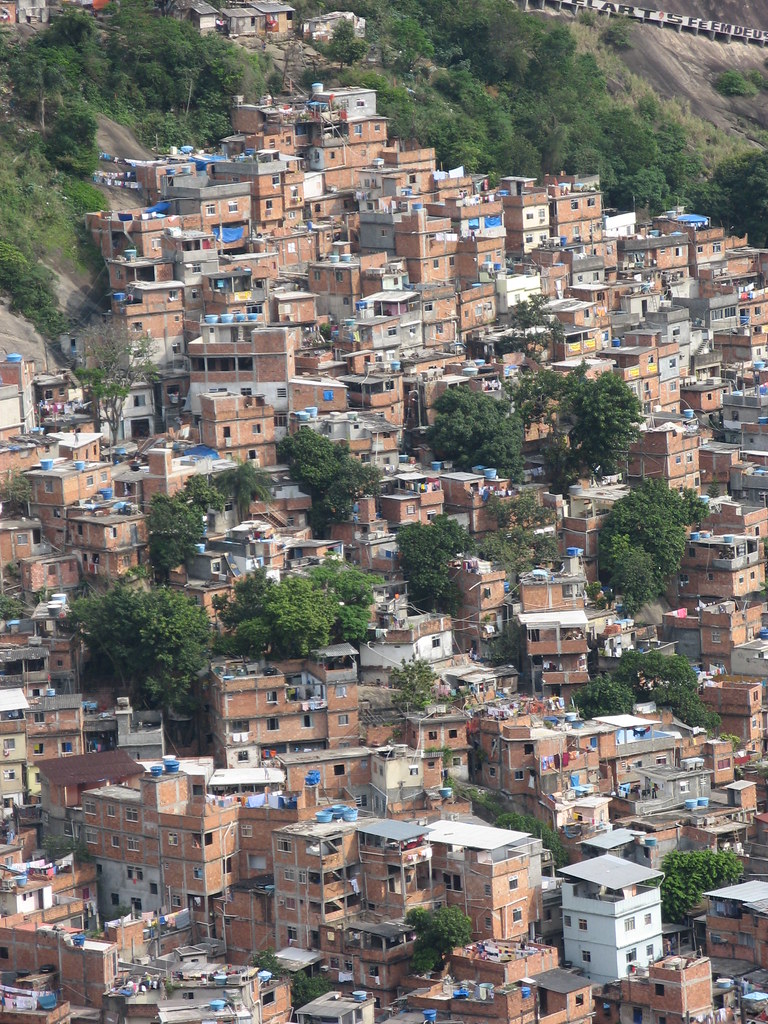
ITEM SEVEN: Rio's infamous favelas are getting an overhaul. (There might be an upcoming Conscious Urbanism post on this...in the meantime, here's another great article on the subject.)


Oh, what a week this was. It's time for some R&R, right? See you next week!

(Photo from Flickr user joleetraveller.)

Resident Experience Master Planning


Scattered across the new master plan of Baltimore are blue dots that represent what are described as "nodal points," areas marked for significant development over the coming years as an influx of DC-area residents heads north to Charm City. One of these dots, located on the city's east side, represents the National Bohemian Brewery, now a massive mixed-use development helping to revitalize its surroundings. Perched atop the tallest brick warehouse is the classic-cute smiling face of Natty Boh, the brewery's mascot.

The disembodied head of Mr. Boh, though, is not an original piece of sinage. The Natty Boh sign was added by the developer who revamped the brewery in a dual effort to raise the development's profile and in deference to the history of the site. The resultant sign has become a landmark for the entire area -- which brings us back to the concept of originality. In architecture and urbanism, originality refers to different things. With architecture, originality is synonymous with innovation. In urbanism, it alligns more closely with historical value. So if we look at Natty Boh from an urbanist perspective, it is clever but not original. This is an important distinction to make, because the Natty Boh sign is an interesting (if simplistic) example of the potential for large-scale urban themeing.

In her June column for Metropolis, Karrie Jacobs decries the impending destruction of Coney Island by what she so brilliantly describes as "the tyrrany of concept." In the course of her lament, Jacobs quotes this from the webite of the firm designing the new Coney Park: "Thinkwell goes beyond traditional land-use planning and focuses on what we call Content Master Planning™ and Guest Experience Master Planning™...These approaches look at not only the physical layout of a project, but also take into consideration and pay particular attention to how that experience unfolds for a guest from the moment they pass through the project threshold until they complete their experience.”

Malls, hotels, theme parks -- high-concept themed design became a standard feature for these types of places ages ago. And while the Coney Island redevelopment would be relatively innocuous (it consists of a small theme park and several condo towers on nearby Stillwell Avenue), the idea that an urban neighborhood can be Guest Experience Master Planned™ creates the potential for a whole new kind of urban planning. In fact, Resident Experience Master Planning (I should ™ that) could revolutionize the way that cities are built. Using nodal points like Mr. Boh, cities could create self-contained neighborhoods that direct how life unfolds for a resident from the moment they move into the area until they...um...complete their experience, whatever that might mean.

Of course, this sounds like a lot of loopy mumbo-jumbo today. As one of the commentors on Jacobs' article points out, "The power to shape experience is what Thinkwell sells to its clients, yet neither philosophers nor cognitive scientists have deduced how an experience unfolds or how it’s 'completed.' Most researchers now doubt if an experience has a beginning and end — which means there are a lot of externalities, including prior experiences, that can thwart a planned experience." But new advances in crowd simulation technology are making Resident Experience Master Planning more and more possible and, with the economic potential of such a development so high, indeed more probable.

Pruned recently came up with some pretty fascinating potential uses for a new high-performance crowd simulator from Paul Torrens of Arizona State University. For instance, such technology could be used to "design a mall which can compel customers to shop to the point of bankruptcy, to walk obliviously for miles and miles and miles, endlessly to the point of physical exhaustion and even death." Or, perhaps, "figure out how one could, through spatial manipulation, inflame a crowd, even a very small one, to set in motion a series of events that culminates into a full scale Revolution or just your average everyday Southeast Asian coup d'état -- regime change through landscape architecture." If urban planning could figure out exactly how to get people to do specific things or behave in specific ways, it would give new and rather intense meaning to the term "master planning".

The Natty Boh sign in Baltimore is an example of the current extent of urban themeing. The best that developers can do right now is to drum up as much nostalgia as possible. The sign atop the old National Bohemian brewery is an eye-catching logo for the development and gives it some skyline presence, but these are essentially side effects. The true purpose of this sign is to, in effect, re-brand the entire neighborhood. American society has always been defined by work ethic, and Mr. Boh reminds the creative class-type workers moving to East Baltimore to work in the city's nearby "biotech districts" of the ever-elusive Simpler Time, when B-more was a blue-collar center of industry. Mr. Boh is to East Baltimore what Disney World's Cinderella Castle is to Euro-ancestral America.

So take the central idea behind this more primitive form of urban themeing -- sell real estate through nostalgia -- and add the supreme control granted by Resident Experience Master Planning, and voila! Revolution! Quasi-historical touches like the Natty Boh sign convince people to buy apartments, even to move great distances. So imagine the potential for landmarks or layouts or sophisticated systems of these things that could eliminate traffic by dispersing commute start-times, or promote concentration and convince potential residents to embrace density. On the flip side, imagine a city where small nodal neighborhoods each operate completely independently of each other to limit contact with others and thereby remove "externalities" from the experience equation. These neighborhoods could be planned to move residents swiftly from one pre-determined location (home) to another (work) to another (store), creating an endless, muss-and-fuss-free cash-flow for The Powers That Be. Think mass surveillance pre-planned and coded into the physical environment; after all, when behavior is planned, one does not need cameras to know where people are.

Mr. Boh better keep his eye on those pesky planners...

(Photo from Flickr user rebelpilot.)


Links:
Mr. Boh's Neighborhood (City Paper)

End of the Line (Metropolis)

Modeling Urban Panic (Pruned)

7.02.2007

Everyone is Watching You


Reality TV has been decried as death of American culture, entertainment for our most base and unflattering instincts, and one of the four horsemen of the Apocalypse. At the onset of the Reality TV era there was no lack of color when writers aimed to describe the medium's potential effects on our society. Despite this valiantly verbose effort, it is now difficult to find someone who, when pressed, won't admit to liking at least one or two Reality programs. Over time, even the medium's loudest detractors just got used to it.

But what no one has called Reality TV yet, to my knowledge, is a critical part of the mass indoctrination of society into a culture of constant surveillance. This thought came to me as I was reading about a new art installation/publicity stunt/marketing campaign/reality show from HBO that "illustrates the underlying truth that sometimes the most revealing stories are the ones you weren't meant to see." Via images projected onto the walls of a Lower East Side apartment building in Manhattan, passersby can look into the private homes inside, watching as the inhabitants move about their "daily lives". It's yet another evolution of the Reality TV form, this time taking down yet another wall: the one provided by the explanation that what we are watching is merely "a show". (I have to admit: it's pretty engrossing, especially considering the total absence of dialog or any form of explanation for what one is watching.)

Our defenses are being broken down, slowly. As our culture becomes increasingly comfortable with Reality TV that moves more and more toward presenting actual reality as a form of entertainment, we are being lulled into a false sense of security with the surveillance of our own lives. Manhattan provides another perfect example thanks to the Institute for Applied Autonomy's iSee project, which has mapped all of the CCTV cameras in the city (as well as several others.) In a recent interview with WorldChanging.com, an IAA representative (members are anonymous) had this to say: "It's true that many people are comfortable with surveillance of public space, especially when confronted with the usual choice between privacy and security. With iSee, we tried to subvert (or at least complicate) this binary." The resultant maps certainly achieve this: seeing the shockingly large range of the streets under constant surveillance, one wonders whether these cameras, "put up by individual building owners [with] their data...increasingly managed by third-party private companies" (IAA again), provide security or eliminate it entirely.

Privacy, after all, is commonly equated with security. But in an urban environment, when we are surrounded by so many other people, our expectation of privacy is lowered. In a densely populated place, safety replaces privacy as the central focus of security efforts. So in the city, we are especially vulnerable to surveillance efforts -- and the thwarting of the London carbombings by the large network of CCTV cameras in the West End only increases this vulnerability. I left the question of how to deal with increasing surveillance open at the end of last week's post on digital urbanism. Now, I'd like to look at some possible answers.

Perhaps the most disturbing piece of tech news I've read lately comes from Smart Mobs, where the authors highlight efforts by Cornell University researchers who are injecting microfluidic sensors into unborn insects. "Of course, when they grow," Smart Mobs exposits, "these insects still carry the sensors. And if this works, they'll be used for monitoring and security surveillance." Apparently, this is something that the US Military has been working on for a while now (not in conjunction with Cornell). And with the promised advancement of nanotechnology over the coming years, it's not hard to imagine a future in which every airborne insect is a "bug" in more than just a literal sense. In 1984, George Orwell (hard not to mention him when writing about surveillance) described a world in which people were perceived to be under constant surveillance. In Orwell's imagined future, even the threat of being watched by the walls was enough to keep the masses in line. And a world in which even the insects can't be trusted is a world in which subversion is next to impossible.

In what is certainly most representative of the present situation [of the ideas discussed in this post], blogger Glenn Weiss offers up a less dire, if not exactly inspiring idea on his blog, Aesthetic Grounds. Weiss describes a Parisian film festival that highlights films made with and for cell phones and marvels at how some of these mini-films reclaim the device that has bound everyone so closely by providing the viewer with a moment of quiet immersion: a sort of imagined privacy. "Is this the future?" Weiss wonders. "Even with some private territory in an apartment, will only mental privacy survive in the megacities? When the cell phone provides an avenue for almost anyone to enter your space, are these short mental moments of isolation the new reality of intimacy?

Perhaps the most upbeat perspective on the future of surveillance is in one of last Friday's Weekend Reading topics: Harvey Feldspar's [fictional] Geoblog, from Wired. In it, author Bruce Sterling imagines the life of a so-called geoblogger in the near future (2017, to be exact). Feldspar is voluntarily monitored at all times thanks to his constant blogging and a GPS tracker installed in his Moleskine-sized computer/phone/everythingelse, the Sensicast-Tranzeo 3000. This futuristic jet-setter shows us one way of dealing with increasing surveillance: embrace it. Learn to control the system before it controls you.

As surveillance becomes ever-more pervasive, people will determine how to deal with it on an individual -- or even local basis. Perhaps paranoid subdivisions filled with houses featuring lead-lined walls and airtight mirrored slat windows will spring up in and around cities. Or maybe features like Helio's Buddy Beacon (which seems so disturbingly invasive right now) will become the norm, with everyone being able to find everyone else, and some innate desire for privacy will force us to form some kind of new social honor code. To paraphrase that famous line: when everyone is a watcher, who's watching the watchers? Everyone.

So is mass surveillance a good thing? A bad thing? The most probable answer is that it is neither. Like Reality TV, it's just another thing we'll have to get used to.

(Photo from Flickr user Semi-detached.)


Links:
HBO's "Voyeur" Projected On NYC Building (CitySkip)

Interview With the Institute for Applied Autonomy (WorldChanging.com)

iSee (IAA)

The hunt for the London Terroristsm (The Independent)

Autonomous insect cyborg sentinels (Smart Mobs)

The New Cell Phone Privacy in the City (Aesthetic Grounds)

Dispatches From the Hyperlocal Future (Wired)

Helio Buddy Beacon

6.28.2007

The Dawn of Digital Urbanism


Blog Like You Give a Damn put up a great post last month on recent advances in online urban cartography (like Google's über-controvertial Street Views) and how these new digital reinterpretations of the world are moving us toward William Gibson's vision of cyberspace as a physically inhabitable place. From BLYGAD:

"Unlike the cyberspace that Gibson describes in [his book] Neuromancer:

'...a graphic representation of data abstracted from banks of every computer in the human system. Unthinkable complexity. Lines of light ranged in the nonspace of the mind, clusters and constellations of data. Like city lights, receding...' (69)

this new cyberspace will be much more familiar to us. It will look and behave in ways we understand - dangerous because the line between real and virtual will be that much more hazed. As the possibilities for exploration, learning, and knowledge building expand - so too will the potential for surveillance, misuse, and abuse."


Cyberspace is Shangri-la for the internet generation: a mythic miracle of a place that we are sure exists just over the horizon, within a whisper's length of our grasp. Each person has their own idea of this place painted in their mind, but I think the truth about an inhabitable Cyberspace is that it will be very much like Gibson's fantastical vision. It will also be very familiar to us, as BLYGAD predicts. In fact, our physical reality is already merging with its virtual counterpart. For, as the hyperconnectivity brought on by the rise of the internet becomes integrated into the urban fabric, understanding of one's physical environment is becoming more inextricably tied to one's understanding of the web itself. The melding of the physical and virtual (cyber) worlds is already taking place on both ends, with each side moving quickly toward the other. Eventually, of course, they'll meet somewhere in the middle.

We can see this trend online as the "clusters and constellations of data" described by Gibson are being harnessed to create a sort of digital urbanism, recreating various aspects of the physical world for Cyberspace. Akamai recently launched a tool -- Visualizing the Internet -- that has been described as a weather report for the web. Meanwhile, an online art project called We Feel Fine (profiled in the June issue of Metropolis) mimics the richly frenetic atmosphere of a busy public space without actually replicating any of the recognizable features of physical places. If the aforementioned Google Street Views is representational digital urbanism, We Feel Fine is the presentational version, capturing the essence of public space in a wholly new way, reorganizing the traditional tokens of public spaces (trading visual diversity for emotional diversity) into a "place" that could only exist online.

Good old-fashioned bricks and mortar urbanism, meanwhile, is getting a digital overhaul as handheld, web-enabled devices and wireless internet for laptop users takes the edge off of some this system's perennial problems. I'll take any chance I can get to highlight Urbanspoon, a site that catalogs every restaurant in several major US cities (DC was recently added), aggregates reviews from major websites, allows for user ratings and reviews, and provides neighborhood breakdowns via kickass "nighttime" maps that show the locations of all of the cities' eateries. Finding a great restaurant has never been so easy. Another genius web service, recently covered on Springwise, is MizPee, a San Francisco-based service that allows users to access a list of nearby public restrooms, eliminating one of the chief drawbacks of pedestrianism.

As cities become more digitally enabled, they are also starting to bleed together. Geographic constraints have been removed from art and culture in the same way that they were from commerce. Even street fashion has crossed over into the digital realm. As the David Report...well...reports, cities across the globe will be represented in "Street Clash," a blog where the tragically hip artkids from dozens of cities will go head-to-head in an effort to determine which city has the ultimate street style. The irony of this is that, while individuals can rep their hometowns in a token sense, they are still independent human beings free to change their geography at any time. That is to say that what is happening here is the formation of an international street style, as a handful of people cannot be representative of an entire urban population. Hipster fashion has been globalized. Whether this is good, bad, or just hilarious is still a question mark.

As BLYGAD's post points out, the transition of the physical world into the Cyberspace of the future could open a Pandora's Box of new social, ethical, and safety concerns. Pittsblog reported yesterday on a proposal from the city of Pittsburgh for a massive urban surveillance system. Mike Madison, who writes the blog, had this to say: "Hopefully the public will respond...to the proposal's Benthamite implications...It's one thing (though it's not necessarily a good thing) to be watched when you know that you're being watched. It's something else entirely -- and rarely a good thing -- to be watched all the time, when you don't necessarily know it" (emphasis his). Madison then asks the age-old question, "who will watch the watchers?" This, I think, will be the most fundamental challenge of Cyberspace: in a universally connected world, the unwatched watcher has more power than ever, as they will have unprecedented access to the masses.

As the internet becomes increasingly ubiquitous and reality moves toward the virtual, the emergent Cyberspace will almost certainly take on an urban form -- though it remains to be seen whether it will lean more heavily on the physical or virtual world. Either way, geography will become less and less binding as cities learn to connect in ever more complex ways, and we will likely come to understand urbanism as something very different from what it is now. Shangri-la is upon us.

(Photo from Flickr user 3views.)


Links:
New Urban Cartography (Blog Like You Give a Damn)

Visualizing the Internet (Akamai)

We Feel Fine

Urbanspoon

Mobile Loo Locator (Springwise)

Street Clash (David Report)

The Pittsburgh Panopticon (Pittsblog)