Showing posts with label milwaukee. Show all posts

3.25.2009

Q&A with the “Mayor” of Opportunity City


MILWAUKEE, March 32, 2010 (IP*) – Ronald Dykes is executive director of Opportunity City, a non-profit organization dedicated to fighting poverty in Milwaukee. Housed in what was once a sprawling steel fabrication plant in the heart of one of the city’s poorest neighborhoods, the organization is generating lots of buzz in policy and academic circles across the country for its innovative initiatives.

Q. Opportunity City isn’t a city; it’s a non-profit group. Everyone calls you “mayor,” but your title is executive director. What’s up with the city shtick?

A. We are like a city. Inside this old factory space, we house staff for the 27 different anti-poverty programs that we run. A few are big programs; many are small. About 475 people work here, and we get about the same number of clients and visitors coming through every day. There’s a lot of human bustle in here. The office cubicles are arranged in blocks like a street grid. There’s a big thoroughfare we call Main Street, and there’s Coffee Alley and an area we call The Park where we have big staff meetings. And…


Q. So, you’re like a city because you’ve arranged your cubicles a certain way? That’s a pretty shallow metaphor isn’t it?

A. Well, if you’d let me finish…We don’t just look like a city; we act like one in some important ways. We intentionally created Opportunity City to try to capture the agglomeration effects that flow from the concentration of resources and functions in cities. Everyday, there are lots of low-income people here. Everyday, there are lots of people in here helping them directly or indirectly. In house, we’ve got people working on solving child care, transportation, housing, food and health care problems for individuals. We’ve got labor market analysts, administrators and support staff, employment recruiters, job trainers and representatives from apprenticeship programs working with individuals and on policy-level changes. There are also policy designers, grant writers, program evaluators and various academic interlopers. They’re all here, everyday. In close proximity. Trouble-shooting problems. Bouncing ideas off each other. Able to shout over the cubicle wall to get help. Coordinated complexity happening in close quarters is not a bad description of what a city is, and it’s what we are doing at Opportunity City.


Q. Agglomeration effects. Coordinated complexity. Fancy talk. Please tell us in plain English what the hell you’re talking about.

A. It’s simple, really. It’s just what I said a second ago: if you can get a lot of people working closely together on a set of related problems, you can be more effective at solving problems, at being productive. Density and proximity make it easier, more likely for people to problem-solve effectively in real-time. That’s the essence of these concepts. They’ve been at the heart of understanding why people and firms locate in cities.

Q. For a non-profit, you seem very well funded indeed. Where does all the money come from?

A. We’ve been blessed with very extravagant donations from a few wealthy benefactors in town. Our policy innovations have attracted grants from national foundations. And, of course, we’ve been fortunate to get funding from the new federal block grant programs for workforce development and affordable housing.

Q. You sound excited. Knowing the history of anti-poverty efforts, aren’t you setting yourself up for disappointment?

A. First, hold on a minute. Anti-poverty efforts often get a bad rap they don’t deserve. Social Security keeps lots of elderly folks out of poverty. If that’s a failure, give me more. The Earned Income Tax Credit has helped millions of low-income working families make work pay enough to afford housing and groceries. That’s a success story in my book, and so is the fact that many low-income folks have gotten good jobs through some of the better job training and placement programs. So, no, I don’t think we’re setting ourselves up for disappointment. In fact, this is one of the most exciting times in American history to be involved in the fight against poverty. Thanks to the new national health care program, every American now has affordable health insurance. This is a huge boost to low-income people. And there’s the new Skill Net program. Under this program, every American worker gets financial help to keep their job skills up-to-date and, when a job is lost, gets decent wage insurance payments to bridge over periods of unemployment without having to plunge into poverty to qualify for help. For struggling low-income workers, this new program will help keep them attached to jobs and prevent them from cycling in and out of poverty and low wage work.

Q. You like what the Obama administration has done to help fight poverty. Understood. But what are you doing locally at Opportunity City?

A. What the feds are doing is really important to our efforts. Because federal efforts will help keep many low-income families and workers from falling back into poverty so easily, at the local level we can focus on harder problems like helping people with few skills and little-to-no job experience get jobs and rebuilding distressed neighborhoods. That’s what we’re doing at Opportunity City.

Q. Nice generalities. Any specifics?

A. Sure. We’ve just launched an experimental program called Project Search and Employ. Basically, the program aims to create a group of companies with a strong profit incentive to recruit poor people with few job skills and successfully place them in real jobs with good wages and benefits. It works like this. There’s a big pot of money—all from a very generous private donor—controlled by a team of investors. The investors are a bunch of experts—experts in things like training workers, analyzing businesses, understanding industry sectors and supply chains, poverty policy, mentoring and coaching, and program evaluation. What they do is invest in proposals to create what we call search and employ companies or SECs. The SECs—each using different strategies, but all working within the same set of very high poverty census tracks—go out and find poor people who don’t have much work history, but are able to work, and hire them for a job with the SEC that involves them being trained for a real job. The SEC job is real enough, too. The recruits get paid a decent wage and benefits, and pay taxes and can be fired at the will of the employer. Anyway, if and when the SEC gets the recruit a real job—not with the SEC—then, our investors pay the SEC a big bonus. And if the recruit stays employed long enough, they get an even bigger bonus. If the SECs don’t get people good jobs for long enough, they’ll fail as businesses. Even though a program like this will work best when the labor market improves, we’re excited to get started on it because it not only gives a lot of poor people jobs right away—the SEC training jobs—but it also incentivizes lots of creative thinking about how to turn low-skilled people into stable employees.

Q. Profit from poverty. Isn’t that morally yucky?

A. Don’t try to be cute. The profits come from increasing employment and reducing poverty.


Q. Fair enough. What else are you doing?

A. Running programs is not all we do. We also try to push larger systems—like schools, chambers of commerce and city governments—to do things that help fight poverty. For example, we’re trying to create a fairly dense walkable low-income neighborhood where there are currently lots of boarded-up houses and very few businesses. To do this, is going to require help from everybody. We’ll need good schools. Grocery stores and other businesses willing to look with fresh eyes on the economic prospects in low-income neighborhoods. New zoning ordinances allowing for mixed use. And more.


Q. Now, it’s your turn to hold on a minute. Isn’t “walkability” code for gentrification?

A. It can be, sure. But first you need to understand that walkable neighborhoods can really help make life much easier and more affordable for low-income people. Think of the transportation costs and life-hassles you can avoid if child care, schools, grocery stores, places of employment, government offices, parks and transit stops are located within walking distance. The gentrification concern comes in because more and more of what we used to call yuppies like this stuff too and are willing to pay a premium to live in such places and drive up costs for everybody. But our plan is keep these neighborhoods affordable for the people who already live there. And we’re doing that with a range of programs including generous low income housing tax credits, land trusts, and value-latching which taps into any rise in property values to pay for programs that keep housing affordable. We’ve structured all this so that, over time, property values will be able to return to their real market values but only as long as the neighborhood maintains enough affordable housing capacity, too.

Q. You’re smiling. How is that possible with all the misery, all the failure of the American Dream you see every day?

A. Yes, poverty is terrible. And, yes, it’s heartbreaking to see what it does to people. But as I said before, this is a very promising moment for America. There’s a new sense that we’re all in this together, and a new willingness to work for the common good. For me, in the context of the fight against poverty, it’s especially wonderful to see Americans rediscover the natural strengths of cities, to see cities once more as the engines of growth and opportunity they are.

Interview confabulated, condensed and edited by Dan Lorentz.

*IP is an acronym for Imaginary Press, a wire service providing factually dubious news and feature stories to credulous media outlets worldwide.

--- --- ---


Note:
This will be my last post as a regular Where contributor. My experience here has inspired me to continue to blog about city issues, except that now I want to concentrate on a more local project. In mid-April, I hope to launch My Athens, a blog about my new hometown, Athens, Georgia. [Note: This note and the note it’s embedded in are true, unlike most of the fiction that precedes it.]

(Photos--in the order they appear--from Flickr users craigallyn, opendemocracy, Matthew Shelley. The original full-sized color version can be viewed by clicking the photo.)

7.24.2008

The Worst Cities...?

While Monocle and Forbes and everyone else in the mainstream media argues about what cities are the best to live in, Where was recently introduced to a site that's coming at urbanism from a slightly different perspective. Worst-City.com is home to what appears to be an entirely subjective (and often absurd) list of the sixty worst cities to live in on the face of the earth. The intro paints a pretty accurate picture of what to expect from the rest of the site:

"The world is very, very, very big. There are some wonderful places on its surface. Fabulous sun-kissed beaches with miles of golden sands. Wonderful mountains with crystal steams cascading down into tropical paradises. There are also some horrendous cities populated by a subculture of thugs and gangsters. Sadly this website is about the latter locations. Here you will discover some of the most vile and violent places to leave. So read on and be prepared to be shocked."

The list ranges from the obvious (Chernobyl, Brazzaville, Baghdad) to the completely befuddling (Paris, Seattle, Barcelona), and takes a whack at everything from Milwaukee to Bangkok in between. The site is filled with bons mots like "When it was built most Parisians hated the Eiffel Tour - that's why they named it Eiffel - means Awful in French!" and is entertaining as long as it's read with several large grains of salt and a hefty suspension of disbelief. All in all, it's a mind-bending international adventure that's worth a lazy afternoon.

Enjoy the ride...

2.29.2008

WEEKEND READING: February 23-29, 2008


Happy Leap Year everyone! The crappiest month gets a whole day longer...Seriously, y'all, I hate February. Hooray for Weekend Reading, right?

ITEM ONE: TNAC becomes NAC, and kicks off a contest to come up with a tagline. The response so far has been El Lame-o, so go make some noise.

ITEM TWO: A massive wishlist for Hong Kong, Asia's Global City.

ITEM THREE: Pop City talks to Urban Design Associates honcho Don Carter about the eight things Pittsburgh needs to become a 21st Century City. It's about the Steel City, but many of Carter's points can be applied universally.

ITEM FOUR: Richard Florida frames urban development with an article about the Sex Pistols, and some interesting conversation follows.

ITEM FIVE: The Ground Floor explores the relationship between density and safety in urban areas.

ITEM SIX: Planetizen takes a look at Rotterdam's new "Blue Building" (seen in last week's Urbanffffinds).

ITEM SEVEN: A detailed written account of the soundscape of the boomtime Chinese city.

Have a fantabulous weekend, everyone! This blogger's headed home to Milwaukee for the weekend.

(Photo from Flickr user cblee. The original full-color version can be viewed by clicking the photo.)

10.02.2007

Questioning the Creative Class Logic

Sometimes I can't help but wonder if maybe the whole Creative Class phenomenon is doing more to harm cities than it does to help them. Not in all cases, of course...certainly many cities are benfitting from the investment in their artistic and recreational infrastructure. But the primary purpose of a city is to provide high-quality services to all of its citizens, and at times it seems like this responsibility falls by the wayside as civic governments try to focus on building Creative Class-friendly amenities.

Gentrification happens because neighborhoods throughout a given city are unequally supported. And while this isn't the fault of the Creative Classmates, they appear to be exacerbating the problem by attracting a disproportionate amount of attention -- and funding -- from mayors who think of their presence as a silver bullet. With rich creative people comes an increased tax base, and with an increased tax base, more problems can be solved in less privileged areas, right?

Portland, Oregon, is seen as one of the capitals of the Creative Class. The city's arts and cultural scenes are thriving, with artists flocking to the once-granola metropolis to be a part of the scene. As a recent article in Slate pointed out, "it's rare to meet a young, creative Portlander who's from Portland." Its success in drawing talent from other cities is, in fact, one of the reasons that Portland is held up as model of the Creative Class metropolis. The CC is all about migration, after all; it could not exist without the internet, which allows for artists to live in cheaper cities while still participating in the larger artistic fields in which they are interested and/or employed.

Jump to the other side of both the country and the spectrum, to New York City. Manhattan and Brooklyn (and, to some extent, Queens) have become inordinately expensive. The city -- or The City, with caps, as it's known Stateside -- has become what airoots recently described as "a networking platform and marketplace for established creative people from all around the world, [but not] much of a place for emerging artistic production within the city." NYC is a popular city with the Creative Class as well; in fact, it is the sun to their universe, around which all things (in some way) orbit. In effect, New York has become the City of Art, while the artists have fled to the hinterland.

But what has made Portland -- or Boston, or Boise for that matter -- a hub of activity for those who have fled New York's rising rents? One of the things that a large chunk of the Creative Class' centers of production share is a strong public services network that pre-dates the city's popularity. They are cities with well-maintained parks, strong transit systems, and clean and affordable utilities (water, electricity, etc.) Cheap space must be available -- again from airoots, the new creative cities "are open and messy enough to provide artists with interstitial spaces they can takeover and make their own."

Walkability, density, urban character -- all of these things are supposedly important to the Creative Class. Yet there are cities much closer to New York (aka the Center) than Portland that offer all of these things in larger helpings yet have failed to tap into the Creative Class boom as effectively as the Rose City. To name a few: Philly (which is starting to benefit from NY's overflow but is still limping considerably), Washington DC, Pittsburgh, Cleveland, Cincinnati, Milwaukee, Richmond. It seems to me that the advantage that Portland had over these places was strong, well-maintained infrastructure. After all, if you don't want to live in New York but you can live pretty much anywhere else, you're going to choose a city that can provide you with the most comfortable life with the lowest amount of stress.

Milwaukee is a perfect illustration of the benefits of maintaining strong basic urban infrastructure -- and what happens when that maintenance falls by the wayside. The city managed, against all odds, to remain in the black into the 1930s while other cities across the US struggled with the Great Depression. This was largely due to the civic integrity of the city government (socialists, for the record) and the fact that they had not been extravagant in their spending during the Roaring Twenties. Milwaukee eventually suffered from the depression like the rest of the country, but anyone who has followed the history of the Midwest can tell you that the Brew City never suffered the kinds of blows sustained (or not) by Saint Louis, Detroit, and Cleveland. After the depression passed, the industrial city roared, and its services remained strong and well-maintained until the 1980s. Slowly over the past twenty-five years, the city and county have been chipping away at Milwaukee's utilities, infrastructure, and once-legendary bus and parks systems. Even with the Creative Class leading a renaissance in parts of the city, crime is at an all-time high and the racial segregation is some of the worst in the nation.

The importance of creativity in the modern economy is nothing to sneeze at. While basic services are something that cities need to focus more heavily on, it is important that they bolster the creativity of their populace. But it seems to me that spending city funds on cultural amenities, building artist housing, and hosting snazzy (and pricey) festivals might not be the best way to go about incubating a culture of innovation and artistic aspiration. If anything, they seem likely to create a dangerous "us and them" tension between the Creative Class and their fellow city-dwellers. In a way, this could even be seen as the institutionalization of the overprofessionalization of art.

So how can cities create a dynamic, creative culture without overreaching? I have some ideas, but this post is starting to get long, so I'll save them for tomorrow.

(Photos from Flickr users gonebiking and Digital Trav.)


Links:
The Indie City (Slate) (via Brand Avenue)

New York Rollercoaster City (airoots)

Urban Fictions: The Toolhouse (airoots)

9.11.2007

Clarity

Generally, the only personal information you'll get about this blogger is my opinion on some urbanism-related issue. That's not to say that I take myself too seriously here; let's be real -- I'm no professional. But it seems incredibly disingenuous to write about the 9/11 terrorist attacks in any sense other than personal. It also seems odd to write about anything else today. Perhaps that's just a part of the cultural PTSD Americans are going through; we aren't haunted day in and day out, but once a year we all feel a yearning to share our stories about "that day" with each other. Even more interestingly, it's a day when most of us will actually listen to what one another have to say. At any rate, if you don't want to listen to my own account, consider this your fair warning.

And so.

I was still living in the Milwaukee area six years ago on the day of the attacks on the World Trade Center and the Pentagon. I was away when from the television when the second plane hit, as well as when the towers fell, so the most potently visual events of the day will never be as vivid for me, I don't think, as they are for many Americans. I remember what happened, but not as it happened. September 11th is, for me, a day of video replays. I saw the images a million times before September 12th, but what happened has always felt distant to me.

In fact, what I remember most vivdly from the whole ordeal came several days after September 11th. There is a massive church in the hills to the northwest of Milwaukee called Holy Hill. Perched atop -- you guessed it -- a hill, the building's two steeples dominate the rural skyline for miles in every direction. One of the towers has a public observation deck, and I traveled out to Holy Hill with two friends on the Friday after the attacks. There was no particular reason for the trip; we were bewildered by what had happened, and were perhaps looking for that musty feeling of sanctuary that religious buildings can provide.

I had been to Holy Hill once before that day with my family, and I remembered being able to see Milwaukee's stubby little skyline, over 25 miles away, enshrouded in a typical urban haze. On the Friday after the attacks, when I returned to the steepletop room with my friends, the skies were the perfect blue of early autumn, and the urban haze that had hung over the city was vanished; the air was quiet in a way that changed my understanding of that phrase. Planes had been grounded for days, of course, and as a result the view from the tower was so clear you could practically see the windows of the individual buildings in the skyline. For some reason, that image of the city stretched out at the point where the early reds and oranges of the very leafy metro area dropped off into Lake Michigan (also visible from the tower that day) has always stuck with me.

Whenever I think back on the September 11th attacks, I remember the confusion and the anxiety that followed, while the attacks themselves border on the abstract, like a never-quite-forgotten childhood nightmare. And whenever I find myself in a position now that causes me great confusion and anxiety, I use the memory I have of the view from the tower at Holy Hill to remind myself that, oftentimes, tragedy and struggle can wind up clearing things up in a way that I had never expected.

Perhaps that's too literal of an interpretation; perhaps, as many are arguing lately, enough time has passed that emotional license has revoked for people writing about September 11th, and I've just made an ass of myself by adding to the pile of endless and unncessary pontification; perhaps this post is entirely off topic and completely inappropriate. Still, I felt compelled to write it.

I live under a flight path into O'Hare, and as I write this post I can hear jets flying overhead. Most days I don't notice, but today is different.

8.10.2007

WEEKEND READING: August 4-10, 2007

It's been humid here like you wouldn't believe this past week, but the weekend is supposed to get a bit cooler. (Note to self: stop starting every Weekend Reading post by commenting on the weather...)

ITEM ONE: The US Affordable Housing Institute's blog is both informative and hilarious. Quite a feat, hey?

ITEM TWO: Milwaukee Magazine has a great article up about the unsinkable Whitney Gould, the architecture critic who has played quite a large role in the development in Milwaukee's attitude (and thus, my own) toward design and architecture.

ITEM THREE: The headline takes care of this one - Asia's biggest slum set to turn into India's Madison Avenue .

ITEM FOUR: One Porteño's commentary on (and photos of) Buenos Aires' new $46 million, 16 block tram. Oy. (Found via the excellent Global Voices Online)

ITEM FIVE: Some good news out of New Orleans -- the city's population has reached 60% of the pre-Katrina level.

ITEM SIX: Great post this week on brain drain at the Burgh Diaspora blog.

ITEM SEVEN: In case you missed it, proposals for San Francisco's Transbay Tower from Richard Rogers (ouch), Cesar Pelli (double ouch), and SOM (actually quite good) were unveiled this week. Life Without Buildings points us to some gorgeous animations of SOM's tower and station buildings on YouTube.


That's all for now, folks. Enjoy your weekend!

(Photo from Flickr user fddi1.)

6.28.2007

The Brewhaus

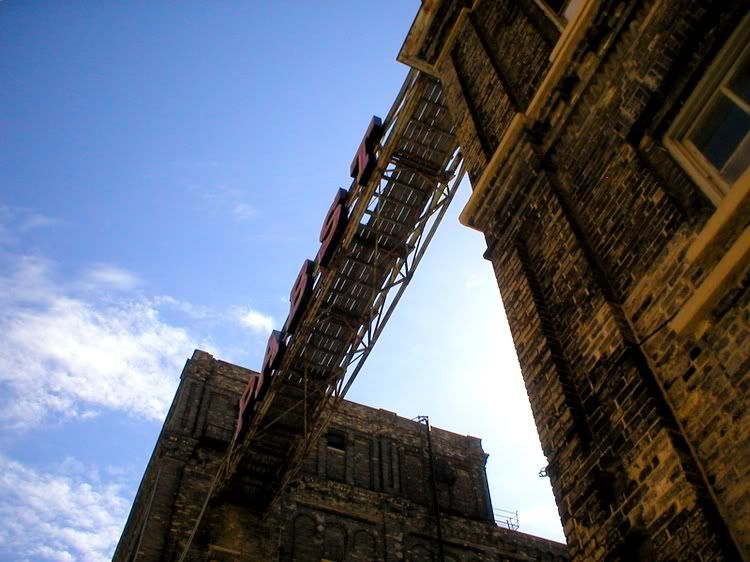
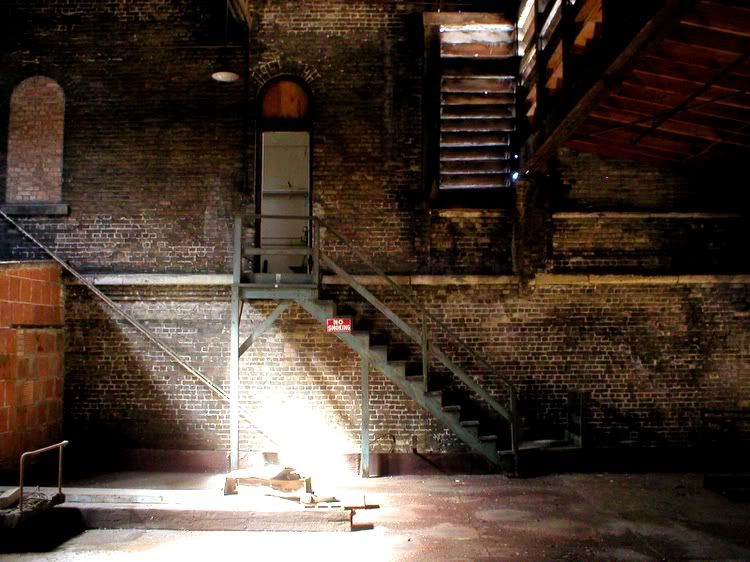
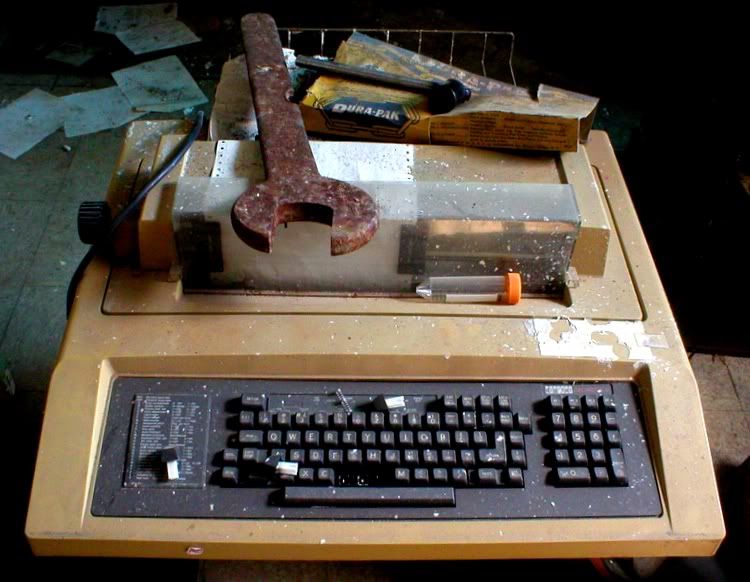
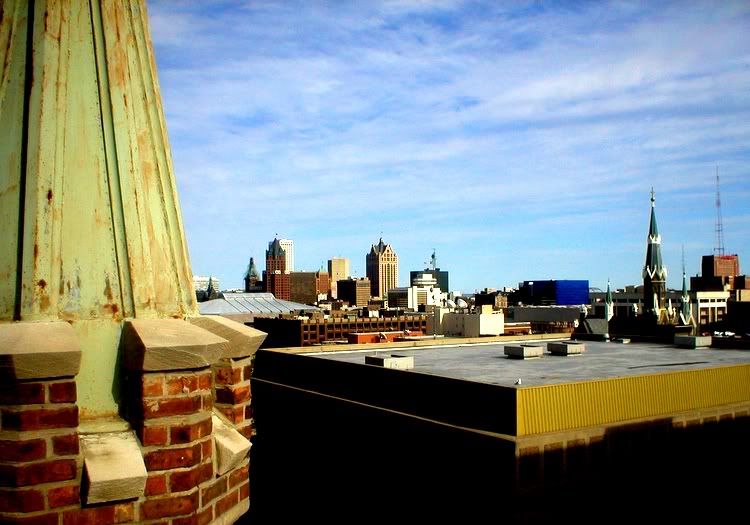
When was still living in Milwaukee, I got a call from my roommate one afternoon. A mutual friend of ours had founded a photography club, and he had somehow managed to befriend the security guard of the Pabst Brewery complex and convinced him to let the club tour the old Pabst Brewhaus. The roommate wanted to know if I wanted to come along.

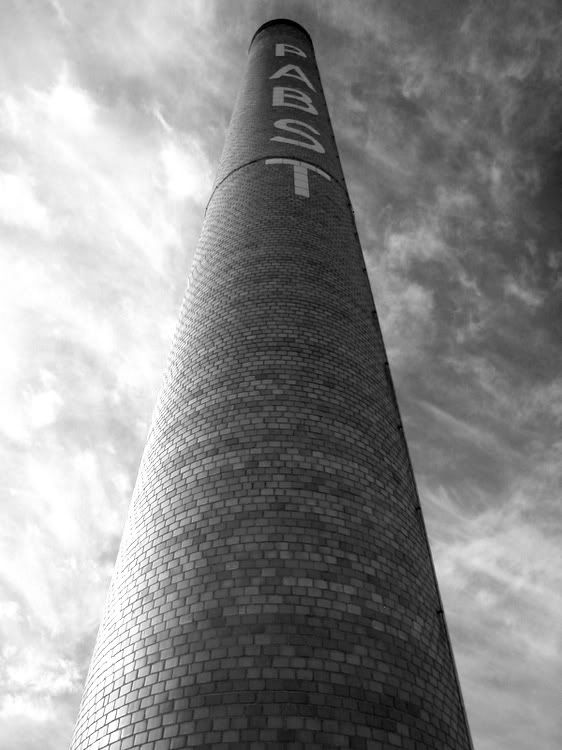
A bit of background: for those who don't know, beer is kind of a big deal in Milwaukee, historically speaking. The city was once the largest German city in the world after Berlin, and the German Beer Barons who built the city's legendary breweries -- Miller, Blatz, Schlitz, and Pabst are the best remembered -- were major celebrities in their day. Many of their elaborate Flemish mansions still stand. And while microbreweries are nearly as ubiquitous as corner bars in the Brew City, Miller Brewing Co. is the only one of the historic brewers left (Pabst still exists, but brewing operations have been contracted out to Miller).

The Blatz and Schlitz complexes have both been converted into residential and office complexes. Pabst's 20-acre complex, however, which sits isolated on a hilltop at the far northwestern corner of downtown, remains empty. With its great smokestack, gothic spires, and the huge red "PABST" lettering that hangs from a skybridge connecting it to a neighboring structure, the 1872-vintage Brewhaus is an imposing landmark on the skyline.

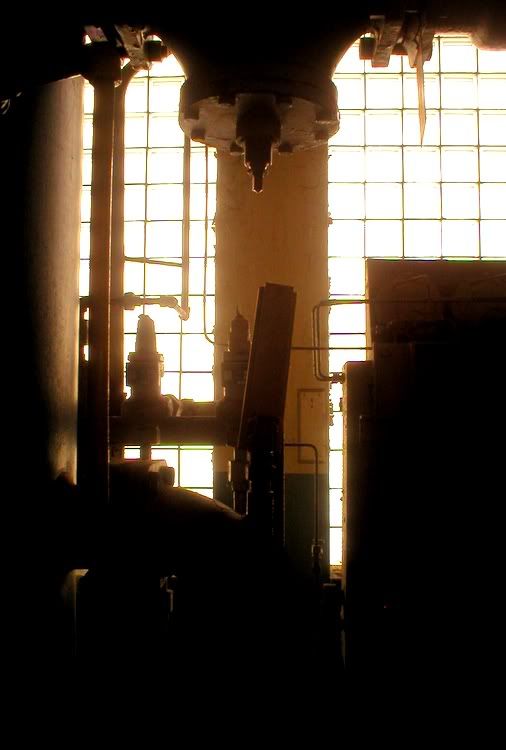
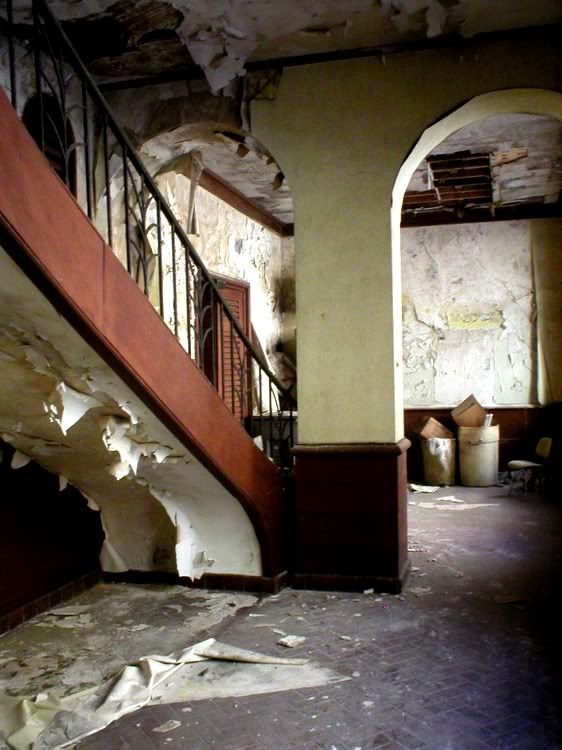
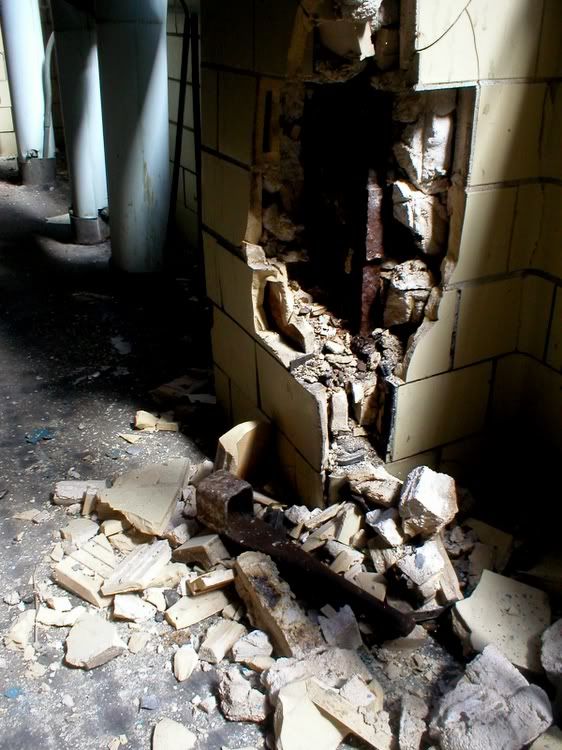
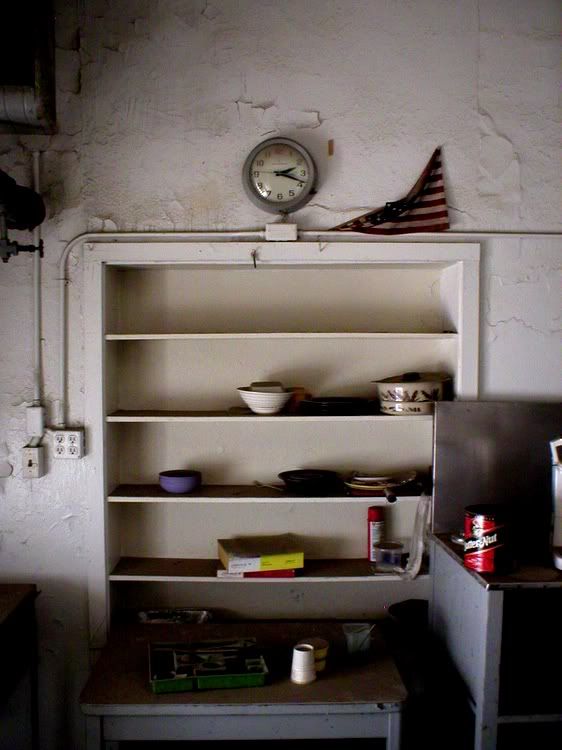
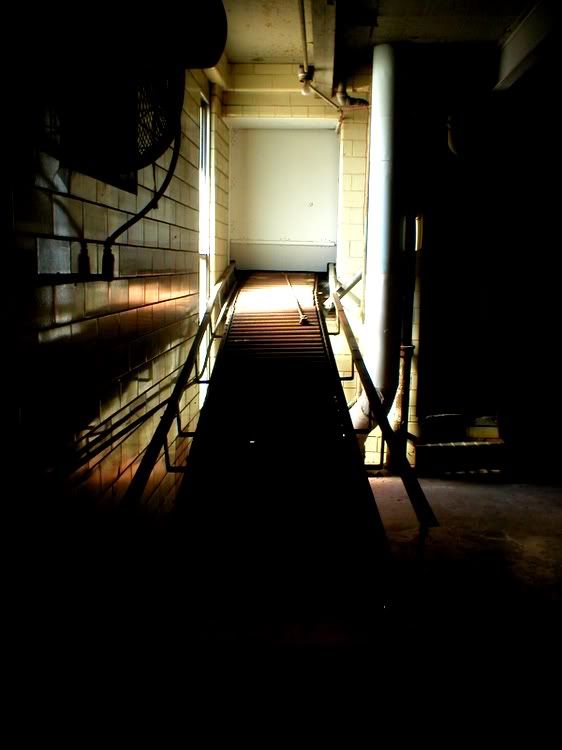
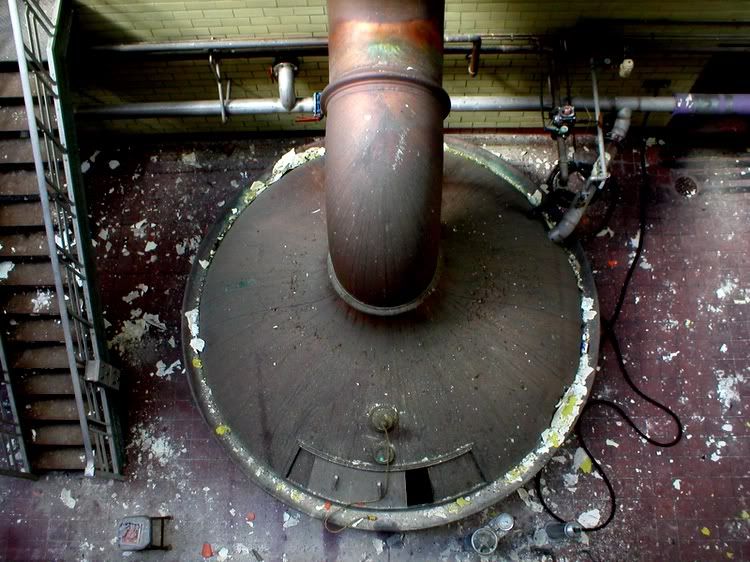
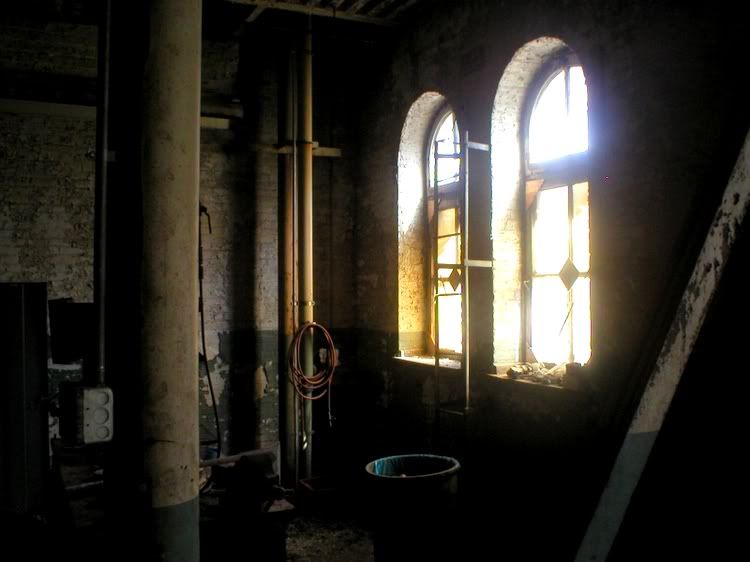
Did I want to come along on a tour of the building? Of course I did. A year and a half later, the complex is finally being rehabilitated and sold off piece by piece in a unique historic preservation redevelopment by Zilber Ltd. While I'm ecstatic to see this fabulous complex so carefully brought back to life, I will probably always remember the Brewhaus as it was the afternoon that I first went inside: broken, decrepit, and devastatingly beautiful. The following photos were taken with an older digital camera (an Olympus D-380, I think) that I've since managed to lose. I couldn't use the flash and had no tripod, so there's a bit of haze in some of these...whether or not that adds to or subracts from the images, I will leave the decision up to you. And so...


(Click the thumbnails for full images.)


Links:
The Brewery

Zilber Ltd.

4.20.2007

WHY WOULD YOU WANT TO LIVE ANYWHERE ELSE??????


I was going to take the night off, because I'm in that phase at the new job where I'm taking in so much new information each day that I kind of just want to be a vegetable when I get home...but then I saw a truly awful video promo for a new set of condo towers back in my hometown, Milwaukee. It's gross, y'all. You'll be reeling from the clichés by the end, but it's kind of fascinating to see which elements of a location are used to lend status to some fairly bland architecture...I'm particularly interested in how green and pastoral they try to make these twin hulks seem. I was also amused by the way that downtown cultural venues (located more than a mile and a half away) are advertised so fervently when it is within a five minute walk of two of the most vibrant areas in the city (Brady Street and North Ave.)

If it seems like I'm being picky about the distance, you have to take into consideration that a mile and a half actually still means something in Milwaukee, where the metro is really only about thirty miles end to end. Sure, the exurbs stretch further out, but the developed part of the region is very compact. There has always been an economy of space here that had a lot to do with shaping my views on the spatial requirements of individuals and on places in general. Milwaukee was, for quite a while, one of the most densely populated cities in the country...so to see this regionalist attitude that justifies bland design through perceived proximity to downtown is kind of...weird.

Nevermind my ramblings...go and enjoy the video.


Links:
Park Lafayette (The video link is in the center of the page.)

4.10.2007

Open Spaces, Non-Places

There is certainly something to be said for wide open spaces in cities. Large, well-designed parks are a welcome respite from the high-energy city streets. They are perfect for jogging, biking, and walking. They make great places to take children to play. They are often as close to nature as many urbanites can get on a daily or even weekly basis.

That being said, I think that people tend to blindly value "open space" without any consideration for quality. In another example of the public's fear of density, NIMBYs are often quick to cite the loss of "open space" as a reason for their opposing a new structure. I remember, when I was living in Milwaukee, a group of "concerned neighbors" trying to get plans for a high-rise condo building in the heart of downtown scrapped because it was going to destroy what they called open space. In actuality, the lot was a glorified traffic island. Also, it was across the street from one of the city's largest parks, which in turn fronted the great blue expanse of Lake Michigan. A loss of open space? Technically, yes. But the city certainly traded up.

The anecdote neatly illustrates what I think is a major semantic issue that gets little to no attention: people have idealized "open" space when what they should really be focusing on is "quality" space. After all, the endless expanse of cornfields in the Great Plains states are technically open space, yet seemingly everyone who's driven through them is jumping out of their skin to tell you how awful the drive is. The same goes for Atlanta's infamous eight-lanes-in-each-direction megafreeway, which I had the displeasure of traversing (fancy word alert!) in the shuttle to my hotel this afternoon. It struck me as very odd that a city of only 130 square miles would waste such a massive chunk of their land on this non-place, which is essentially a large "open space" that is used by millions of people every day yet is completely devoid of character or any sort of sense of place. But then...that's another post entirely.

When the distinction between "open" and "quality" public space is ignored, it allows not only for the types of ridiculous arguments used by the "concerned neighbors" mentioned above, but on a more subversive level it devalues public space in general. If we continue to dilute parks, squares and the like by lumping them in with plain ol' "open spaces," they lose their importance in the cityscape. Sure, it's a word game. But you'd be surprised how much those can matter.

"Urban Renewal," anyone?

4.05.2007

You Can Go Home Again...Just Wear Sunglasses

I'm home in Milwaukee for the Easter weekend, and while I only moved out of the city eight months ago, it was amazing how much brighter the city looked today when I was passing through some neighborhoods that I used to frequent. The city's warehouse district, aka the Historic Third Ward, has filled in quite a bit with new condo construction. Some storefronts downtown have been filled. And on the whole, it looked as if the whole place had been given a fresh coat of paint. It was kind of weird, in a very cool way.

I'll admit that there isn't a lot of weight to this post...but isn't it great to return to a place that you used to find mundane and see it in an entirely new light? I always loved showing people around Milwaukee when I lived here, because introducing people to new places allows you to see your daily environment in a new way; by being the tour guide, you get to be the vicarious tourist, as out-of-town friends will often notice little details about your daily environment that you had overlooked.

It's really a lot of fun to come back home and see what changes have been made, and perhaps notice things that had always been there but that you had never taken the time to observe. It has made me appreciate the city that I had taken for granted for so many years. I guess it's true what they say about distance making the heart grow fonder, hey?