10.15.2008

Gender and Economic Access

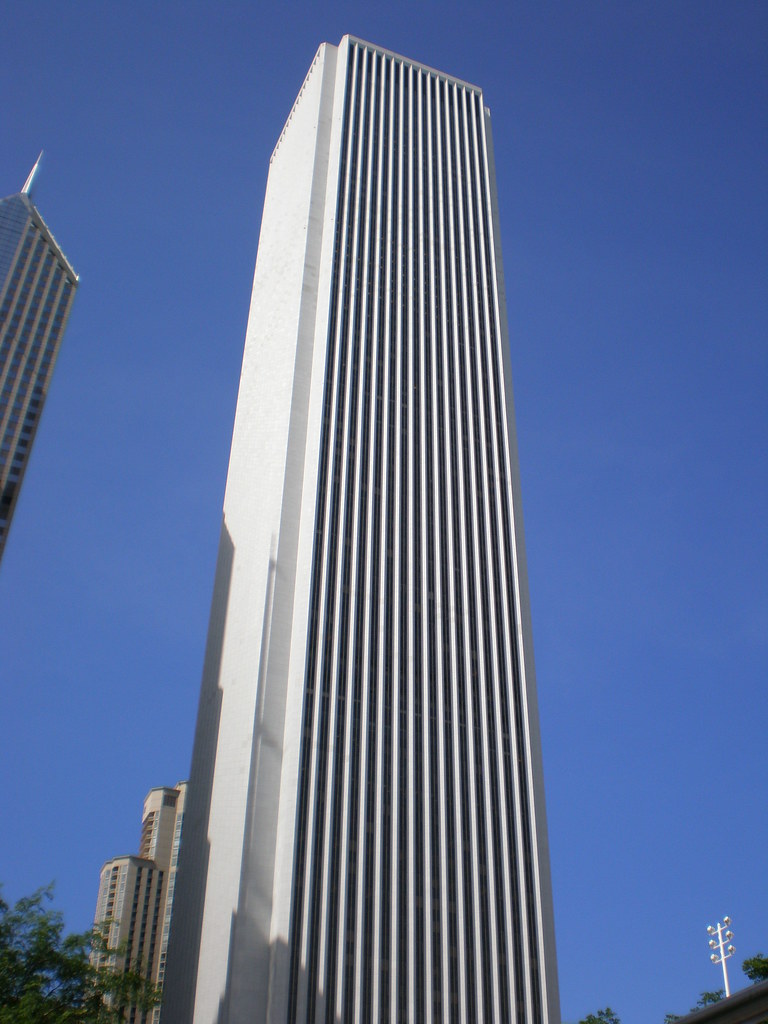
Walking through my Chicago Loop-based office building, I am often struck by the simultaneous layers of experience that exist in one geographical space. There are executives who have never stepped foot on public transit and service staff who commute hours to work each day on increasingly faulty Chicago buses. They eat different food, communicate with different technology and in my building, even use separate elevators. (Higher floors, which have their own elevators, house the more prestigious offices.) They occupy the same physical space, yet their experiences rarely overlap.

In a city with a history of entrenched inequality, this separation is often exacerbated by factors of race, education, etc., but it generally boils down to a matter of access granted by economic means. Money affords, among other things, certain clothes (which confer a sense of belonging in a workplace) and the ability to eat out (a center of socialization). Your geography of access is limited by your economic reality.

Gender plays a fundamental role in determining the geographies of economic access within Chicago. The phenomenon known as the "feminization of poverty" is not only an international issue (see the Millennium Development Goal #3), but also surfaces in Chicago. Americans already have a tendency to picture young mothers on welfare when they think about poverty, and in Chicago unfortunately that is an accurate picture, with women comprising almost 60% of all those under the poverty line.

Chicago Foundation of Women Executive Director Hannah Rosenthal notes in an NPR interview that a leading cause of women in poverty is the burden of single-parenthood: a third of all women-headed households in Chicago are in poverty. A quick look at the Boys and Girls Club membership demographics reveals that 48% of all members are from families living well below the poverty line, while an overwhelming 72% live with their mother's only.

While this equation (women in poverty=single parent families in poverty) may seem obvious, the solution is certainly not; financing families (often single-parent) in poverty is a much more complex problem requiring a much larger sum. There are additional access challenges- access to safe schools and affordable childcare options are two that readily come to mind. A favorite development blogger of mine, Niti Bahn, writes about how much harder it is to be poor in the US than in the developing world; without common developing world features, such as a large extended family for childcare, raising a family alone in the US is no exception.

In Chicago, the cause of financing availability is led by ShoreBank, an institution famous for its successful focus on community revitalization. Based on the Southside of Chicago, ShoreBank provides banking services to its surrounding community, despite a median family income of only $20,000. (They also, incidentally, provided Yunus and his fledgling Grameen Bank startup advice in the eighties for him to export back to his native Bangladesh. How's that for microfinance street cred? I could go on and on about this company- visit their website and read about them. Now! They are a triple bottom-line company, as well as being minority- and women- led. But I digress...)

Last year, Shore Bank launched a program to refinance subprime mortgages, saving many Chicago families (including many single-parent families) from foreclosure. Often, their community development loans go to small, female-owned businesses allowing them to escape from potential failure. Their community development credits often focus on lending to “credit-challenged” women who would be ignored by other commercial banks.

In the interview referenced above, Hannah Rosenthal laments that few studies of poverty use a gender lens in their analysis. This underscores the importance of smart institutions such as Shore Bank, who work to bring attention to gendered poverty and to alleviate the resulting limited access to resources.

Let’s hope in this unfavorable banking climate that Shore Bank is able to continue its work to transform Chicago’s economic landscape!


Note: I was deliberately focusing on gender in this post, though certainly many of the factors pointed out as problems of gender have racial roots as well.

(Photo from Flickr user hanneorla)
(Photo from Flickr user Edu-Tourist)

Taking the "I" out of "AID"

USAID headlines its Web page on Urbanization and Poverty with these words:

"In the next 30 years the world's population will grow by 2.2 billion people. Of these, 2.1 billion will be born in cities. 2.0 billion will be born in the world's poorest cities. Over 1 billion people will be born in slums if we don't do something now."

The text goes on to paint a tragic picture of an impoverished populace facing an "uncertain existence... surrounded by uncollected garbage... without the capital necessary to pull themselves out of poverty." While most poor people in cities do live in deplorable conditions and face colossal disadvantages, this apocalyptic call to action - typical of most outside aid efforts to developing countries - smacks of a dangerous noblesse oblige.

Painting the poor as victims and the rest of us as saviors ends up incapacitating the poor. With such a vision underlying global aid missions, efforts become based on outside interventionism and don't make much room for including the poor themselves.

The fact that attempts to impose Western programs usually do more harm than good is well known. In my own experience working on shelter issues in India, I have heard of laborers who have never set foot in a classroom falling asleep during extended training sessions, international donors demanding receipts from illiterate women's collectives, and fancy water pumps lying dormant because the technology to repair them is unaffordable. These anecdotes represent the ineffectiveness and unsustainability of programs that aren't rooted in the realities of urban poverty in specific local contexts. Outside programs can be worse than ineffective, though - many call them a softer form of colonialism.

While acknowledging our collective complicity in supporting systems that produce poverty, and our responsibility to be part of the reform process, we have to take a more humble approach. Poor people have been coming up with intricate survival strategies all along: constructing affordable housing, locating unoccupied crevices in the city, and developing dynamic neighborhoods. Development will only truly be equitable and sustainable when those of us on the outside support the agency of the poor to produce their own solutions.

Of course, "capacity-building" and "empowerment" are now trendy terms in the development business, but it's rarely more than lip service. Real participation entails letting poor people be involved in setting priorities, defining strategies, and managing projects. To genuinely address the crisis of urban poverty, we have to be willing to let our ego take the back seat and acknowledge that we may not, in fact, know best.

Poor Little (Formerly) Rich Us


Whether or not we’re actually on the brink of collapse, as newspaper headlines suggest, it’s pretty clear that—for our generation, at least—the days of dizzy abundance are done for. Even before the financial debacle's culmination in the past few weeks, very obvious warning signs had been piling up for quite some time, particularly in cities. Consider the sordid impasse of authorities faced with post-industrial, post-conflict, and post-disaster displacements; the thoughtless oohs and ahs sputtered at the urban fireworks extravaganzas of Dubai, olympic Beijing and other undemocratic, environmentally reckless city-building enterprises; the debunking of the creative city, the downtown renaissance or countless other urbanity-as-lifestyle jingles; the proliferation of substandard living conditions in the global slums rivaled by the proliferation of paranoid securitization measures in the global capitals; the spurious urbanisms of the Third-meets-First world crash sites; the brand new urban wastelands of foreclosed properties, ghost resort towns, or the aborted new economy's boomed and busted office clusters.

All of these factors add up to an eerily coherent landscape of failure, a probable breeding ground for a new urban—or afterurban—culture of poverty. Before getting into the details of what this actually means, we should recognize that we're not talking about the heavily mediatized, teary-eyed, dried-snot, food-stamp, dollar-a-day, We-Are-the-World concept of poverty, a sentimental and distorted view that considers destitution an exotic and rectifiable predicament. We need to see ourselves as part of the flaw. Failure isn’t always unintentional or accidental, and doesn’t necessarily call for immediate, direct or self-evident “corrective” measures.

We have to overcome our inability to cultivate, maintain, and/or deploy the collective intelligence that cities are supposed to encourage. What are we really learning from cities? Trading planning for packaging and reducing policy to product placement? Taking to heart the Jenny-from-the-Block motto of "used to have a little and now have (or want to have) a lot"? Pushing a pop chart urbanism of annual top whatevers? We’re so concerned with making our cities “successful” that we forget how to make them smart.

It wouldn’t hurt to realize that many places usually considered urban mishaps are in fact closer to premature paradigms. These afterurban extremities have given us—for years, or decades even—a hint of things to come, of the obstacles and opportunities we’re only beginning to face and assume elsewhere. We have to refocus on contexts of shortage and conflict and understand how they work. A different kind of inventiveness is required here, one that faced with the worst makes the most out of the least. We should start taking cues from failed urbanisms, considering they're nothing more than a crude and intensified reflection of our own contradictory standards.

Soon enough we might be absorbed into a new culture of precariousness: one of raw self-preservation, struggle for access, and profound instability. If we do manage to revert from consumer society’s holy trinity of speed, excess, and waste (says Zygmunt Bauman) into a time of pause, scarcity, and smart reuse; understanding poverty as vital urban failure—a situation that reveals something about ourselves as opposed to something we can and should “resolve”—could be our best chance to identify and attack the overwhelming restrictions and challenges of these circumstances. Poverty usually goes hand in hand with realism, it disenchants, it brings forth the dirty workings of things. Failure is a sort of active reminder and hopefully—at the risk of sounding like some sort of perverted Pangloss here—a potent drive for change.

Is Urban Poverty An Acquired Taste?

"The whole idea of de-concentrating poverty was supposed to be that you would pick up middle-class values. But all it's doing is urbanizing the suburbs." [Emphasis added.]

That's what a suburban activist said about Section 8, a major U.S. government rent subsidy program for low-income people. The quote comes from a Cincinnati Enquirer article about how the program is creating clusters of low-income housing in the suburbs as poor people from Cincinnati's inner city move there.

My first reaction—a knee-jerk urbanist reaction—to the quote was: "Good! Suburbs are fake; cities are real. A shot of poverty will make the suburbs more real."

But then I realized I had accepted a questionable assumption: that poverty is somehow inextricably linked to and emblematic of urban life.

Do I actually believe that?

In America, poverty is more concentrated in urban areas. Still, there's lots of rural poverty in America and elsewhere. In European cities the poor tend to live in the suburbs, while the well-off inhabit the central city. And I know, of course, that cities are engines of economic growth. So, while the urban/poverty association does make some sense, it's also clear cities don't have a monopoly on poverty.

There's something else right about the linkage. I think it's this: Unlike some suburbs and gated communities, it's not as easy for cities to exclude undesirable things like poverty. And it is this vulnerability to what's in the world—including poverty—that gives cities more authenticity.

Cities—with their layers of old and new, their sediments of success and failure, their grime and glitter, their wealth and poverty—are real places par excellence. This authenticity is a meaningful part of why I like living in a city. Poverty is a sign you're living in a real place.

But where this idea could lead freaked me out.

Does appreciating the authenticity of cities entail liking failure, grime and poverty? If we eliminated poverty would cities bore us? Do city-lovers love cities because they're difficult to love? Because they enable the flexing of snob muscles?

The idea that savoring city life might mean acquiring a taste for poverty—because that's one of the spices required for the full flavor of authenticity—is revolting.

Thankfully, I don't think anybody has to buy this noxious idea.

Here's why not: There's nothing wrong with the desire to live in the real world—even a world that includes poverty and failure. Just as you can love your family even when it includes your depressed, grouchy sister and not have to love depression, you can take pride in cities even when that pride is partly based on an authenticity that includes poverty (something you don't have to feel proud about.)

Nor does being proud about city life mean you're obligated to regard poverty as an eternal feature of the human condition. We can—and should—fight poverty even though it's a tenacious and complex problem. Like your sister's depression, poverty might be preventable—and, at the very least, is certainly worth controlling and ameliorating.

For the record, I bet that people not distracted by the misery of poverty will contribute more excitement to cities, not less.

Let's return to what the suburban activist said. While there is evidence that moving out of poor city neighborhoods into middle-class suburban neighborhoods does benefit some poor people, the activist is right that poverty's problems won't just blow away in the fresh suburban air. Still, the claim that poverty is for cities not suburbs strikes my urban-biased mind as a very suburban attitude. Which is to say, fearful and irresponsible—and definitely not something to be proud about.

Of Scrappers and Trashers

Due to the awesome economic climate being experienced here in America, two industries are seeing a surge in popularity. One relatively dated, the scrapping industry, made up primarily of undocumented workers who traverse our urban centers picking up waste metals (clothes dryers, chairs, ducts, etc...) in their trucks held together with bungee cords and duct tape. The other, a fresh industry born out of the massive amount of foreclosures plaguing the nation, thrives by trashing all the personal remnants left from the previous residents who were forced to leave everything on a whim. Basically, these guys go into the abandoned homes, often in upscale neighborhoods, and throw everything that isn't part of the house into a huge dumpster. Personal photos, 50" TV's, furniture, clothes, everything.

Now, both are benefiting highly from the unstable economy in the US, but I find a whole lot of contextual and ethical questions and comparisons that encircle these now flourishing industries. On the one hand, the Scrapping industry is largely made up of illegal immigrants living in poverty who know that they can sell materials to recycling centers and make a living under the radar. However, these scrappers are saving millions of pounds of metals from being blatantly wasted and saving an equivalent amount of raw material from being harvested and processed. They typically drive older trucks, which aren't the best on fuel consumption or emissions, but are mechanically maintained till their last dying mile. This isn't an industry producing millionaires or the well to-do, but an industry of working men, whether you agree with their citizenship or not. It's an industry built by an economic condition and it happens to be accidentally sustainable.

On the other hand, the Trashing industry is much more legitimized. Businesses have been created from coast to coast, generally owned and operated by real estate agents who have noted the increase in abandoned houses and the need for these houses to be emptied before they can be sold. Check out Foreclosure Ally for a great piece on this industry. These guys are actually getting paid to remove all the furnishing of these foreclosed homes so that they can be shown for sale. Consequently, they have no regard for the material and near 100% of the materials end up in a landfill. Now, I'm sure there are a few companies out there that try and recycle what they can, but the majorities simply load up dumpsters and ship them off to the landfill. Some companies have tried to work with goodwill and donate things but have never been successful in working out a system to save these materials….so it just gets thrown away.

In this situation, we can see that the economic conditions of the scrapper are much different than the trasher. The scrapper makes little money by recycling where as the trasher makes alot by throwing things away. It isn't economically viable for the trasher to save everything and try and sell it again where as it isn't economically viable for the scrapper to disregard waste materials of value. Why is it that those that are in a favorable economic situation are quick to discard everything? I would argue that those in a less favorable economic bracket are forced to live more sustainably than those that are well off. This is also evident in 3rd world countries like Nigeria who thrive off of our trash, recycling the western world's waste. Favela's are created using whatever materials are available. In America, Salvation Army's and thrift stores are set up so that lower class citizens can get clothes and furniture for much less than your average department store.

The lower class is inherently more environmentally friendly than the upper society, because they have to be. When is the rest of society going to catch up?


(Photo from Flickr user Damariew)
(Photo from Site Trashout Xpress)

About The Team


To live in a city in a globalizing world is, inevitably, to live in a globalizing city.
Where brings together urbanists from all walks of life living in cities around the world to poke, prod, and otherwise examine everything urban in an effort to maintain a global conversation about this increasingly vital subject matter. This is a group that loves cities. We hope that, through this blog, we can come to know them better. [more]


This is who we are, (where we are), and what we do:

Drew Austin (Chicago) plans mass transit for a living and passes through his favorite Chicago building, the Merchandise Mart, five days a week. He grew up in Indianapolis but has since moved on to larger Midwestern cities. In addition to transportation, he's fascinated by public space, good architecture, bad architecture and urban morphology. He once wrote about those topics on a short-lived blog called The List of Dorms. His favorite grid-based city is, of course, Chicago, and his favorite grid-based game is Scrabble.

Mario Ballesteros (Barcelona) is an urban enthusiast and independent editor based in Barcelona. He's lived in Southern California, Paris, and Mexico City—where he was born and raised. He co-edited of the latest issue of Actar publisher's Verb series (Crisis) and has worked as a curator for the Design Hub Barcelona. A self-taught urban analyst, he's toyed and toiled with a broad range of city-related issues, including post-revolutionary planning, the failure of Latin American developmentalist utopias, the spurious urbanisms of the Mexico-U.S. border, and alternatives to urban renewal in Mexico City's historic core. He's always happy mixing spatial perspectives with pop and politics. A regular blogger since 2003, additional posts of his appear sporadically at Mañanarama.

Marc Couillais (Chicago/Detroit) is the founder of Detroit based design collaborative, Preserve Industries as well as a 5th year architecture student at the Illinois Institute of Technology. He has lived and worked in a variety of economic climates though is drawn to the social and environmental context of America's Rustbelt cities. Though many see these conditions as a blight to society, Marc prefers to see the inherint beauty in natures reclamation of our industrial past. Through his writings on reuse and studies of adaptive housing, Marc hopes to one day reverse the stigma that has been placed on America's post-industrial urban centers.

Brendan Crain (Chicago) is the founder of Where, and an avid armchair urbanist. He spends his days researching construction projects in a big glass box in the Chicago Loop. He is heavily involved with the nonprofit organization Neighbors Project, currently serving on the National and Chicago Advisory Boards of the group. In his spare time, he drinks too much soda, argues with people who call it pop, and tries to get his cat to stop chewing on things plugged into the wall sockets. He really wants you to add Where to your RSS reader. Do it now!

Dan Lorentz (Athens, GA) has been fascinated by street grids, buildings and underground infrastructure since he was a boy. More recently, he's added zoning codes and economic development policies to list of things that he likes to think about. For about a decade, Dan has worked as an aide to state legislators in Wisconsin. He's worked in the non-profit sector on poverty and public health issues. He has a master's degree in public administration. Dan currently lives in Athens, Georgia, with his wife and two dogs, trying to do some freelance writing.

Katia Savchuk (Mumbai) was born under Soviet rule in Kiev and moved to San Francisco on the day of the 1989 earthquake. She investigated the urban mental maps of housing voucher recipients to earn herself a BA in Social Studies from Harvard in 2007. She currently works for the Society for the Promotion of Area Resource Centres (SPARC), a Mumbai-based NGO, and for its global affiliate, Shack/Slum Dwellers International (SDI), on issues of housing, sanitation and tenure security for the urban poor. She was a co-organizer of Koliwada Urban Typhoon, an experimental participatory design workshop held in March 2007 in Dharavi, Mumbai's vast informal settlement. She will continue to advocate community-driven urban development as a Housing and Urban Policy Scholar at NYU's School of Law, where she will start in Fall 2009. Katia also possesses a black belt in martial arts, an obsession with bhangra, and an as-yet unfulfilled desire to design mosaics.

Peter Sigrist (Ithaca) is studying city and regional planning at Cornell University. He is particularly interested in adaptive reuse, botany, and clean technology. Peter has a background in international and environmental studies. He grew up in Rochester, NY, and has lived in San Francisco, St. Louis, New York, and Cambridge, England. Peter is the founder and author of the blog Civic Nature.

A Whole New Where

As promised, today marks the kickoff of a new phase in the life of this particular urbanism blog. After a great first year, I found it increasingly difficult to keep up the momentum required to put out five to six long-format posts a week. I noticed that collaborative blogs in the field (and outside of it) were consistently good reads, while seeing several great blogs peter out or die off entirely. It seemed that my problem was not unique.

And yet, Where had built a small but solid following that I had no intention of squandering. After a bit of thought, I decided that the best way to keep Where on as a contributing member in the urblogosphere was to upgrade: to go collaborative. Currently, there are group blogs on sustainability, architecture, design, regional urbanism -- but none that focus on urbanism at a global level, which is something that is vitally important to understanding how contemporary cities work. Domestic discussions are important, but we can learn much more from looking past international borders. To live in a city in a globalizing world is, inevitably, to live in a globalizing city. There is no escaping the outside world in today's metropolis.

The new Where is made up of bloggers -- eleven, at relaunch -- that live in cities not just around the United States, but around the world: in Spain, India, Australia, and the UK. The places where we have lived cast an even wider international net: Paris, London, Kuala Lumpur, Sydney, New York, San Francisco, Santiago, Chicago, Brighton, Mexico City, Boston, Kiev. This is a group that loves cities. We hope that, through this blog, we can come to know them better.

To start off with a bang, today all of us will post as part of Blog Action Day, approaching the topic of Poverty from eleven unique perspectives. Where's original stated goal, which you can still read in the sidebar until the new blog format launches next Monday, was to engage readers in a conversation about cities. I hope that, as this blog opens up, on the production end, to new and diverse voices, that you will join us in discussing urbanism, and all of its many facets, by sharing your thoughts in the comments area. Blogging is nothing without an engaged audience. I invite you to engage with us on this topic today, and on anything and everything as we move forward.

Welcome to the new Where.


10.13.2008

LWB Scores Kaufman Interview

Holy mother of pearl, archiblogospherites: Jimmy over at Life Without Buildings just put up a severely rad interview with the one and only Charlie Kaufman, who penned the landmark films Being John Malkovich and Eternal Sunshine of the Spotless Mind. Where is in awe, and bows down. From LWB:

Life Without Buildings recently had the chance to sit down and speak with Charlie Kaufman, who generously answered this excited-yet-slightly-nervous interviewer’s questions about film-making, the search for truth, and the role of architecture in his movies. Discussed: Synecdoche, the practicalities of first-time directing, Paul Auster, the lost art of wood carving, and the infinite potential of Las Vegas.

Read the interview here. Do it.

9.18.2008

The Bean


New updates to Chicago on Google Maps' satellite coverage finally show The Bean and a completed Millennium Park. In case you were wondering if every last square inch, including the very tip-top, is polished, here's your proof.

9.17.2008

Jane

Do people actually read Jane Jacobs anymore, or has she become a misappropriated symbol for old-guard thinking in the same way that she was misappropriated as a symbol for David-vs-Goliath preservationism? Even Kazys now suggests that we throw her out in the face of gentrifying and demographically inverting cities -- things that make her core arguments for variation, limited regulation, and localism more relevant than ever. Her most revered book is nearly 50 years(!!!) old, he exclaims. What good could she be to us now?

Token Jacobsism.

A F%@$ing Break: Give me one, Please

It seems like every couple of weeks there's another city ranking list, and the extremely flawed methodology of each one is ever more extremely flawed than that of the list before it. Add to the pile: Forbes' recently-vomited-up list of America's Most Stressful Cities.

Obviously, I'm being melodramatic. And obviously, this means that I have some emotional stake in the results. So let's be done with it: Chicago topped the list. Which...I'm sorry, I have to laugh at that. Hard. Just last week, I was talking to a close friend about my growing desire to head out East, because Chicago has such a relaxed atmosphere. It's very casual here, and thus harder to get things done. A bit of procrastination is built into the way of life. Thus, working on more than a couple of projects at once gets more difficult. You feel almost pressured, in a weird way, to do less.

The merits and problems associated with this way of life are fodder for another discussion, but help to frame my reaction to Forbes' list. How, I wondered upon reading the article this morning, could this possibly be? And then, there it was, in the list of reasons Chicago placed so highly: "rising unemployment rate, expensive gas, high population density and relatively poor air quality."

I'll give them the rising unemployment. I'll even toss in an E for Effort on the air quality, even though it's really not that terrible. Wind blows a lot of our air pollution up to my good ole' hometown to the north, Milwaukee, giving the metro of only 1.7 million some of the worst air quality for a city in its size range. Milwaukee, in turn, dumps sewage into Lake Michigan, which then floats down to Chicago and closes our beaches (though this has been happening a lot less in recent years thanks to the Deep Tunnel project...but again, I digress).

Rising gas prices I had to roll my eyes at, because crowding issues on the CTA and Metra have been evidence of the fact that people are taking advantage of alternate options here. If anything, transit ridership should have been taken into account for determining stress in Chicago. Though it appears that these are metro area rankings (something Forbes is continually foggy about with its lists), so whatever.

But density?? This is a negative factor in determining stress? For my official position on this criterion, please refer to the title of this post.

I will grant -- as any pro-density advocate worth their salt will -- that there is such a thing as an unhealthy level of density. Chicago, my friends, comes nowhere near that level. There are plenty of residential high rises springing up around town, but it's hardly anything that you can compare to, say, the high-rise blocks of Hong Kong. Chicago has wide streets, many of them lined with trees. There is plenty of parkland, much of it well-maintained and relatively safe. As a friend once noted when visiting from New York, "My God, you can actually see the sky here."

Forbes' list is blatantly skewed toward older, more densely-populated cities (more commonly referred to by those with sense as "real cities"). Chicago is followed by New York, Detroit, Los Angeles, and San Francisco, with San Diego, Cleveland, Salt Lake City, Providence (yes, seriously), and Philadelphia finishing things out. Only one of these cities, you'll note, is not located in the older, more highly-urbanized Northeastern and California Coast regions.

Density wasn't the only thing to play a part, but it had a noticeable effect on the outcome. At any rate, this seems to be a better indicator of stress levels. I'll take living in a high-rise over living on the freeway any day of the week. Now excuse me, I have to o relax.

9.16.2008

A Letter to Barack

Dear Senator Obama;

Of America's four largest cities, Houston and Chicago are partially underwater, and New York's financial heart is having a coronary. Los Angeles seems to be in the best shape right now, and when you can say that, you know that we have a very, very serious situation on our hands.

Meanwhile, Senator McCain and his moose nugget continue to their banshee screeching about your lipstick on a pig comment in an effort to move the election further and further into their party's most familiar territory: the character assassination campaign.

For over a year and a half, you have promised us a different campaign. You have promised us that you would rise above the pettiness and catscratching that usually passes for political discourse in this country. You gave us your word that, this time, things were going to change. You practically trademarked the word.

Senator Obama, the idea that Americans don't want to hear about actual issues, that the last thing they want to hear is policy talk -- this is the most insidious lie that has been told. True, there are those in both camps that would follow their party out of a plane in flight without a parachute. They are of little concern.

You can run the same campaign that we have seen time and time again. You can continue to get caught up in the scuffle that the GOP is so desperate to get you caught up in. When they will launch an attack ad that oh-so-coyly (tee hee, tee hee) suggests that you just might be a pedophile, what line is left for them to cross?

There is no winning, here, sir. The deeper you get into their fight, the less energized your base will be. The more of us young, tech-savvy folks who launched you past Senator Clinton into the position where you now sit will feel duped, cheated, and used.

Our greatest cities are on their knees. What will you do, Senator, to rectify the situation on Wall Street? In the plainest of terms (because no one loves wonk but a wonkette), tell us what happened, and how you intend to address it if you are elected. What can be done for Houston and Chicago, and other waterfront cities, to protect them in the future? Yes, the current relief efforts are important, but what will you do, specifically, to address the problems that are creating these increasingly dangerous storm systems that travel further inland each year?

Senator Obama, you are at a crossroads, and the current polling information has little good to say about the way that you've responded to Senator McCain's attacks thus far. If you cannot live up to your promise of change on the campaign trail, you have little hope of winning this election, because it speaks very poorly of your ability to affect change once you are in office.

We are still holding our breath. Change the conversation.

9.04.2008

Wow.


I'm a big fan of Jay Smooth over at Ill Doctrine, but he's outdone himself today. I was sick to my stomach when I heard about Sarah Palin and Rudy Giuliani mocking community organizing at the Legion of Doom's GOP's convention in St. Paul last night. But Mr. Smooth's vlog response today does a brilliant job of sucking the political bluster out of the scenario and presenting their banter plainly as what it is: an incredibly careless, openly disdainful slap in the face of everyone who actually goes out and works hard to make a difference in their community. It's a surprisingly moving take-down. Don't miss it.

8.28.2008

Save Our Modernism!


"Architecturally, New Orleans is perhaps best known for its Creole cottages, shotgun houses, and the mixed-influences of the French Quarter. But there is a small yet important concentration of Regional Modernism in the Big Easy and local Modernists are doing their damnedest to preserve it. Let’s just hope its not too late. Currently facing the biggest threat are 30 area schools built during the 50s — 29 of which are slated for demolition or land-banking..."

Where's friend Jimmy over at Life Without Buildings is leading the blogosphere side of a charge to save a collection of Modernist public schools in the Crecent City. If you're at all interested in modernist preservation, I'd suggest you make your voice heard. There's less than a month left until the decision regarding the fates of these buildings is made.

8.24.2008

Blog Action Day 2008: Poverty

The big bloggy day with the unfortunate acronym is fast approaching, and Where will be participating again this year. On October 15th, 2008, thousands of bloggers around the world will post on the subject of poverty in an effort to raise awareness and, as the BAD website says, "change the conversation." Where has a bit of a surprise planned, so if you haven't already, make sure to add this blog to your feed reader of choice!


Blog Action Day 2008 Poverty from Blog Action Day on Vimeo.


Hickenlooper on Biden

I've got my doubts about Barack's veep choice, but this quote from Denver mayor John Hickenlooper gives me hope. Perhaps, as is very, very possible with the contemporary media, Biden's big mouth has overshadowed wise policy. Let's hope that's the case.

At any rate, here's what Hickenlooper had to say yesterday:

"From the point of view of a big-city mayor, I think Barack Obama couldn't have picked a better vice-president. Joe Biden has been at the forefront of a lot of urban policy issues - the governor was just talking about his domestic violence legislation. He has consistently shown that you don't throw money at problems, right? You come up with solutions, and they you measure your investment, you measure your outcomes. He will be very warmly received by the mayors of this country."


(From, Via)

8.23.2008

3000 Broadway

Sure, all major cities look big and dense at their cores. But how do they compare a bit further out? Where's got some (admittedly loose) comparative urbanism for ya's today: aerial images of the address 3000 Broadway in America's nine largest cities -- #10 San Jose has no like-named street. (For the record: Philly's is from 3000 Broad Street, and Dallas' is from 3000 Broadway in the suburb of Garland, since the address does not exist in The Big D proper).

New York City, NYLos Angeles, CAChicago, ILHouston, TXPhoenix, AZPhiladelphia, PASan Antonio, TXSan Diego, CADallas, TX

8.14.2008

Holy Futuristic Automobiles, Batman


Ok...if they can make cars look like that (and not chow down on the environment to get from A to B), I'll give up my bike and start driving again, and stop complaining about how cars uglify the urban environment. I still want wider sidewalks, though. Walking will never go out of style.

Which reminds me...


Forgive the slightly vapid post, but the future is looking mighty sexy right about now...

(Both found via Core77)

Air Show

It's Air Show Weekend here in Chicago, which means the US Air Force's Blue Angels are "practicing" overhead for the next few days. "Practicing," of course, translating to "flying so ridiculously low and fast over one of the most densely populated areas in the country that the noise they make sets off car alarms and makes pictures tilt on their wall hangars."

Seriously, who thought this up?

Any thoughts on urban air shows? They're a blast to watch, but really...do they have to practice over the 'hoods for three days? Listening to the roar of the jets flying overhead, I feel a bit on edge...I have to wonder if an event like this has some sort of subtle psychological effect on people.

8.11.2008

Energie Tales


Like Fairie Tales, only a bit less connected to reality!

Case in point: Discovery News, today, brings us this report on a competition between several teams of researchers to find a way to turn car exhaust into an energy source. Sigh. Where will it end?

It may well be that recycled car exhaust winds up being a genuinely useful source of energy. I won't dispute that (nor do I have any sort of scientific background to back up such a dispute if I were to try). But doesn't it seem like the things that "researchers" are trying to cull fuel from keep getting more and more...far-fetched? Every time you turn around, there's another story about another mundane, thoughtless bit of waste from our society's daily workings that just may be the source of energy to rescue us from oil dependency! It's getting to be a bit hard to believe any of it.

What's next? A plan to collect dead skin cells from under the blades of used razors to create a biomass engine for powering Las Vegas? Or perhaps an ingenious discovery that shed cat hair is ten times more efficient, when burned, than gasoline if mixed with a teaspoon of the sludgy goop left in the drain-catch after you wash the dishes?

I can see it now: millions of people toss out their dishwashing machines (which will then be melted down to be used as another recycled fuel source involving dead fish and broken Tickle-Me Elmos), and buying cats. The cacophony of feline mating calls fills wealthy enclaves as neighbors cross-breed their pets in an effort to get enough kitty-biomass to get the Beamer to work and back. Driving to the grocery store for more cat food, you see a man hunched over a large, frantic Tabby, combing frantically as the cat claws the air; "Come ON, Patches! Goddamnit, I need to get to WORK!"

Or maybe ethanol will save us all. Oh, excuse me while I go fix my eyes. I just rolled them so hard that they got stuck that way...


Edit: I realized just after posting this that it contrasts pretty sharply with this post back in June. Oh well...chalk one up for fatigue.

8.09.2008

Dear India: You do not need your own Dubai.

I can't be the only person who's bored to death with videos like the one here, screenshot'd above, for the Nanocity deveopment north of New Delhi, can I? Obviously, the presentation, with its sweeping aerials and zooming close-ups of crystalized placeholders for buildings is intended to impress.

And yet.

After Masdar, and the Palm Islands, and that insipid Koolhaas Death Star development, these "impressive" videos have become mundane, commonplace. There is the slight tweak to the trope, in this case, of the development's being located in India. Still, knowing what little I do of India's wild and dynamic culture, the change of location actually generates more disgust for the project. Here is a sanitized, plagiarized version of Next Generation Urban Density™ for yet another developing country.

The most irksome thing about these kind of developments is that they completely ignore existing infrastructure. Why not propose a radical rethinking of actual New Delhi neighborhoods by drawing on Indian cultural and building traditions? Dubai is a lost cause, but India has no need to go down this road. In twenty years these generic ecocities are going to look like 1960s housing projects in the US look now: like a terrible, horrible, no-good very bad idea. Building an eco-city from scratch is like burning down your house to get the kitchen stove lit.

So a plea to Indian developers and financiers looking to develop their cities in the coming decades: Dubai is not a model. It is a warning sign. Take heed.

8.06.2008

You Have to Earn It

(Cross-posted from the Neighbors Project blog)I'm moving out of my current apartment at the end of the month. When I go, the next people to live here will be paying literally almost twice as much as I currently pay in rent. My neighborhood -- on the border of Wicker Park and the Ukranian Village in Chicago -- is being gentrified. I feel weirdly responsible, even in my leaving of the place. Since I don't have any control over the management company, I'm not really doing anything, per se; but as it turns out, that's exactly the problem.

Moving to a new neighborhood does not guarantee that you will be welcomed into the existing community -- especially when the neighborhood in question is going through large-scale change. I was reminded of this fact this morning while researching today's Neighbor News post. I came across this story from Pittsburgh, where a team of young urban farmers has created a working farm in one of the poorer areas of the city, bordered by one of its most infamous ghettos, The Hill. One of these people articulated quite nicely the idea that first got me involved with Neighbors Project last fall: "We're aware we didn't grow up in the Hill," she said. "We have to earn a place here."

When anyone, young or old, moves to a new neighborhood, they become agents of change. There will be things that we make worse for some people, and things that we make better for others. Few people can claim to wield the power of a developer or city councilman; indeed, our impact on a new neighborhood, as individuals, is small, but it is still important. The choice that we are each presented with is: will I merely pass through this neighborhood, or will I earn a place here?

I'll let you in on an embarrassing little secret: I never really earned a place in the community that I'm moving away from. I had originally intended to stay longer than I'm going to wind up staying, so I'd just assumed I'd get more involved in the future. I heard about neighborhood meetings and saw people out on their stoops, but I was always in a hurry. Even working closely with a group like Neighbors Project, it was easy to feel too busy to engage with my own block.

And now I can't help but wonder if, had I gotten to know the people living around me, I might have been able to find a way to keep my apartment affordable. Maybe one of my neighbors has a relative or a friend moving to town, and I could have re-signed my lease and subletted the apartment. It's a pretty fruitless line of thinking, really, since the past is the past and the rent has already been hiked. Still, it's disturbing to see how much impact a lack of effort can have, and it's made me remember why it's important to slow down and engage with my surroundings.

When you move to a neighborhood, and are immersed in a new community, remember that doing nothing within that community is doing something.

-----------

I wrote this post recently for the blog of Neighbors Project, a nonprofit that I've become more and more involved with since I first reported on it a year ago. I've been working for NP over the summer and recently joined the National Board of Directors, and I figured that, since I can put a little of the blame on NP for the lack of posts on Where, I'd cross-post to share a bit of what I've been up to. As for Where, there are big changes on the horizon. More on that later. For now, get out and earn your place in your neighborhood.