8.06.2008

Chicago Prints

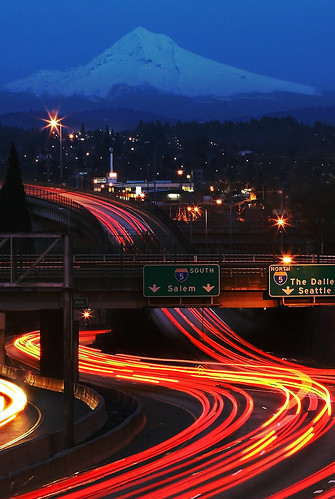
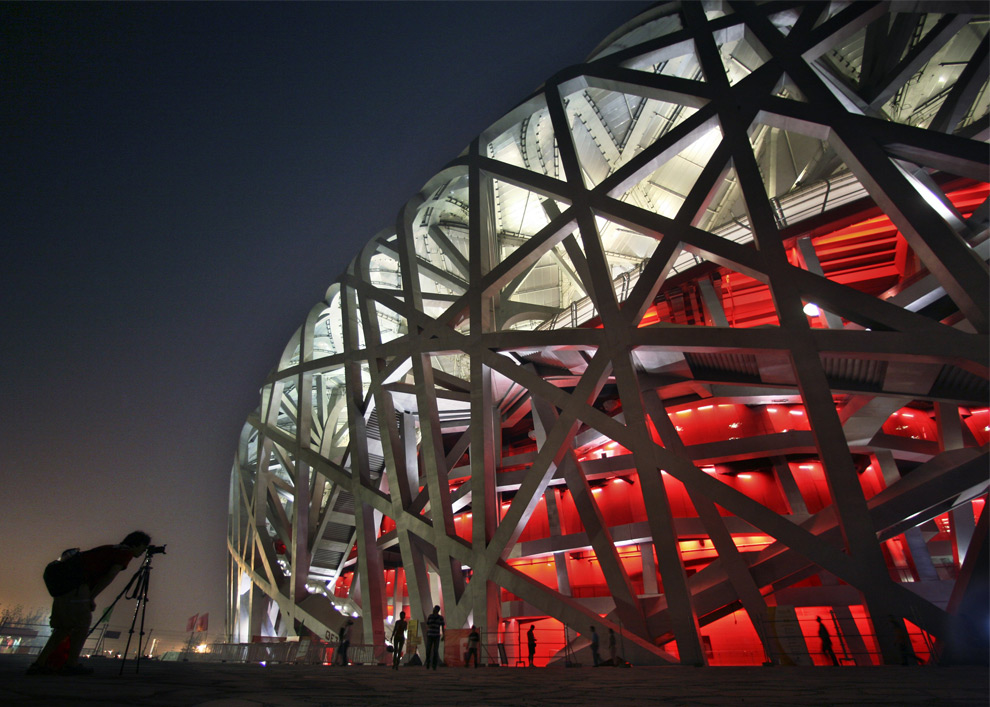
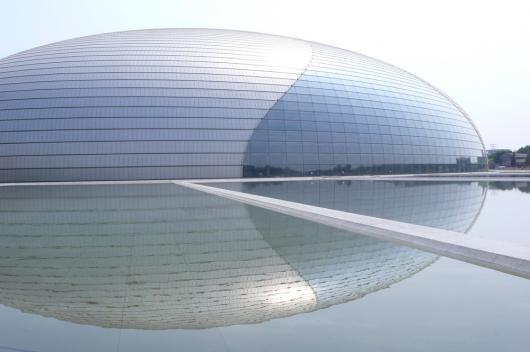
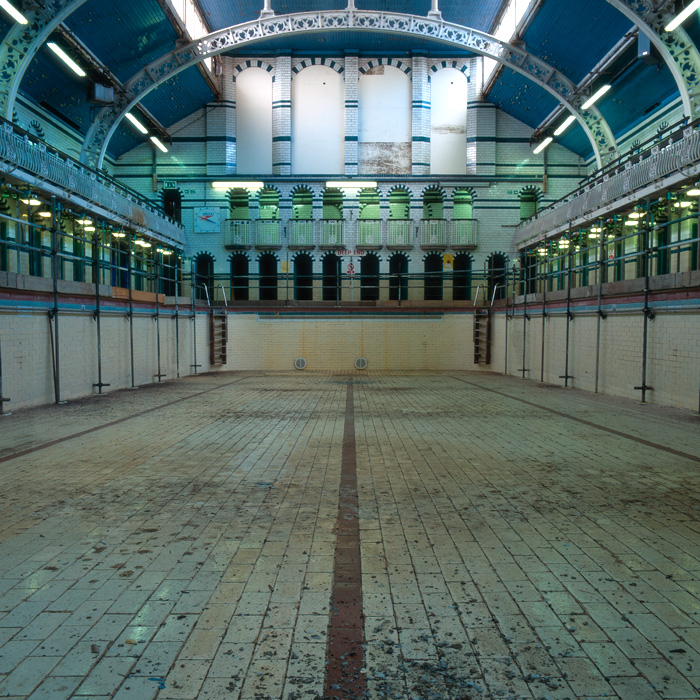
Found some spectacular art prints of Chicago landmarks while poking around on Etsy today. If you see one you're interested in purchasing, click on the image and it will take you directly to the seller's page.


8.04.2008

A bit of color...

Tonight's storm in Chicago:


And, oh god...Tokyo is on Google Street Views...


7.31.2008

Urbanffffinds: The Movie

Well, not really. Actually, not at all. Maybe sort of? Whatever, it's a longer variation on a theme.

Urbanffffinds will not run as a regular feature anymore on Where. But, thanks to Marcus, there will be a constantly-updating feed of architecture and urbanism imagery over at Where's new FFFFOUND! account! Occasionally, there will be Urbanffffinds features to promote the page, which can now be found in the sidebar at left. But I encourage you to add the page to your feed reader for a steady flow of excellent urban imagery.

Enjoy!


UPDATE: the full Urbanffffinds catalog has been added, mostly in order, and with only a few permanent losses (stupid broken links!), to Where's FFFFOUND! page. Peruse away!

7.24.2008

The Worst Cities...?

While Monocle and Forbes and everyone else in the mainstream media argues about what cities are the best to live in, Where was recently introduced to a site that's coming at urbanism from a slightly different perspective. Worst-City.com is home to what appears to be an entirely subjective (and often absurd) list of the sixty worst cities to live in on the face of the earth. The intro paints a pretty accurate picture of what to expect from the rest of the site:

"The world is very, very, very big. There are some wonderful places on its surface. Fabulous sun-kissed beaches with miles of golden sands. Wonderful mountains with crystal steams cascading down into tropical paradises. There are also some horrendous cities populated by a subculture of thugs and gangsters. Sadly this website is about the latter locations. Here you will discover some of the most vile and violent places to leave. So read on and be prepared to be shocked."

The list ranges from the obvious (Chernobyl, Brazzaville, Baghdad) to the completely befuddling (Paris, Seattle, Barcelona), and takes a whack at everything from Milwaukee to Bangkok in between. The site is filled with bons mots like "When it was built most Parisians hated the Eiffel Tour - that's why they named it Eiffel - means Awful in French!" and is entertaining as long as it's read with several large grains of salt and a hefty suspension of disbelief. All in all, it's a mind-bending international adventure that's worth a lazy afternoon.

Enjoy the ride...

7.23.2008

7.22.2008

Rankability

WalkScore has taken their delicious color-coded walkability maps, previously covered on Where, national. The results are...well, a bit disappointing. Perhaps I'm the only one, but I'm getting a bit tired of seeing rankings that use central city populations to determine the sample cities when metropolitan populations are far more important in determining the stature of an urban area. It makes little sense that Jacksonville, Tucson, and Oklahoma City make the cut for such rankings while St. Louis, Cincinnati, and Pittsburgh -- the central cities of much larger, more important metropolitan areas -- are left out because they've lost population to suburbanization.

This methodology has been a minor annoyance to me for some time, but the oversight seems particularly egregious in the case of WalkScore's ranking since it punishes densely-built urban centers for falling victim to exactly what the site is supposedly working against, and rewards cities that inflate their population counts through annexation and suburban deveopment patterns. The end result is a bit embarassing, with the overall city scores dropping under 70/100 points before you even get past the top ten on the list. Average everything out and the US gets a big fat F for walkability in its cities.

While there's a long way to go for Americans to become a more pedestrian-minded people, the idea that only a handful of our major cities are walkable is a bit absurd, and seems more like a misrepresentation than useful information. While it certainly shows the damage that suburbanization has done to our cultural understanding of urbanity, it says little about the actual state of walkability in America.

And that's too bad, because the maps look great, and the idea behind the rankings is a good one. If real estate is about location, the mantra for academic study should be "Execution, execution, execution."

7.21.2008

Creative Density

A trailer park, inserted neatly into a long central lot on an oversized block in Bangor, Maine. It looks a bit like a zipper, no?

The Outquisition and Urbanism Camp

Prolific greenblogger Alex Steffan wrote a post last weekend about an idea spawned during a late-night coffeetalk with the equally prolific and fantastic Cory Doctorow (which sounds like maybe the most thoroughly awesome way to spend a weeknight, ever) that Doctorow dubbed "The Outquisition." The idea is grand and audacious in just the right way, and the comments that follow the initial post are well worth a read. But this post is about an offshoot inspired by a footnote in Steffan's post.

The dynamic e-duo's Outquisition involves sustainability-minded urbanites trekking out to failing suburbs and shrinking cities around the world, bringing with them innovative, site-specific solutions to the slew of new problems being brought on by the collapse of the oil-based economy. In his litany of suggestions, Mr. Worldchanging mentions "running holistic programs for kids" as a possible method of green evangelism. This re-ignited an idea I'd been going over a few months back: urbanism camp.

There are all kinds of camps for kids. There are outdoor adventure camps, sports camps, art camps, and plain old-fashioned away-from-home summer camps, with their crafts and campfires and capture the flag tournaments. Kids learn a lot at camp; not only do they build social skills, they are able to hone their interests and be exposed to new activities and ideas. With families increasingly looking at cities as a solid alternative to suburban picket fences, it seems like camp would be the perfect way to teach kids how to appreciate the urban environment.

Indeed, life in the city is very different from life in the suburbs for a youngster. A city-focused camp could feature games that took advantage of urban neighborhoods, sneaking in lessons about street safety amidst the fun. Trips to different neighborhoods, museums, community centers, parks, and public spaces could not only expose kids to a variety of subjects, but also introduce them to the many different creative outlets provided by a dense urban core.

This poses all sorts of interesting questions; architecture, public space, sustainability, diversity, mass transit -- can these things be entertaining to an eleven-year-old? It's kind of fun to ponder. Maybe someday, somebody will actually come up with an affirmative answer.

Urban Sandboxes

CEOs for Cities recently relayed an interesting story from USA Today that has some interesting implications for older, depressed urban centers as Gen Y and the Millennials gear up to make their mark on history:

Tulane's applications almost doubled from 17,572 pre-Katrina to 34,100 this year. As one Loyola's vp of enrollment told the paper, "Students know they are coming down to have an adventure. It's a great time to be part of something... the rebirth of a city."

NOLA and other struggling burgs -- think Detroit, Pittsburgh, St. Louis, and Baltimore, or even smaller cities like Canton, Reading, and Flint -- together provide a unique opportunity in their hard times. These are the urban sandboxes, the cities that present young people trying to prove their mettle with the opportunity to do so in new and interesting ways. Desperation breeds innovation out of necessity.

Previous generations have tried and blundered efforts to turn Rust Belt and Northeastern cities back into growing, productive urban hubs. We now know that stadiums, riverwalks, and high-end condos have a limited (if any) effect on cities. What is encouraging about the surge of interest in New Orleans is that the challenge of repairing the city is so blatant, and so thoroughly un-glamorous (try as Brad Pitt might to change that).

Perhaps this is an early sign that the next generation of urban innovators gets that top-down, aesthetic-focused efforts aren't what improves a city; indeed, the "fix downtown and the neighborhoods will follow" theory is proving itself to be pretty weak over time. Could the interest in the Big Easy mean that tomorrow's civic leaders are now planting the seeds, as college students and recent grads, for a reversal of this process?

Besides -- if Millennials can fix Detroit, the "Greatest Generation" mantle may be up for grabs.

(Photo from Flickr user Alex Summer. The original full-sized color version can be viewed by clicking the photo.)

7.10.2008

Digital Density

CHICAGO, 2008


Dense concentrations of people = dense concentrations of information. Will the NIMBYs of the digital city complain about websites that ruin the character of neighborhood infoclouds? Or perhaps block new sites from launching because they displace smaller, scrappier sites with more interesting content? Will the artistic streetpunks and art insurgents of tomorrow be carefully and sneakily grafting their tag onto Flickr images?

Is the future of urban activism electronic?

7.08.2008

This looks encouragingly familiar...

Kotkin Kabob'd

On principle, Where does not link to any article containing Joel Kotkin's canned, willfully ignorant whinnying about how cities suck and suburbs are, like, totally awesome, bro. But Where does link to Bill Fulton's skillful and thorough skewerings of said whinnying. In fact, it does so with great aplomb.

And now I'll stop writing about this blog as if it's a sentient being.

7.05.2008

Colbert on Skyscrapers


"We need to build big buildings with high asses and huge tits!"

Architectural commentary at it's most entertaining...possibly ever.

(via)

7.03.2008

Parks, Public Space, Political Theater, and a Picnic

The Village Voice reports today about a recent event led by one of Where's favorite American provocateurs, Reverend Billy. The Rev led a lively picnic-cum-protest in New York's Union Square, one of my all-time favorite urban public spaces, which is apparently under the threat of having its lovely Neoclassical pavillion turned into a private restaurant. While I'm not at all opposed to public-private partnerships as an option for reviving parks and public spaces in need of the funding and attention, the idea that one of the most popular and attractive parks in the country's largest city (which also happens to be one of its richest) needs privatization is absurd. Which leads to the conclusion that privatizing any part of it would only be done out of greed or incompetence. Let's hope this idea dies on the vine, eh?

(Photo from Flickr user safety dawn!. The original full-sized color version can be viewed by clicking the photo.)

6.29.2008

Archisatire


"I invite you to invest in the ninth wonder of the world."

Hilarious.

via

6.26.2008

The New WalkScore

The popular Gmaps mashup, which made a big splash in urbanism circles last year when it debuted, has a fantastic new color-coded map of Seattle up on their site. Hopefully this is a sign of things to come. I'll be waiting anxiously for the Chicago map.

6.25.2008

Exploring the Favelas of São Paulo

Electri-City

From the look of things, the zero carbon high tech eco-city of 2030 might not really look that different from the boring old present of 2008. Innovative minds are coming up with new ways of harvesting power from just about everything, reducing the need for crazy-looking turbine towers or solar-paneled skylines. What happens if everything becomes its own source of energy? Obviously, this seems like a Green pipe dream, but speculate for a moment. What might humanity do with a global surplus of power?

In the meantime, we can marvel at the creative thinking below and wonder if, one day soon, our curtains might be powering our laptops and televisions.

So where might we be getting our electricity from in the near future?

Our toilets? (Architecture.mnp)

Our walls? (Jetson Green)

Our clothes? (MIT News)

Our curtains? (Electricpig)

Our sidewalks? (core77)

What are some common, overlooked aspects of the urban environment that might be able to generate usable energy if harnessed in a new way? With suburbs densifying and evolving and becoming more self-sufficient nodes in polycentric megacities, the potential seems endless. So many people, so many opportunities for a volt or two.

(Photo from Flickr user Tobers. The original full-sized color version can be viewed by clicking the photo.)

Chicago El Stories

So here's an interesting art project: Chicago El Stories is an installation at the Armitage Brown Line stop in Lincoln Park that pairs photos of seemingly unimportant sites around the city with audio files of peoples' memories and stories about the places. It's an interesting way of showing how the urban environment is littered with personal experiences, and how the city can be so many different things to so many people.

6.24.2008

The Secret City

What if you woke up tomorrow to learn that your country's political leaders had built a 2,702 square mile (7,000 sq km) city -- a lavish new capital, constructed in secret? If it sounds too fantastical or even conspiratorial, consider Myanmar, where the ruling junta has managed just such an architectural coup.

6.23.2008

Wisdom of the Buck

In honor of the Buckminster Fuller Institute's week of events honoring their namesake (take note, New Yorkers), a quote from the architectural luminary:

"Pollution is nothing but the resources we are not harvesting. We allow them to disperse because we've been ignorant of their value."
-- B. Fuller


More @ core77.

The Urban President


What I find most impressive about Barack Obama is his ability to speak about the Bush administration's bungling over the past eight years that so clearly outlines the need for a different approach. As I listened to his speech to the US Conference of Mayors, I found myself shocked -- dumbfounded, even -- to hear a presidential candidate speaking about urban issues in such plain and ambitious terms. That a presidential candidate would talk the talk about metropolitan- and regional-scale economics, mass transit and high-speed rail, and the specific ways that the war in Iraq hurts individual cities and neighborhoods, is almost hard to believe after eight years of secrecy, corporate carte blanche, and a complete lack of focus on anything that actually matters to peoples' day-to-day lives.

"Neglect," Obama quips, "is not a policy for America's metropolitan areas." Word.

If you like the clip above, check out the full video on the US Conference of Mayors website.

6.20.2008

Chicago mourns the loss of a prominent street artist...

(More from Wooster)

(Photo from Flickr user BigPictureProject. The original full-color version can be viewed by clicking the photo.)

6.19.2008

Three Short Urban Navigation Blogedankens

No prizes this time, but I do encourage you to leave comments if these exercises lead to any interesting answers...or more interesting questions. Click the links to see the inspiration for each thought experiment.


Blogedanken #1: Imagine that your city were like Venice; where would the Grand Canal be located? What streets would remain streets, and what ones would be sunken to form the city's canal network? Create a corresponding map. Does this map tell you anything about transportation and infrastructure networks in your city? How could such a map be used to plan transit lines, or a park system?


Blogedanken #2: If someone asked you to write a guide to your city for visitors that didn't want the tourist experience, where would you send them? Determine 5-10 places and/or experiences that you consider essential for the un-tourist in your city. Now create a walking-tour route that connects these spots in a way that creates a meaningful way -- a way that can direct the visitor's interpretation of your city. Compare your route to a map in a typical tourist guide. How do the two differ? What does this tell you about the way that you have experienced the city, yourself? What has your city taught you?


Blogedanken #3: Cities are very much about paths. Numerous networks of people, information, and physical infrastructure create a massive web often referred to as the urban fabric. Almost every city has one or two once-crucial cords in this web that have faded from prominence, or even disappeared completely. Imagine that you are creating a virtual guide, using GPS and voice recordings, to one of these defunct lines in your city. How have the areas around this forgotten path adapted since its decline? If they have not adapted particularly well, speculate as to why that might be. Based on what need the path and its surrounding infrastructure originally served, what currently vibrant paths through your city could become deserted or forgotten in the future? How might this be averted?

(Photo from Flickr user Damiel. The original full-color version can be viewed by clicking the photo.)

6.10.2008

Chicago: Creative Capital?

Fast Company's Fast Cities 2008 list (which is about a thousand times more coherent than last year's) came with a delightful cherry on top for this blogger, as it named Chicago the "Creative Capital of the Universe." Being from Milwaukee (Chicago's little brother to the north) and currently residing in the Windy City, I found this exciting news; Chicago has long suffered from what you might call Second City Syndrome, always trying to get out from under New York's shadow. (For the record: we don't really think of Los Angeles as a real place, so we're still #2).

All About Cities' Wendy Waters wrote a post tonight questioning whether or not the title was quite accurate; indeed, her assessment of the title's pithy, attention-grabbing nature is right on: it would be boring to read another article about New York or San Francisco being the most creative. But there's more merit to the title than you might think if yer not from 'round these parts.

I'll turn to Paul Graham's recent essay, "Cities and Ambition," for my defense. In his highly enjoyable piece, Graham asserts that cities that act as hubs of ambition have a way of communicating with people; New York says to its residents, "You should make more money;" Silicon Valley says "You should be more powerful;" Cambridge says "You should read all of those books you've been meaning to read." Chicago is most certainly an ambitions place -- it's the Emerald City of the Midwest, the Mount Olympus of Flyover Country. All (rail)roads lead here, so to speak. But after reading Graham's essay, I had trouble picking out exactly what Chicago was saying through its citizens' ambition.

"Creative Capital of the Universe" hit me like a brick in the face. Of course! Chicago says to its citizens, "You should be more interesting." The city is a domestic melting pot, pooling people from a region that is typically overlooked and underappreciated. We of the rust belt and great plains cities flock to Chicago to prove ourselves. Chicago's Second City Syndrome is a great asset; a city that is constantly trying to prove itself, after all, demands that its citizens do the same. And because of the slight sense of inferiority, Chicago is less pretentious than other global hubs like New York, London, or San Francisco. That lack of pretention has the power to erode fear of the unknown; Chicago has always understood that, to make big headlines, you need to take big risks.

In a world as spiky and competitive as the one that we live in today, it's pretty much impossible to claim that one city can claim to be the creative capital. But in terms of big headlines, Chicago seems to have inspired exactly what it was hoping: controversy. Screw being rational. Be more interesting.

(Photo from Flickr user kellyhafermann. The original full-color version can be viewed by clicking the photo.)


Links:
US City of the Year: Chicago (Fast Company)

Chicago: Creative Capital of the Universe? (All About Cities)

Cities and Ambition

Information Overload

Hyperlinks, RSS feeds, Google News, Wikipedia, Technorati...

The amount of information that flows through a web savvy person's brain these days is staggering when you take a step back and observe. Eventually, one can get to a point -- a sort of "information overload," if you will. It gets to be too much to take in. There are too many interesting tidbits, too many convenient coincidences, too many inputs, period. Blogging, as a form of writing that takes that constant stream of information and tries to somehow decipher or make sense of it (albeit a tiny bit at a time, while, ironically, adding to the tsunami) can literally become overwhelming.

Scratch that. This is not a hypothetical. Blogging has become overwhelming. I hope you'll bear with me through this rather indulgent post; perhaps I'm just as narcissistic as the general populace seems to believe bloggers to be, but I feel a strange urge to explain why this blog has, despite several promises to the contrary, remained mostly dormant for the past two months.

In short, the constant flow of media got to be too much. At some point, sifting through hundreds of news items and blog posts and articles and videos every day stopped being enjoyable and started to feel like a heavy weight on the shoulders. Blogging, when not for profit, should at least be fun, and Where became more of a responsibility than an exciting project, for a while.

Excuses aside, I do intend to get things up and running again, but every time I try, the thought of putting together a long post with multiple sources gets a little...exhausting. No joke. Perhaps I started to take this all too seriously. That's always a surefire way to make yourself miserable, isn't it?

So I ask Where's little community of regular readers to bear with me over the next few weeks as I try to sort things out and get back on the blogging horse. I'm taking a cue from BLDGBLOG, Pruned, and Landscape Urbanism, and Where will be featuring more short, informal posts (though they will be titled and archived in the sidebar) while I work back up to 1000+ word entries.

Where's coming back. It's just taking longer than anticipated...