Showing posts with label street life. Show all posts

1.22.2009

Posh to be Poor? Transportation

Over the last few years there has been a surge away from motorcar transportation towards public transportation and the bicycle. This can in part be attributed to the sustainable movement as well as the growth of our urban cores. In 2008, the number of people living in cities eclipsed rural dwellers for the first time. As cities become more dense, the efficiency of traffic becomes increasingly important and for residents, it becomes faster to take public transportation. Now, aside from public transportation, the bicycle is also seeing a boom in popularity as a primary mode of transportation for many city dwellers.


The bicycle is rapidly becoming the popular mode of transportation in large urban cores. It is cheap, you can find a decent used bike for 25 bucks that will get you around the city fairly well. Bikes are easy to maintain and aren't subject to expensive repairs as they age. No need to buy insurance either, or fill up on gas. These qualities make it a very attractive option for those who are strapped for cash. Also, it is environmentally friendly due to the lack of emissions and lower embodied energy than the automobile. So, this is an important turning point as people begin to look away from a more expensive, more convenient mode of transportation, to one that is significantly more affordable. In fact, New York city saw a 35% increase in people biking to work in 2008. Unlike public transportation though, biking has become a trend with thriving organizations such as Critical Mass advocating for increased ridership. It has become cool to ride a bike as demonstrated by the many celebs recently caught on 2 wheels. Lance Armstrong may have sparked a national movement toward road bikes, but the many bike messengers roaming our urban cores have sparked a fixed gear revolution. Once seen as tacky or radical, the bike messenger style has invaded western culture influencing clothing, style (messenger bag anyone??), and heck, transportation!
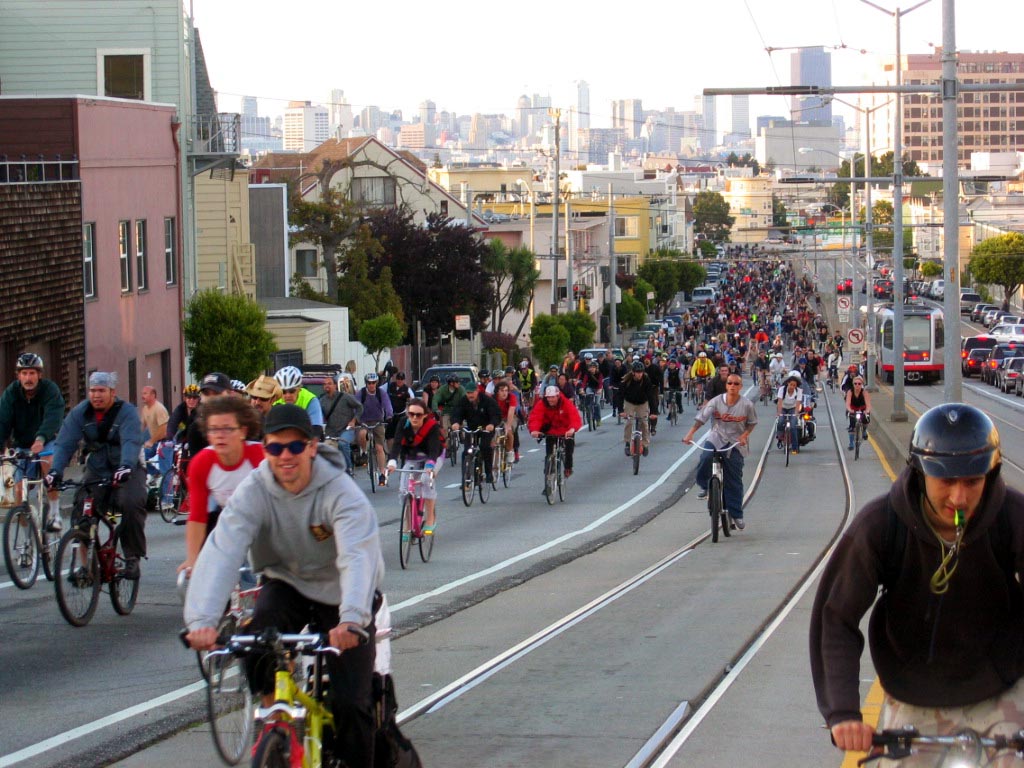


So why does this mean it's becoming posh to be poor? Well, because it's a move away from expensive transportation options, toward more affordable and accessible option. It's a move away from $30,000 SUV's toward $125 bikes (these are both averages of course.) Low income residence take public transit, they ride bikes, and they hop trains; 3 methods of transportation that will see a steep increase in 2009. As we enter into an age of frugality, where we find pleasure in the simple aspects of life, people will worry less about luxury and more about experience, an idea which has grown in prominence over the past few years.


Posh to be Poor? Introduction

(Photo from Treehugger The original full-sized color version can be viewed by clicking the photo.)
(Photo from SFGate The original full-sized color version can be viewed by clicking the photo.)
(Photo from Wikipedia The original full-sized color version can be viewed by clicking the photo.)

7.22.2008

Rankability

WalkScore has taken their delicious color-coded walkability maps, previously covered on Where, national. The results are...well, a bit disappointing. Perhaps I'm the only one, but I'm getting a bit tired of seeing rankings that use central city populations to determine the sample cities when metropolitan populations are far more important in determining the stature of an urban area. It makes little sense that Jacksonville, Tucson, and Oklahoma City make the cut for such rankings while St. Louis, Cincinnati, and Pittsburgh -- the central cities of much larger, more important metropolitan areas -- are left out because they've lost population to suburbanization.

This methodology has been a minor annoyance to me for some time, but the oversight seems particularly egregious in the case of WalkScore's ranking since it punishes densely-built urban centers for falling victim to exactly what the site is supposedly working against, and rewards cities that inflate their population counts through annexation and suburban deveopment patterns. The end result is a bit embarassing, with the overall city scores dropping under 70/100 points before you even get past the top ten on the list. Average everything out and the US gets a big fat F for walkability in its cities.

While there's a long way to go for Americans to become a more pedestrian-minded people, the idea that only a handful of our major cities are walkable is a bit absurd, and seems more like a misrepresentation than useful information. While it certainly shows the damage that suburbanization has done to our cultural understanding of urbanity, it says little about the actual state of walkability in America.

And that's too bad, because the maps look great, and the idea behind the rankings is a good one. If real estate is about location, the mantra for academic study should be "Execution, execution, execution."

7.21.2008

The Outquisition and Urbanism Camp

Prolific greenblogger Alex Steffan wrote a post last weekend about an idea spawned during a late-night coffeetalk with the equally prolific and fantastic Cory Doctorow (which sounds like maybe the most thoroughly awesome way to spend a weeknight, ever) that Doctorow dubbed "The Outquisition." The idea is grand and audacious in just the right way, and the comments that follow the initial post are well worth a read. But this post is about an offshoot inspired by a footnote in Steffan's post.

The dynamic e-duo's Outquisition involves sustainability-minded urbanites trekking out to failing suburbs and shrinking cities around the world, bringing with them innovative, site-specific solutions to the slew of new problems being brought on by the collapse of the oil-based economy. In his litany of suggestions, Mr. Worldchanging mentions "running holistic programs for kids" as a possible method of green evangelism. This re-ignited an idea I'd been going over a few months back: urbanism camp.

There are all kinds of camps for kids. There are outdoor adventure camps, sports camps, art camps, and plain old-fashioned away-from-home summer camps, with their crafts and campfires and capture the flag tournaments. Kids learn a lot at camp; not only do they build social skills, they are able to hone their interests and be exposed to new activities and ideas. With families increasingly looking at cities as a solid alternative to suburban picket fences, it seems like camp would be the perfect way to teach kids how to appreciate the urban environment.

Indeed, life in the city is very different from life in the suburbs for a youngster. A city-focused camp could feature games that took advantage of urban neighborhoods, sneaking in lessons about street safety amidst the fun. Trips to different neighborhoods, museums, community centers, parks, and public spaces could not only expose kids to a variety of subjects, but also introduce them to the many different creative outlets provided by a dense urban core.

This poses all sorts of interesting questions; architecture, public space, sustainability, diversity, mass transit -- can these things be entertaining to an eleven-year-old? It's kind of fun to ponder. Maybe someday, somebody will actually come up with an affirmative answer.

4.01.2008

Blogedanken Public Poll

Here are my favorite entries from each of the six Blogedanken participants who submitted full responses. Take a quick read-through, pick the one you think is the most interesting, and vote in the public poll at the bottom of the post. One-two-three, and by April 10th we'll have a winner! That person will then recieve a copy of Hyperborder, courtesy of PA Press.

Patrixbanx
(Portland, Maine, USA)
It sure would be nice to have a suburban commuter rail network in southern Maine. It would be even nicer if the commuter rail stations weren’t sited in the middle of vast parking lots, especially closer to the urban core. So why not allow development to cluster around those stops, like say Morrill’s Corner? And by development, I mean dense development. We’ll need to reform our zoning to encourage such growth, of course – not just by creating incentives for density but by creating disincentives for sprawl as well. Oh, and remember – this is Maine, a land that get’s pretty damn cold over the course of our long winters, and global warming hasn’t turned us into South Carolina just yet. Yet I hear tell of other cities even further north that are colder and get more snow than us, yet still manage to have a vibrant street life even in depressing old February. We gots to have that. I don’t know how exactly but if we’re going to discourage driving so we can have more walkable and transit oriented neighborhoods, we might as well make the streets of Portland a pleasant place to be in the depths of winter – bike and pedestrian friendly snow clearance, warm transit shelters, fun festivals, whatever it takes.

Medea
(Medellin, Colombia)
24 hour public transportation makes shifts easier to stagger, so bus drivers are not competing with each other in hazardous maneuvers. Every bus and taxi driver will receive mandatory drivers ed and courses on politeness and good manners. If they are rude or customers complain, their punishment won´t be a fine, but they´ll have to do public service hours cleaning the riverbanks.

M.B.
(Mexico City, DF, Mexico)
As a way of improving safety and bridging the gap between the city core and the bulging periphery, the city has launched a Defense of Modern Ruins program, stringing together blighted sights that range from industrial sights to downtrodden art-déco buildings to bureaucratic baroque whales. The program includes low-rent housing schemes, urban wilderness tours and itinerant party circuits.

T H Rive
(Victoria, BC, Canada)
Wireless capable crosswalks.
Edit: *apologies for the absolute shortness of mine. explanation: The crosswalk I was requesting was the ones that go green on ALL sides so that diagonal crossing is validated. It's quicker. The wireless part was more outdoor, cafe oriented Etc green wireless spaces. The result of the mixup?>> Wireless Crosswalks. Still a good idea. (4/1/08 5:38 PM)

Dan Lorentz
(Lexington, Kentucky, USA)
Organize a strong city-wide neighborhood group to promote mixed-use planning that supports street-level vitality, and make the first priority of that group the reweaving of the city's street web to create more corners for mixed-use development.

Petersigrist
(Cambridge, England, UK)
Hovering leisure boats with transparent roofs and floors, which hover about twenty feet in the air and provide lifts around town above underwater gardens with glass walls at street level as well as terraces, balconies, shops, and restaurants that open onto the streets and river


Remember: vote or die! (Hah. Always wanted to use that in context).

12.20.2007

Welcome to Lagos...


I'm cheating tonight and throwing up a video. It's a good one, though. Enjoy!

11.16.2007

WEEKEND READING: November 10-November 16, 2007 (Guest Post by Colin Kloecker)

Hi, I'm Colin and I usually cover the intersection of humanitarian issues, sustainability, and the built environment over at Blog Like You Give A Damn. But this month you'll find me here, curating Where's Weekend Reading segment. Five Items of interest for you this week.

ITEM ONE: I've been saying it for years: Skyways suck the vitality out of our city streets, "we should tear them all down". Living in Minneapolis/St. Paul I often get blank or bewildered stares when I tell people this (which I probably do far too often), but I feel my argument has been bolstered now that top urban designers Jan Gehl and Gil Penalosa have come out and expressed a similar sentiment.

ITEM TWO: Time-travel ALL the way back to September 29th, 2007 when nearly 100 teams from 70 different cities around the world participated in "Snap-Shot-City" and photographed a day in the life of their urban environs. Billed as an "urban photographic treasure hunt", the resulting photos are a wonderful celebration of city life. The CityDwellers team from London gets credit for the photo this week.

ITEM THREE: Is Jean Nouvel designing the most exciting Skyscraper to hit New York City since the early 20th century? This blogger thinks so. Straight out of a Hugh Ferris painting, 53W53rd is a thing of beauty. NYT article here.

ITEM FOUR: The Dharavi district (an urban mega-slum with over 1 million inhabitants) of Mumbai, India is getting "rehabilitated". So how much space will current inhabitants get out of the deal? Each of the 57,000 families are allotted a meager 225 square feet, no more and no less. Social Design Practice Blog has more, including an interesting memo from Matias Echanove suggesting that the city use Tokyo's revitalization after WWII as an alternative development model - see airoots for more on that. (Thanks Matias!)

ITEM FIVE: 250 Million Urban Planners! Planetizen reports that the $200 XO-1 laptop (the first model designed for the One Laptop Per Child program) will come packaged with Will Wright's 1989 classic planning game Sim City. OLPC plans on getting the laptop into the hands of 250 million poor children around the world by 2012. Want one too? You only have 11 more days.

Until next week, Happy Friday!