Showing posts with label quality of life. Show all posts

1.22.2009

Posh to be Poor? Transportation

Over the last few years there has been a surge away from motorcar transportation towards public transportation and the bicycle. This can in part be attributed to the sustainable movement as well as the growth of our urban cores. In 2008, the number of people living in cities eclipsed rural dwellers for the first time. As cities become more dense, the efficiency of traffic becomes increasingly important and for residents, it becomes faster to take public transportation. Now, aside from public transportation, the bicycle is also seeing a boom in popularity as a primary mode of transportation for many city dwellers.


The bicycle is rapidly becoming the popular mode of transportation in large urban cores. It is cheap, you can find a decent used bike for 25 bucks that will get you around the city fairly well. Bikes are easy to maintain and aren't subject to expensive repairs as they age. No need to buy insurance either, or fill up on gas. These qualities make it a very attractive option for those who are strapped for cash. Also, it is environmentally friendly due to the lack of emissions and lower embodied energy than the automobile. So, this is an important turning point as people begin to look away from a more expensive, more convenient mode of transportation, to one that is significantly more affordable. In fact, New York city saw a 35% increase in people biking to work in 2008. Unlike public transportation though, biking has become a trend with thriving organizations such as Critical Mass advocating for increased ridership. It has become cool to ride a bike as demonstrated by the many celebs recently caught on 2 wheels. Lance Armstrong may have sparked a national movement toward road bikes, but the many bike messengers roaming our urban cores have sparked a fixed gear revolution. Once seen as tacky or radical, the bike messenger style has invaded western culture influencing clothing, style (messenger bag anyone??), and heck, transportation!
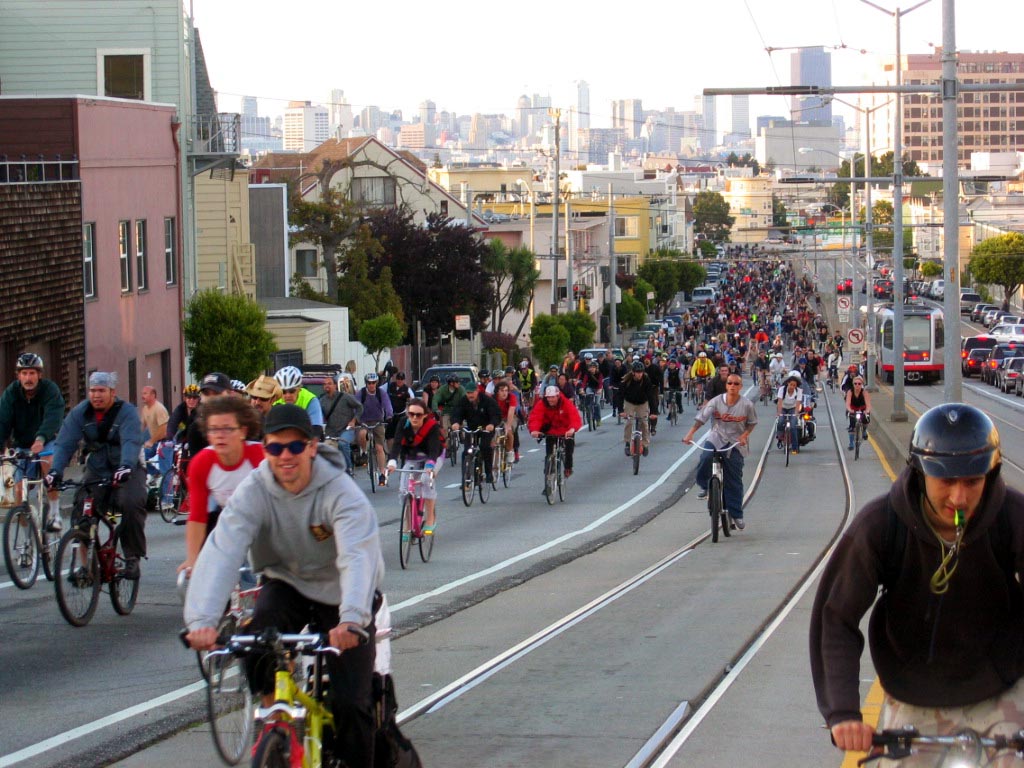


So why does this mean it's becoming posh to be poor? Well, because it's a move away from expensive transportation options, toward more affordable and accessible option. It's a move away from $30,000 SUV's toward $125 bikes (these are both averages of course.) Low income residence take public transit, they ride bikes, and they hop trains; 3 methods of transportation that will see a steep increase in 2009. As we enter into an age of frugality, where we find pleasure in the simple aspects of life, people will worry less about luxury and more about experience, an idea which has grown in prominence over the past few years.


Posh to be Poor? Introduction

(Photo from Treehugger The original full-sized color version can be viewed by clicking the photo.)
(Photo from SFGate The original full-sized color version can be viewed by clicking the photo.)
(Photo from Wikipedia The original full-sized color version can be viewed by clicking the photo.)

6.10.2008

Chicago: Creative Capital?

Fast Company's Fast Cities 2008 list (which is about a thousand times more coherent than last year's) came with a delightful cherry on top for this blogger, as it named Chicago the "Creative Capital of the Universe." Being from Milwaukee (Chicago's little brother to the north) and currently residing in the Windy City, I found this exciting news; Chicago has long suffered from what you might call Second City Syndrome, always trying to get out from under New York's shadow. (For the record: we don't really think of Los Angeles as a real place, so we're still #2).

All About Cities' Wendy Waters wrote a post tonight questioning whether or not the title was quite accurate; indeed, her assessment of the title's pithy, attention-grabbing nature is right on: it would be boring to read another article about New York or San Francisco being the most creative. But there's more merit to the title than you might think if yer not from 'round these parts.

I'll turn to Paul Graham's recent essay, "Cities and Ambition," for my defense. In his highly enjoyable piece, Graham asserts that cities that act as hubs of ambition have a way of communicating with people; New York says to its residents, "You should make more money;" Silicon Valley says "You should be more powerful;" Cambridge says "You should read all of those books you've been meaning to read." Chicago is most certainly an ambitions place -- it's the Emerald City of the Midwest, the Mount Olympus of Flyover Country. All (rail)roads lead here, so to speak. But after reading Graham's essay, I had trouble picking out exactly what Chicago was saying through its citizens' ambition.

"Creative Capital of the Universe" hit me like a brick in the face. Of course! Chicago says to its citizens, "You should be more interesting." The city is a domestic melting pot, pooling people from a region that is typically overlooked and underappreciated. We of the rust belt and great plains cities flock to Chicago to prove ourselves. Chicago's Second City Syndrome is a great asset; a city that is constantly trying to prove itself, after all, demands that its citizens do the same. And because of the slight sense of inferiority, Chicago is less pretentious than other global hubs like New York, London, or San Francisco. That lack of pretention has the power to erode fear of the unknown; Chicago has always understood that, to make big headlines, you need to take big risks.

In a world as spiky and competitive as the one that we live in today, it's pretty much impossible to claim that one city can claim to be the creative capital. But in terms of big headlines, Chicago seems to have inspired exactly what it was hoping: controversy. Screw being rational. Be more interesting.

(Photo from Flickr user kellyhafermann. The original full-color version can be viewed by clicking the photo.)


Links:
US City of the Year: Chicago (Fast Company)

Chicago: Creative Capital of the Universe? (All About Cities)

Cities and Ambition

3.17.2008

Exploring the City of Tomorrow

A hypothetical Aura Map of Istanbul's Golden Horn.
Google Transit wants your city to get on their bus. At the American Public Transportation Association's recent TransITech conference the web giant's mass trans-tracking maps app (say that five times fast) challenged every transit agency in attendance to upload their schedules and information to the site by Earth Day of 2008. If Google's effort at TransITech is successful, live, up-to-date GPS-powered transit tracking for every major city in the country (and beyond) could be a reality much sooner than one might imagine.

It's a bit freaky at first; there's a whiff of Big Brother, and a dash of 1984. But once the knee-jerk paranoia passes, the benefits begin to sink in. With live-feed transit information, Google Maps and Google Earth could eliminate the need for standing on a windy or snowy street corner for twenty minutes, waiting for a late bus. Outside it could be pouring rain, but you'd know exactly when to leave the house to catch your train. Even making connections could be more easily choreographed. Suddenly, one of mass transit's biggest drawbacks -- unreliability -- is eliminated. Overcrowding becomes less of a problem, and the whole system runs more smoothly. Everyone wins.

Online mapping technology has come a long way since the basic click-navigation maps of MapQuest hit the web back in the 1990s. Nowadays you can easily access street-level views, satellite images, and highly-detailed maps of buildings and amenities of dozens of cities. Certainly, this makes the prospect of taking an exploratory walk through a new part of town less daunting; you can preview your route, get a feel for landmarks, even decide where you want to stop for lunch. But there's still a dimension missing. Online maps are still very much stuck in the 3D-level, at least as far as the masses are concerned. We're still figuring out how to map the most important factor in cities: people. Not individuals (again with the creepy 1984ishness), but crowds, traffic patterns, and even emotions.

Think back, once again, to the SimCity game franchise. In later versions of the game, players could open up maps that charted everything from traffic to crime to the general happiness (aura) of the entire city. Live. Can you imagine the potential of people-mapping technology as a tool for planners and policy-makers?

A scenario: it's 8:00pm on a Friday in the year 2015, and you're looking for something to do. You grab your wi-fone and fire up the GoogleCity live maps app. There are three parties within a ten minute walk of your house being advertised on GoogleSocial (a convenient MeetUp/Bebo-powered mashup), a wifi-gallery showing one of your favorite artists from deviantArt four subway stops to the south, a restaurant opening on the corner where that hookah bar just closed last spring, and a band whose iSpace page you just subscribed to because you heard one of their songs on Pandora's new Loc:Audio channel. There's no excuse to be bored. And oh, look -- if you leave now, you can catch the next bus, but it'll be at least five minutes for a train. Perhaps tonight will be a concert night? The e-stars have aligned...

You're happy. You're entertained. You click a button on the screen that tells Google that someone on your block is in high spirits. The block's aura jumps up one point. At City Hall a few weeks later, the general happiness trend of your neighborhood is noticed to be on the rise. Civic officials study the area to learn why this spike in aura has been occurring, and use this people-powered live information to liven up some less brightly-colored spots on the map. Repeat this process with any resource, tangible or otherwise. The places that need something get it more quickly, and the decrease in wasted funds leaves more tax money to be distributed wherever it's most needed.

Now you, as a citizen, have every right to see this information if your elected officials are looking in. So the aura map overlay is available via GoogleSocial. You tap the screen, pull it up. There's a spike near your friend's apartment building downtown. What's the deal? Street fair. You are so there. You lift the phone to your ear, call the friend, and then check a transit map. You just missed the train, which means 10 minutes of waiting. But oh, there's a cab around the corner. You ping it with the push of a button, and you're on the road a few seconds later.

The next day, you're ready to go for a run. You check out air pollution and crowd overlays. The wind is blowing everything to the south today, so air quality will be best on the north side of town, which is good, because that's where you live. The big orange blob in the middle of the park closest to your house suggests some kind of festival is going on. Not wanting to deal with people-dodging, you check out the riverfront. Clear as crystal. And you're off!

The full potential of maps, in terms of improving the quality of life in cities, is just beginning to be realized. Soon, maps won't just tell you where movie theaters are; they'll tell you which ones are less likely to be crowded, dirty, or noisy. Get ready for the cartographolution.

Links:
Get Your City On Google Transit (WorldChanging)

How Google Earth Ate Our Town (Time)

2.18.2008

The Endless City Q&A

After a tiny bit of prodding, the folks at Phaidon sent over a review copy of the recently released book The Endless City, edited by Ricky Burdett and Deyan Sudjic, and containing essays by the likes of Saskia Sassen, Enrique Peñalosa, and the indefatigable Rem Koolhaas. Where will feature a review of the book soon, but first, another treat from Phaidon; the editors were asked a series of questions. The following is a selection of the highlights from the record of this Q&A.

What are the main issues that you think people should be concerned about when it comes to city growth?
The book has a section titled ‘Issues’ that we hope synthesizes the complexities of urban growth. In it, a number of the contributors outline key issues but approach them from a variety of viewpoints. For example, Richard Sennett argues that ‘over determination’ can kill the vitality and growth of urban centers. Cities need to be dynamic and its physical forms and functions need to be endowed with the capacity to respond to indeterminate, unpredictable forces. Frank Duffy applies a similar idea when explaining the urban office, so ‘adaptability’ is the central issue they both cover. Another issue the book clearly prioritizes is sustainable development. The contributions from Guy Battle and Nicky Gavron, along with the Knoflacher, Rode and Tiwari essay, all detail urban growth strategies that respond to the environment and the challenges of climate change. Another central issue summarized by the three essays by Gerald Frug, Enrique Penalosa and Geetam Tiwari is governance and civic participation – cities need to allow for a multiplicity of voices and actors as well as a variety of experiences but there needs to be an agent or authority that can intelligently negotiate this multiplicity and still get something done. Tiwari explains this with particular reference to the forces dominating the informal sector. Both Anne Power and Sophie Body-Gendrot elaborate on this as well as some of the other pressing sociological concerns that urban designers, policymakers and the general public confront in the act of city making. Of course it goes without saying that quality design is the ingredient that delivers a truly remarkable city and allows individual places to flourish. The essays by architects Rem Koolhaas, Alejandro Zaera-Polo, and Jacques Herzog and Pierre de Meuron all contribute various reflections about how to reconcile a variety of factors and perspectives enmeshed within the city’s physical reality. It should be noted that many of the essays in the Cities section resonate with the broader themes in the Issues section as well. The result is a cross-sectional analysis between the six cities [New York, London, Shanghai, Johannesburg, Mexico City, and Berlin] and the global world with issues finitely referenced to specific urban conditions.

What world cities do you expect to go through the greatest changes in the 21st century?
The fastest growing cities are in Africa and across Asia and its up to the next generation to make sure their development does not repeat the mistakes of cities in the developed world – this means Lagos and Kinshasa, Mumbai, Deli and Dhaka, as well as Shanghai and Jakarta. It is projected that by 2030, over 4 out of every 5 urban dwellers will be in the developing world so this will have huge implications for the global economy. At the same time, mature cities such as London and New York City, Berlin and Mexico City need to ensure that their future growth reconciles their layered history of planning mistakes and prioritizes sustainable transport and inclusive, contained growth.

The book talks about the importance of cities learning from each other. Can you explain that? For example, what can NYC learn from Shanghai? Can small cities learn from big cities?
There are countless examples of cities looking to other cities when deciding how to invest in their future growth and health. Congestion charging in NYC wouldn’t be a viable option had London not demonstrated how it could be done, and Mexico City’s Metrobús is a stunning success modeled on the Transmilenio in Bogota and of course Curitiba. Ideas must be partnered with implementation strategies and learning often is a matter of scale. So yes, small cities can learn from big, and vice versa. The essay by Knoflacher, Rode and Tiwari describes how small cities can serve as incubators for innovation precisely because of their scale. Understanding how cities implement large projects such as the Olympics in London, doing it with the right amount of investment in public space, has a lot to do with acknowledging how the city and individual neighborhoods have developed over time and how open space serves to socially integrate people from disparate backgrounds. The contributions of both Saskia Sassen and Enrique Peñalosa emphasizes this learning, especially in the latter how urban centers in developed countries are recovering from their love affair with the car, delimiting the access of automobiles in favor of public transport. Cities in developing countries could learn a lot from this. Most importantly, in order for ideas to transfer from one city to another, there needs to be a complementary understanding about how policies, decision making and funding align to facilitate implementation. Frug’s essay explains how the power structures of the six cities vary and what impact permutations to each city’s existing systems could have on local and regional planning mechanisms.

What are the key ideas that you want people to take away from reading this book?
The 34 contributors to the book – along with the hundreds of policymakers, politicians, academics, architects, planners, and urbanists involved with the Urban Age project which forms the basis for The Endless City – all believe that cities can offer a better social and economic life for its citizens. Now that half the world’s population live in cities, there is an urgent need to take stock of the new urban condition and find an approach to dealing with it. City sprawl should be contained and there are innovative strategies for creating high density, highly liveable environments. We want to help those charged with running and making cities understand the relationship between the socio-economic and spatial characteristics of cities – and we want the general public to understand how sustainable urban development can actually improve the physical form of their cities and the quality of their lives.

Are you hopeful for the future when it comes to our cities?
Enrique Peñalosa, the former mayor of Bogotá, offers an incredible explanation for why we should all be hopeful for the future of cities. Cities offer the potential for ‘quality of life equality’, i.e. access to green, open space and social and economic mobility as well as physical mobility. Across the world, people are moving into cities at an alarming rate – and not just mega-cities but smaller cities comprising an overall urbanized region. Most importantly, the twenty-first century will be increasingly focused on reducing both the overall sum and per capita production of carbon emissions, and as emitters of 75 per cent of the world’s pollution, cities are the battleground on which the future and health of our planet will be determined.

Is there any way for ordinary people to make change in their own cities? Do you have any recommendations for someone who wants to get involved?
Ordinary people make change in their city everyday. They do this by opting for public transport instead of a private car, by holding their government officials responsible for the quality of the built environment, and by advocating for equal access to green, open space. Ensuring that there is investment in sustainable forms of transport, and that access to healthcare, education and community services does not depend on how much money you make or the wealth of your locality. Most importantly, if you don’t know what your community is doing locally to advocate sustainable urban development, then join a forum and find out. Participate.

(Thanks, Faye!)

(Photo from Flickr users thequickbrownfoxjumpsoverthelazydog and howzey. The original full-color versions can be viewed by clicking the respective photos.)

2.11.2008

Brackets


(Photo from The New York Times. The full-size version can be viewed by clicking the photo.)

10.09.2007

Civic Crowdfunding

As technology becomes increasingly ubiquitous, the internet is fast becoming the new Agora. The social functions of the public square are being transferred into cyberspace, and we are being forced to come up with new ways of doing things in cities. Public discourse is the perfect example; urbanites, once able to voice their opinion in the public square, are finding a new voice online. City governments have a real opportunity, then, to tap into public opinion and get to work on citizens' real concerns.

One of the most interesting web 2.0 developments has undoubtedly been the rise of crowdsourcing, and now by extension, crowdfunding. A particularly interesting and grassroots-y example of crowdfunding comes from the site Sellaband, which allows music lovers -- whom Sellaband refer to as "believers" -- to pool their money with other believers to help artists, who submit their music to the site, fund a trip to the recording studio. This method breaks a band down into 5,000 "parts," which are each sold for $10. Once $50,000 has been raised through the sale of these parts, Sellaband provides the artist with an A&R professional to guide them through the recording process. The full amount must be raised before the recording process can begin, so this turns both artists and believers into music evangelists, spreading word of the fund-raising effort to friends, neighbors, co-workers, etc.

It would be great to see something like this applied to neighborhood, or even city-wide improvement projects to create a kind of civic crowdfunding. The Sellaband method makes a great deal of sense since it pools money from a large number of people who then provide free marketing and PR. By tapping into peoples' passion for where they live, city officials and even developers can enliven the civic discourse by using internet technologies. Just imagine the potential of a site where people didn't just complain about local problems, but offered feasible solutions and invited their neighbors to get involved in getting real results. City Hall could even have an agreement whereby it provided a city official in a related office to help guide a fully-funded neighborhood project through the implementation.

If it sounds pie-in-the-sky, you might be surprised to hear that there are already somewhat similar programs in several cities. Seattle, for instance, has its own Department of Neighborhoods, a city department that deals with neighborhood projects and services. The SDoN even has a matching grant program that helps groups of Seattleites to fund projects that address the problems they have identified within their own neighborhoods. From their website: "Funds are limited so it's a competitive program. Applications are considered during specific funding cycles and the highest rated applications are awarded funds." From the sound of it the ratings come from a government body, but this looks like an early form of civic crowdfunding.

Next we turn to Minneapolis' Neighborhood Revitalization Project (NRP), which is "an investment program based on truly empowering residents by bringing them into the priority-setting process of the city. It is based on the belief that the empowerment of residents and the mobilization of untapped resources, energy and creativity can make our collective desire for a better future a reality. Neighborhood based priority setting, planning, and implementation are NRP's core. Residents and other neighborhood stakeholders create Neighborhood Action Plans (NAPs) that describe the neighborhood they want in the future and the goals, objectives and specific strategies that will help accomplish their vision. NRP completes the empowerment process by providing funding to each neighborhood to help implement their approved NAP."

The Neighborhood Action Plans seem to be another form of primitive civic crowdfunding. While the funding structure is still traditional (read: external), it is neighborhood residents that are creating the plan for their neighborhood (I knew someone had to be doing this already) and setting the priorities of the plan. Will everything that these plans address work out as residents had hoped, or even in their favor? Probably not. But it would be foolish to suggest that developers and/or City Hall always gets it right when trying to "fix" neighborhoods. There is a certain amount of risk involved in a program that asks lay citizens how their neighborhood should be improved -- but there is a wealth of unprofessional expertise, as well. After all, planners may know best how to move traffic efficiently through a theoretical neighborhood, but residents understand the idiosyncrasies and unplanned tics of their neighborhoods better than anyone who doesn't live there.

Springwise, the bloggy arm of Trendwatching.com, had this to say in a recent profile of a software crowdfunding site: "In addition to a marketplace for software development, microPledge reckons its site will come to be viewed as a free market-testing service to gauge the reception for new software products and features. Interesting example of the intention economy at work: when consumers have to put their money where their mouth is, it's a pretty good bet you can believe what they say." If you extend this argument to neighborhood crowdfunding in cities, it holds up quite nicely. The risks of trusting what some might term "non-experts" are mitigated in crowdfunding by the wary wisdom of the consumer. Neighbors are more likely to ignore flashy-but-ineffective revitalization projects, choosing instead to fund the kinds of improvements that will raise an area's quality of life in all of the little ways that legacy-laden city officials can overlook.

Little bits add up. That's what crowdfunding is all about.

(Photo from Flickr user djpiesas.)


Links:
Sellaband

Seattle Department of Neighborhoods

Minneapolis Neighborhood Revitalization Project

Crowdfunding software projects (Springwise)

9.26.2007

Framing Urbanism

Anyone who lives in a city is a student of urbanism. We have the choice of whether or not to pay attention to the lessons we are being taught, but they are taught either way. Every day of living in a city is a chance to learn about how the place works. So it helps to have a way of organizing the observation process.

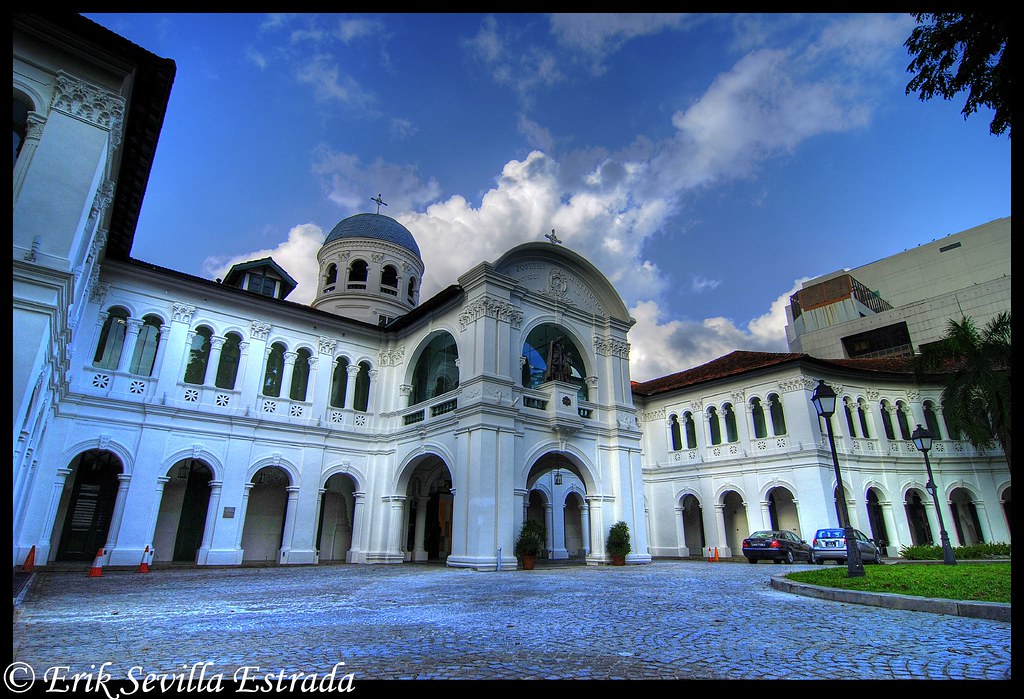
That being said, I came across an organizational tatic of which I am particularly fond recently on re:ACT, a blog run by a dozen architecture students in Singapore. Ronald Lim, one of the re:ACT bloggers, put up a post entitled "My Wishlist for Architecture in Singapore." It's short (five items), practical, and the objective is very clear even without being directly stated. That objective is to make Singapore into a more architecturally conscious city, to improve the quality of the buildings being designed there by improving public awareness of architecture and design. Lim calls for an architecture and design department at the Singapore Art Museum, an annual competition similar to PS1 or the Serpentine Gallery, and an interesting set of tax incentives (among other things).

The benefit of having such a list, as an individual observer of a specific city, is that a person can identify what it is they are looking for in terms of an area's strengths and weaknesses. It's a framing technique, really. But a wishlist is especially helpful, I think, because it gives a person something to look for when visiting other cities. Even more than framing how one sees one's own city or even one's neighborhood, it frames how one approaches the urban form in general. This is beneficial because it allows the observer to absorb information from one place and take it home with them, using it to enrich their own city.

I've always thought it'd be really interesting to see a neighborhood group do this kind of thing, collectively. The common perception of the Neighborhood Association or Block Group is that of a stodgy, reactionary coalition of anti-growth crumudgeons with pickett signs and way too much time on their hands. Rather than hearing moaning and groaning about the death of a neighborhood's precious, precious character every time someone so much as proposes to trim their hedges, it'd be fascinating to see how a group might impact their community by identifying what defined the character that they were trying to preserve and coming up with a wishlist of ways in which that character could be strengthened and enhanced, and maybe even improved. Imagine a neighborhood group that actually courted developers to help achieve their goals of enhancing the architectural character of a neighborhood, welcoming and even helping to speed a long the process of approval for a new building in exchange for architectural sensitivity and some streetscaping improvements.

I wouldn't be surprised, actually, to hear that this has been or is being done. In fact it would be great to hear stories of this kind of thing; a neighborhood threatened by the dreaded gentrification beast working with developers instead of against them. I wonder how that works out...are the neighbors better off in the end, or do they wind up getting screwed over time? I'd be willing to bet on the former, but I'm open to arguments for the latter...

***

By the way -- while we're on the topic of taking observing what other cities are doing right when traveling, if you haven't heard of Civic Tourism yet, check out the link below. It's a great concept, and it seems like the kind of thing that could really give some extra oomph to your next urban vacation.

(Photo from Flickr user Erik Sevilla Estrada.)


Links:
My Wishlist for Architecture in Singapore (re:ACT)

Civic Tourism

9.21.2007

WEEKEND READING: September 15-21, 2007

The weekend has arrived just in time!

ITEM ONE: CityStates debunks Wendell Cox's article, previously discussed at Where, on the CityStates blog.

ITEM TWO: IDEO's reimagining of the street cafe, via GOOD Magazine. (Photo credit)

ITEM THREE: Chicago is turning out to be a rather tiresome city that lives up (or down) to its muddled quality of life ratings by utterly forsaking its residents in favor of attracting more tourist dollars to fund more TIFs for million-dollar condos. That was me pontificating, but check out Item Three for the most recent bit of proof.

ITEM FOUR: Cleveland is taking community development down to the block-level.

ITEM FIVE: I have heard of Miss Representation many times...it is a blog that pops up frequently in meta discussions about the archiurban blogosphere. And yet, I had always avoided it since I thought "Eh...
another blog about New York. Who gives a rat's?" And then I actually read it and realized that it's some of the funniest architectural writing...well, ever. The moral of this story is: don't be a twit like me. Read Miss Rep. Start with this new post on the hapless mess that is Ground Zero.

ITEM SIX: Cities of Theory is another great blog to add to your reader. Here we have a post on creating enjoyable urban places...

ITEM SEVEN: Speaking of quality of life, Cuba's all like "Hey guys, check me ouuut!"

Oh...I think you can tell that I am in need of some r&r. Y'all come back now, ya hear?

6.07.2007

(Still) Made Here: Story and Status


While yesterday's post examined the (Still) Made Here trend from the Eco and Ethics angle, today's looks at another subtrend that Trendwatcher.com's editors call Story and Status. In their words: "An obvious example of the link between locality and story/status is the perception of location-specific quality."


Location-specific quality is hardly a new concept in urbanism. However, it is most commonly used to attract tourists. Think about the French Quarter with its penchant for decadence, or Temple Bar's hybrid cultural/drinking scene, or Ginza with its blinking, frenzied energy. The previous references are to New Orleans, Dublin, and Tokyo, respectively, though the fact that you most likely didn't need clarification there speaks to the success of these places in positioning themselves as authentic and unique. But places like these can sell their story with minimal effort; they are veritable monoliths. Perhaps they just got lucky, but that's neither here nor there. What other neighborhoods must figure out is, "how can what is already here or has been here in the past help this place to become better in the future?"

In TW's report, the first part of Story and Status is titled "Inspiring global production trends: quality made here." The case studies include high (percieved) quality goods made by companies such as Ermenegildo Zegna and Rolex. These companies operate smaller factories or workshops, overcoming the challenge of higher production costs for skilled labor and materials by charging much higher prices than the competition for their product because they have earned a reputation for quality. So if we set up an analogy where neighborhoods are the factories and workshops, and a distinct "sense of place" is the product (I admit this is a cynical way to view communities, but bear with me), then the high production costs are the ills associated with aging architecture and infrastructure.

City neighborhoods are already status symbols in most places. If you live in Los Angeles, for example, you can identify yourself as being from The Valley, Hollywood, or Watts and get completely different reactions. By associating ourselves with a certain place, we are associating ourselves with the cultural story that has been created about that place, and that cultural story is the quality that will allow a place to overcome its challenges. To increase investment in a community, neighborhoods can focus on the most exceptional aspects of their local culture (which can be just about anything) in order to craft a favorable cultural story. And in a society where "individuality is the new religion" (credit TW) it seems that marketing a neighborhood's most unconventional aspects would be the best way to go about promoting it.

Here, though, we come to the problem of gentrification and one of its most infamous side-effects: culture drain. When neighborhoods become popular for their distinct local culture, the fear is always that scads of yuppies, hipsters, and other fad-crazed demographic groups will invade, price out current residents, install a Starbucks and a Gap, and erase the culture that made the neighborhood popular in the first place. It's Chinatown as "CHINATOWN™". Also: it's gross. Also also: it has happened far too many times already.

The second part of Story and Status is "Purchasing ingredients for a story." And this, I'm afraid, is where I'm at a loss for compairisons. City neighborhoods cannot go out and purchase a unique history (though they can work toward creating one in the future by fostering progressive and creative communities. Keep Austin Weird would be one famous example of this sort of long-term planning.) Instead, cities must do what is commonly referred to as Asset-based Planning, taking, as suggested above, existing assets and positioning them as engines for neighborhood revitalization.

The "Purchasing ingredients" section does provide this interesting quote: "[We've] seen a rising interest in the truly different, the obscure, the undiscovered and the authentic. These new status symbols thrive on not being well known or easily spotted. They don't tell a story themselves, but require their owners to recount the story." So unconventional neighborhood features, then, can be used to either puff up a place's civic reputation or can be kept vague and slightly mysterious in order to give residents a sort of edge. (This would certainly explain all of that whining New Yorkers do about how they miss the good old days, when getting mugged was part of the daily routine.) Or whole neighborhoods could, themselves, be the quietly tucked-away spots that provide residents with secret satisfaction (though I'm not sure how you'd pull that off.) Either way, this concept seems to provide a way for neighborhoods to sidestep the culture drain process while still improving their local communities. As for how that would all play out, well...

Again, I ask: any ideas?

(Photo from Flickr user Anole.)


Links:
(Still) Made Here (Trendwatching.com)

Keep Austin Weird

Evaluating neighborhoods in terms of assets of all kinds (Rebuilding Place...)

Part I: Eco and Ethics

Part III: Support

4.06.2007

The Rundown

So a few days of slacking and travel have added up to me being a bit behind on my e-reading and blogging. To remedy this situation, today's post will be a few bite-sized nuggets of info and links to a number of unconnected articles.

First item: I've heard about the Memphis riverfront redevelopment that the guys over at Project for Public Spaces are working on...several times, actually. And forgive me for criticizing a technically good project, but the whole thing just seems really tired. Like, "fountains, playgrounds, street vendors" is kind of...just...bleh. It's the same old stuff, rearranged on a new lot. It seems like the banks of the Mississipi deserve something more innovative. Perhaps an experiential playground like Chicago's Millennium Park?

Perhaps I'm just antsy after reading Josh Stephens' most recent post over at Interchange, the Planetizen blog. Stephens talks about a survey by Mercer Consulting in which the US's cities faired quite poorly in terms of quality of life, with none of our many, many cities breaking the top 25. I'm always very wary of rankings and statistics, but as Stephens points out, it's not the rankings but the fact "that hundreds of millions of Americans live, grow up, and toil in places that are less clean, less safe, less pleasant, less sociable, and less inspiring than counterparts around the globe" that's really disturbing.

Interchange has been lively lately, and another great post comes from Lance Freeman. Freeman saved me the trouble of writing a post I was planning for this coming week on congestion pricing by saying exactly what I was going to say (and he did a better job than I probably would have.) The argument: congestion pricing is bad for poor people. Go read it.

John over at A Daily Dose of Architecture has started a cool new thingy where he'll be quoting relevant pieces from his personal readings on architecture, urbanism, and the like. The first features this kind of amazing excerpt from Bill McKibbin's The Age of Missing Information about the role of the natural landscape as context for buildings and communities.

Finally, a quick shout-out for what I think is one of the best urbanism sites on the web. CEOs For Cities is a very cool organization whose membership list includes some very important people. Everything they do is fascinating, and the blog is a great read. Bookmark it, add it to your RSS, or do whatever it is that you crazy kids do these days. Just keep it on your radar. (I'm sure they'll be popping up again in this blog.) There are two recent posts on gentrification and urban immigration that are more than worth the time it takes to read them.


Links:
Ideas for riverfront flow at workshop (commercialappeal.com)

So Many Cities, So Much Mediocrity (Interchange)

The equity considerations of Congestion Pricing (Interchange)

Literary Dose #1 (Daily Dose of Architecture)

CEOs for Cities Blog