Showing posts with label streetscape. Show all posts

7.16.2011

Splashy Times Square Satellite View


Woke up this morning to discover new Google Earth satellite imagery of Manhattan, complete with the fully-pedestrianized & mural'd Times Square. Great light too, Midtown usually looks so dark on G-Earth. Three cheers for Janette.

UPDATE: Just realized you can also get great views of a few other ped plazas. Click the thumbnails for full-sizers:

Union Square (with Greenmarket in full-swing!):

Madison Square Park:

(Also: whoever gets rid of these #$&#% borders that magically insert themselves around images on this blog when I've tried everything I can think of to turn them off wins a prize.)

12.31.2008

Considering Urban Retail: A Re-post at the Crossroads

As we head into 2009 with economists predicting the closing of as many as 73,000 retail locations across the United States due to dismal holiday sales, it seems like a good time to look back at one of Where's most popular posts from last year, "The Possibilities of the Post-Retail City," originally published in August of '07.


I just had my first exposure to Reverend Billy, the leader of the Church of Stop Shopping. After reading a Polis post about the Reverend's anti-consumerist group, I thought it was an actual church. To which I said: "Oh, excellent.

Of course, the CoSS is actually an act, with the "Reverend" being the stage persona of NYC performance artist Bill Talen. It's a send-up of streetcorner preachers and televangelists, and it sounds hilarious. Better yet, there's a point! Reverend Billy preaches against corporatist architecture and urbanism, advocating for sustainable, walkable communities with local economies. And while the site does pay lip service to independently owned local businesses, it is the Church of Stop Shopping, and one of their taglines is "Love is a Gift Economy!" Obviously, these people think that there are better ways for us to use all of that street-level retail space.

And that got me thinking: if there were no major retail chains and independents had to hold up the local economy, what would we do with all of that ground-floor space? Indeed -- and my upbringing in a capitalist society may shine through right here -- but where would we walk to? Certainly, there are plenty of places that we walk every day, but a large amount of pedestrian traffic is genereated by shoppers. And while it's not a requirement for these ground-level spaces that make up our streetscape be places of commerce, their presence is utterly vital to functioning neighborhoods. Often (these days) even moreso than upper-level residential windows, storefronts are the Jacobsian "eyes on the street" that act as a natural deterrant to crime.

Shopping is also a huge part of the social life in many (if not most) contemporary cities; in fact, that's just what Reverend Billy and his fake church take issue with. And whether or not you agree with the Church of Stop Shopping (or, as I'm sure many do, find it outright offensive), it's interesting to imagine a world in which shopping took a back seat to other social spaces as the dominant street presence. Imagining Paris without the Champs-Elysées or New York without Park Avenue sparks a giddy, no-holds-barred creative energy akin to imagining those cities in a work of science fiction or postapocalyptic literature.

To get an idea of what might fill the void, it might be interesting to see how social space is structured in places where gift economies (or at least barter systems) often already exist and retail strips are few and far between, at least in the traditional sense: slums.

An article from Forbes, mentioned briefly in a previous post at Where, described the socioeconomic situation of many older, established slums in Asia and South America thusly: "Many slum dwellers are in fact entrepreneurs, albeit writ very small. They recycle trash, sell vegetables, do laundry. Some even run tiny restaurants and bars for their neighbors." So while there are no Ginza Districts in the favelas of Rio, there is a social commerce to such places. Restaurants and bars remain important components of the neighborhood, which makes good sense; people have always come together over food and drink, and will continue to do so regardless of any freak evaporations of the retail sector.

Another thing that brings people together is knowledge -- or, more specifically, the exchange thereof. Another recent post covered McGill University's Edible Cities project in Kampala; the site for the students' project "includes a low-lying wetland area...where a youth cooperative practices brick-makings, providing work for otherwise unemployed youth...and a sloping dryland area where farming is [practiced]." While this is a very rural area being discussed (albeit in the context of a larger city), the Kampala site illustrates two more possible uses for a retail-less streetscapes: public workshops (which could cover a variety of topics in addition to brickmaking) and storefront hydroponic community gardens.

Heh.

If the second option seems somewhat far-fetched, the first is hardly at all; in fact, in the face of looming irrelevance in the digital age, libraries around the world are starting to take on a more social role in their respective cities, staging various events and programs to encourage public discourse and teach skills that cannot be learned with a mouse and keyboard. One of the most innovative library programs that I've heard of recently is in Medellín, the second city of Colombia.

Once the so-called Kidnappping Capital of the World, Medellín has made more news recently for building five spectacular modernist libraries (like the one in Santo Domingo Savio, pictured above) in its most impoverished barrios. One of the programs to utilize these new libraries -- which are equipped with computer labs full of brand spankin' new computers -- is HiperBarrio, which teaches teens in the barrios how to use blogging and other social media tools as a creative outlet for self-expression. Juliana Rincon, one of the founders of HiperBarrio, spoke of the program's inspirataion in a recent interview with Global Voices Online, saying, "It was amazing...telling these kids about blogs and finding out that they had no idea that there was something like a blog, that they existed. [Or even] that you could write online and have a virtual space to keep your writing, the videos you like, and pictures." Libraries, in this case, serve not just as containers for information, but as catalysts for the creation of new information and new ideas. Certainly, this kind of social space, the place of public learning, will play an increasingly important role in cities as we continue through the Information Age.

Whatever we come up with to fill storefronts and social spaces, shopping districts and neighborhood retail strips are unlikely to disappear within the lifetime of anyone reading this blog post. Still, imagining a world without retail can tell us a lot about how we use cities, why we do things the way that we do, and how we can improve urban places without courting Starbucks and Barnes & Noble for civic salvation. In fact, picturing your neighborhood without any shops selling anything other than necessities might be a great way to fall in love with the place all over again. That is, of course, assuming that you love your neighborhood -- and that you don't live off Rodeo Drive.

----------

That's all for now, folks. Best of luck to everyone in 2009. Let's hope it's not as bad as we're all worried it's going to be.

(Photo from Flickr user galitagreeneyes. The original full-sized color version can be viewed by clicking the photo.)

1.25.2008

WEEKEND READING: January 19-25, 2008

Another really great crop for Weekend Reading this Friday. We're going all over the web this week...make sure you set aside some time to browse.

ITEM ONE: TNAC's Hayley Richardson on Richard Florida and the Creative Class (And Florida's response).

ITEM TWO: Nifty blog about architecture and urban planning in the Ugandan capital, Kampala (via Global Voices Online).

ITEM THREE: Ever tried traversing every block of every street in your city? Bill McGraw of the Detroit Free Press has, and now his findings are online.

ITEM FOUR: This one's not so much about the reading as it is the watching -- a mind-blowing clip of software that builds automatic online cities.

ITEM FIVE: Bill Gates calls for a "creative capitalism." (Where is published on a Mac, but this blogger does admire Mr. Gates' social ingenuity).

ITEM SIX: WorldChanging goes head-to-head with the pro-car crowd, breaking down how cars aren't just killing the natural environment, but the built as well.

ITEM SEVEN: The curiously named blog List of Dorms ruminates on the suburbanization of urban cores, with Chicago as a brief case study. (This looks like a blog to watch...)

ITEM EIGHT: One more for the road -- City of Sound provides this well-illustrated update on its World's Best Urban Places & Spaces project.

Sheesh...if the urbanism web keeps up at this speed, the eighth item might become a standard feature! Have a gerat weekend.

(Photo from Flickr user pinehurst19475. The original full-color version can be viewed by clicking the photo.)

12.13.2007

The Dream Remains the Same

A recent post over at TNAC's blog, The Street, suggests that it may be time to change the American Dream. But what is the American Dream, exactly? It's a well-worn turn of phrase (were it a turn in the road, the guardrail might be out from being hit so many times), and while people usually use "American Dream" as slang for "house in 'burbs, lawn, two cars, spouse, 2.5 kids, dog," I would argue very strongly against this interpretation. The American Dream is not about houses or property or ownership -- heck, it's not even about money; it's about "new hopes, new dreams, and a better way of life for the future."

That quote was taken from an animated short produced by the Walt Disney Company in the 1950s. The subject was, surprise surprise, the future of superhighways. The Disney folks imagined a tomorrowland where automobiles provided the ultimate in high-tech freedom and mobility, populations were dispersed over "vast metropolitan regions" and the family unit was supported and enhanced by the great amounts of leisure time left over from avoiding the hassles of urban existence. On top of that, a global system of superhighways was to connect all nations and peoples and increase cross-cultural communication and collaboration. Oh, how glorious it looks on that little YouTube screen.

The present, as we are well aware, looks slightly different. Private vehicles do provide freedom and mobility, in a way...even if much of that free time is spent in the car, staring at a bumper. As a result, we've given up on that whole "extra time with the family" thing; in fact, divorce rates have soared as our population has spread out, stretching marital relationships to their breaking points by removing the basic social frameworks that might allow spouses to have some much-needed time apart outside of the workday (since both work full-time to pay for the oversized McMansion and the two SUVs).

Then again, that scenario is as well-worn as the term "American Dream." Still, the Dream itself is in no need of an overhaul. We would do well, perhaps, to wrestle it out of the arms of marketing-types still using it to pitch the 1-Acre Lots For All, Ford Chevy Ram MegaCharger bullshit. But the American Dream is as honest and straightforward and bright today as it ever was. You can see it in the modern sustainability movement in the same way that you can see it in Disney's adorably retro vision of the superhighways of tomorrow: the American Dream is about change. More specifically, it's about things changing for the better, and about people having the freedom to enjoy and participate in the process of change. Society and culture are driven -- and have always been driven -- by the masses. The dream of a brighter future took the "American" moniker from the fact that the United States was the first modern nation to do away with the European monarchal system. Change will always happen since the people will demand it; the US was one of the earliest countries to make that its raison d'etre.

In the eternal quest for the elusive "brighter tomorrow," we will continue to make mistakes. We will have disasters and wars, and terrible things will happen. People will die, dictators will rise and fall, and the oceans might rise up to claim some of our cities. But we will continue to evolve with the world around us. So the American Dream is in no need of modification. It is always a good idea to stop along the path and shake off some cobwebs, but hope for something better is the essence of what makes us congregate, collaborate, and create.

Cities are based on this principle; at their core, they rely on change. Cities lose buildings and parks and whole districts; much like any living organism, old cells must be shed to make way for the new. While it is sometimes painful, change will always happen, and as the largest, most interactive manifestations of mankind's ambition, cities will have to change for the good and the bad, just like we do. In short, you can't curse the suburbs; you'll just run out of breath. Instead, try to imagine what the next batch could look like. Try to imagine a brighter tomorrow while accepting that the suburbs will be a part of it.

More on this soon, as a review of Paul Lukez's Suburban Transformations is forthcoming.

(Photo from Flickr user brassplayer. The original full-color version can be viewed by clicking the photo.)


Links:
Changing the American Dream (The Streets)

Magic Highway USA (Part IV)

Magic Highway USA Publicity Stills (Paleo-Future)

11.14.2007

Medellín: a City Planned for the Other 90% (Guest Post by Juliana Rincon)

Medellín, Colombia, is a city that I've fallen in love with, and it loves me back. Whenever I walk its streets, ride the metro, or take a bus, I feel that the city was planned with me, and with all the thousands of others who, like me, don't own a car and depend on public transportation to move around, in mind.

An example: Carabobo used to be a chaotic avenue full of seedy joints and the constant rumble of old buses expelling diesel fumes. The beautiful art deco buildings along the avenue were left unnoticed as people rushed to their destinations enclosed in the safety of a vehicle. At the far end of the street was a no-man's land where you could see homeless people warming their hands with bonfires made in steel drums, and where everything and everyone had a price. Beautiful buildings were abandoned, scavenged and then abused as crack houses, businesses where struggling to maintain customers, and something had to be done.

Nowadays, no buses run through this main avenue; only people are allowed here. Instead of the sky being overcast by clouds of combusted fuels, it is shaded by trees and palms. The former crack house is a cultural and educational center, and the architectural jewels along the way are lit up to showcase their details, while thriving businesses inhabit their spaces. It is a complete pleasure to travel up and down this public space, designed to be fully accessible for every type of citizen.

Walking down the paved walkway, you can see people sitting on park benches and resting their tired feet, bags and bags of purchases from a variety of stores sitting beside them. Textured bricks mark pathways for the blind to follow with their canes, traffic lights with sound and vibrations assist the pedestrians who might not be able to hear or see the lights change color. You don't need to step off the curbs and onto the street -- they are both at the same level, making it easy for people in wheelchairs to enjoy this space as well. No bicycles are allowed, but riders are welcome to dismount and walk their bikes through this area if they wish to.

It seems that common sense solutions are usually completely ignored by governments in Latin American cities, and it is refreshing to see that this isn´t the case with Medellín. The government is rebuilding its city for the inhabitants: they have discovered that when people have public spaces they can enjoy and where they can relax, breathe in clean air, and stretch their legs, they work harder, better, and are generally happier. The poorer inhabitants of the city don't have time or money to take vacations to the rural areas; they don't have the means to visit beaches and certainly don't have membership to country clubs...so the city decided to give them spaces where they could take their families, where they could lay on the grass, sit on a bench and kick back on a Sunday.

The city has placed trust in the people, with the firm belief that if you make citizens take ownership of these new spaces, they'll take care of them and make sure others respect the spaces as well. Store owners and workers down Carabobo street signed an agreement stating that they would take responsibility in keeping their surroundings clean, reporting uncivilized behaviors and vandalism if, in exchange, the city would do maintenance and have enough policemen in the area to ensure shoppers' safety. These store owners now thank this project for their new situation: they have a lot more clients and shoppers now that people can walk at their leisure and window shop; they have met other store owners in their block; they don't have to deal with car fumes and the noise from honking vehicles and motors; and they have come together as a community, united with one goal: to keep Carabobo looking clean, safe and beautiful for many other generations to enjoy.

However, this didn't happen overnight. The business owners in Carabobo at first were terrified that once no vehicles could come by and park in front of their stores, sales would plummet. They didn't want to deal with the months of construction, not knowing if their businesses would survive this metamorphosis. The government decided to include these concerned entrepreneurs in the discussion and planning process so they could become involved with the project and take ownership of it. On October 27th 2006, an agreement was signed, and they first saw the butterfly emerge from its cocoon.

Last week the Hiperbarrio team headed downtown to record a little bit of our experience walking down Carabobo. We took pictures, shot videos and then sat down on one of the many benches to enjoy the day. It was a wonderful way to spend a Saturday morning, and if you ever come to Medellín and visit, I would definitely recommend for you to do the same.

If you want to learn a bit more about Carabobo, you can see the government's plan for Carabobo Street with pictures of the transformation, before, during and after, or look through the pictures we took that day with the Hiperbarrio team. Below, you can watch a YouTube video where the Carabobo community celebrates one year since the cooperation agreement was signed. (The narration is in Spanish).


------------------


Big thanks to Juliana Rincon, one of the organizers of Medellín's HiperBarrio project, for writing this guest post! Photo credits go to her group and the government plan sited in the post, in that order.

11.13.2007

Traversing Newark Avenue (Guest Post by Tyson Thorne and Josef Reyes)

On a windy Sunday this past October, we walked the entire length of Newark Avenue in Jersey City, New Jersey, starting from one end of the avenue and finishing at its other end on the other side of the city. This avenue cuts westward through Jersey City from the downtown section in the east, slipping underneath the New Jersey Turnpike, and terminating at the city's outskirts near the Hackensack River. As we walked down this avenue, which takes a little over an hour to fully traverse, we shot photographs of its surroundings and recorded the avenue's sounds and noises.

In documenting Newark Avenue block by block, the resulting photographs and sound recordings reveal the shifting temperament of this city street. From the densely modest dimensions of the downtown area to the barreling vehicular traffic at the leg heading up to Dickinson High School to the richly polychromatic/polyphonic environs of India Square, Newark Avenue continuously mutates in scale, in typology, in demographics and in meaning as it maneuvers its way around Jersey City. These mutations are made perceptible when Newark Avenue is documented in a linear fashion and the visual and aural textures of the street is organized and collated in their real-time order.

The following photographs and sound recording of Newark Avenue, specially edited for Where, is a condensed version of our visual/aural documentation of the avenue. This Newark Avenue document is part of a street recording project that we will be conducting at various streets in different cities and locales.

Click this image to launch the
Newark Avenue photo essay/sound recording:


------------------


Big thanks to today's guest bloggers! Tyson Thorne is a graphic designer and photographer based in Jersey City (Website). and Josef Reyes is the editor of Conveyer, a zine about Jersey City.

10.12.2007

WEEKEND READING: October 6-12, 2007

It's been a busy week for this blogger, so the Weekend Reading list will be a bit shorter than usual.

ITEM ONE: Part IV, aka "The World's Worst Blog," put up a public poll to determine the three Best Archiblogs of 2007. Where has been nominated. Feel free to vote for it, if you so choose. ;-)

ITEM TWO: The new issue of The Next American City features this great article about the ripple effect war causes on crime, which happens to be available online.

ITEM THREE: City of Faded Elegance points us to the new edition of the Virginia Quarterly Review, which has a ton of great content on contemporary South America.

ITEM FOUR: Aussie blog Pigs Will Fly reports on so-called Sustainability Streets. The formula is quite fun: Mulch (learn), Sow (plan), Grow (do), Harvest (teach).

ITEM FIVE: Planetizen features a great post about a new museum in Salt Lake City that focuses on the ever-changing nature of the city.

Have a great weekend!

(Photo from Flickr user LeggNet.)

9.21.2007

WEEKEND READING: September 15-21, 2007

The weekend has arrived just in time!

ITEM ONE: CityStates debunks Wendell Cox's article, previously discussed at Where, on the CityStates blog.

ITEM TWO: IDEO's reimagining of the street cafe, via GOOD Magazine. (Photo credit)

ITEM THREE: Chicago is turning out to be a rather tiresome city that lives up (or down) to its muddled quality of life ratings by utterly forsaking its residents in favor of attracting more tourist dollars to fund more TIFs for million-dollar condos. That was me pontificating, but check out Item Three for the most recent bit of proof.

ITEM FOUR: Cleveland is taking community development down to the block-level.

ITEM FIVE: I have heard of Miss Representation many times...it is a blog that pops up frequently in meta discussions about the archiurban blogosphere. And yet, I had always avoided it since I thought "Eh...
another blog about New York. Who gives a rat's?" And then I actually read it and realized that it's some of the funniest architectural writing...well, ever. The moral of this story is: don't be a twit like me. Read Miss Rep. Start with this new post on the hapless mess that is Ground Zero.

ITEM SIX: Cities of Theory is another great blog to add to your reader. Here we have a post on creating enjoyable urban places...

ITEM SEVEN: Speaking of quality of life, Cuba's all like "Hey guys, check me ouuut!"

Oh...I think you can tell that I am in need of some r&r. Y'all come back now, ya hear?

8.31.2007

WEEKEND READING: August 25-31, 2007

Even though blog posts in the urbanism 'osphere have been down recently (blame last minute summer vacations and the start of the fall semester) the quality of articles and posts has been pretty high. This week was another good one.

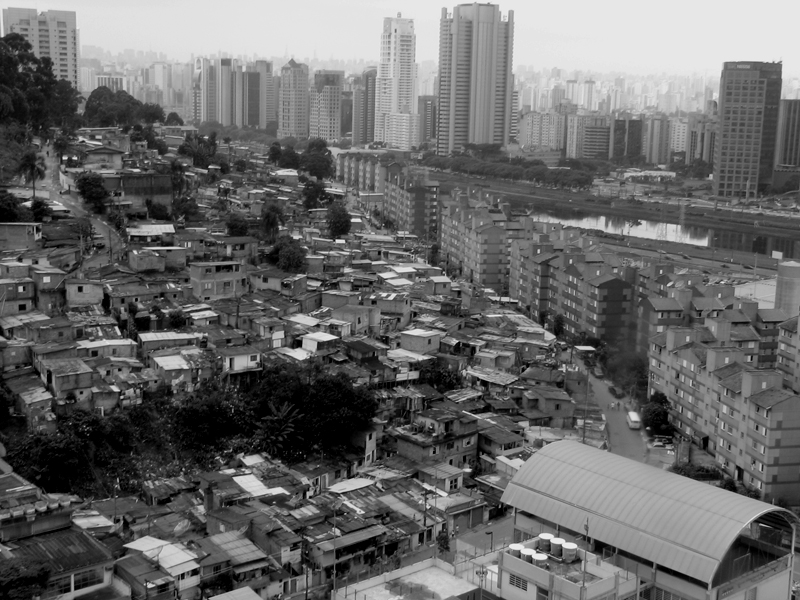
ITEM ONE: A large, thorough, and eye-opening account of life in the hypercity of São Paulo.

ITEM TWO: Some interesting musings on the shallow nature of the shockingly new city of Shenzhen and the loss of culture in China.

ITEM THREE: anArchitecture discusses the emerging problem of shrinking cities -- in Second Life.

ITEM FOUR: The difference between Tokyo and Little Rock? Broadband access. (Well, that's one difference, anyway).

ITEM FIVE: Spacing Wire marvels at the way design and art seem to be woven through every aspect of life in Barcelona -- right down to the (gorgeous) lightposts.

ITEM SIX: Police crack down on Geneva's squats, and airoots fears for the future of the city's underground culture.

ITEM SEVEN: Miami is in a bit of a pickle. 23,000 condos for sale, with another 25,000 under construction. Talk about market oversaturation...

Have a great weekend!

(Photo from Flickr user mariana_dias.)

8.16.2007

WEEKEND READING: August 11-17, 2007

This edition of Weekend Reading is all sorts of random. It's like urbanism salad!

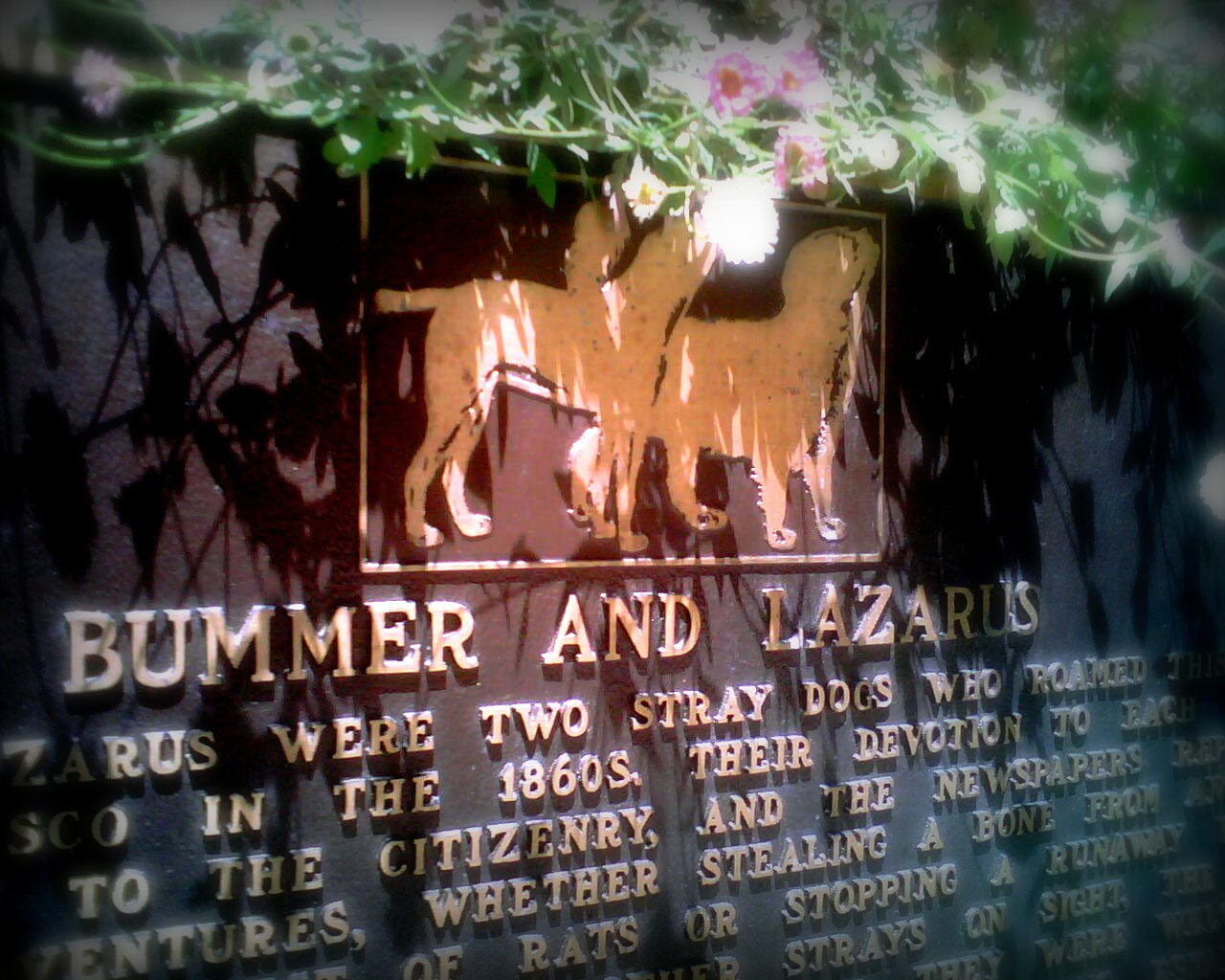
ITEM ONE: The story of Bummer and Lazarus, San Francisco's most famous pooches.

ITEM TWO: The "informal settlement"-watching blog Squatter City, written by the author of Shadow Cities.

ITEM THREE: Mexico City's mayor tries to push vendors off of the streets, but meets opposition from "a 63-year-old ex-con and great-grandmother."

ITEM FOUR: More radio hijinx from BLDGBLOG and DJ/rupture.

ITEM FIVE: The Washington Post asks "can globalization for for the world's slums?"

ITEM SIX: Will South America's first eco-city be built in rising-star Bogotá? Chances are good.

ITEM SEVEN: More from Colombia, where the previously mentioned HiperBarrio project continues to improve the city. For more on that resurgent city, click here.

See? Urbanism salad. Just like I promised. Check back over the weekend, as more of the Neighbor's Manifesto will be posted.

(Photo from Flickr user Dunstan Orchard.)

8.13.2007

The Possibilities of the Post-Retail City


I just had my first exposure to Reverend Billy, the leader of the Church of Stop Shopping. After reading a post (over at Polis) about the Reverend's anti-consumerist group, I thought it was an actual church. To which I said: "Oh, excellent.

Of course, the CoSS is actually an act, with the "Reverend" being the stage persona of NYC performance artist Bill Talen. It's a send-up of streetcorner preachers and televangelists, and it sounds hilarious. Better yet, there's a point! Reverend Billy preaches against corporatist architecture and urbanism, advocating for sustainable, walkable communities with local economies. And while the site does pay lip service to independently owned local businesses, it is the Church of Stop Shopping, and one of their taglines is "Love is a Gift Economy!" Obviously, these people think that there are better ways for us to use all of that street-level retail space.

And that got me thinking: if there were no major retail chains and independents had to hold up the local economy, what would we do with all of that ground-floor space? Indeed -- and my upbringing in a capitalist society may shine through right here -- but where would we walk to? Certainly, there are plenty of places that we walk every day, but a large amount of pedestrian traffic is genereated by shoppers. And while it's not a requirement for these ground-level spaces that make up our streetscape be places of commerce, their presence is utterly vital to functioning neighborhoods. Often (these days) even moreso than upper-level residential windows, storefronts are the Jacobsian "eyes on the street" that act as a natural deterrant to crime.

Shopping is also a huge part of the social life in many (if not most) contemporary cities; in fact, that's just what Reverend Billy and his fake church take issue with. And whether or not you agree with the Church of Stop Shopping (or, as I'm sure many do, find it outright offensive), it's interesting to imagine a world in which shopping took a back seat to other social spaces as the dominant street presence. Imagining Paris without the Champs-Elysées or New York without Park Avenue sparks a giddy, no-holds-barred creative energy akin to imagining those cities in a work of science fiction or postapocalyptic literature.

To get an idea of what might fill the void, it might be interesting to see how social space is structured in places where gift economies (or at least barter systems) often already exist and retail strips are few and far between, at least in the traditional sense: slums.

An article from Forbes, mentioned briefly in a previous post at Where, described the socioeconomic situation of many older, established slums in Asia and South America thusly: "Many slum dwellers are in fact entrepreneurs, albeit writ very small. They recycle trash, sell vegetables, do laundry. Some even run tiny restaurants and bars for their neighbors." So while there are no Ginza Districts in the favelas of Rio, there is a social commerce to such places. Restaurants and bars remain important components of the neighborhood, which makes good sense; people have always come together over food and drink, and will continue to do so regardless of any freak evaporations of the retail sector.

Another thing that brings people together is knowledge -- or, more specifically, the exchange thereof. Another recent post covered McGill University's Edible Cities project in Kampala; the site for the students' project "includes a low-lying wetland area...where a youth cooperative practices brick-makings, providing work for otherwise unemployed youth...and a sloping dryland area where farming is [practiced]." While this is a very rural area being discussed (albeit in the context of a larger city), the Kampala site illustrates two more possible uses for a retail-less streetscapes: public workshops (which could cover a variety of topics in addition to brickmaking) and storefront hydroponic community gardens.

Heh.

If the second option seems somewhat far-fetched, the first is hardly at all; in fact, in the face of looming irrelevance in the digital age, libraries around the world are starting to take on a more social role in their respective cities, staging various events and programs to encourage public discourse and teach skills that cannot be learned with a mouse and keyboard. One of the most innovative library programs that I've heard of recently is in Medellín, the second city of Colombia.

Once the so-called Kidnappping Capital of the World, Medellín has made more news recently for building five spectacular modernist libraries (like the one in Santo Domingo Savio, pictured above) in its most impoverished barrios. One of the programs to utilize these new libraries -- which are equipped with computer labs full of brand spankin' new computers -- is HiperBarrio, which teaches teens in the barrios how to use blogging and other social media tools as a creative outlet for self-expression. Juliana Rincon, one of the founders of HiperBarrio, spoke of the program's inspirataion in a recent interview with Global Voices Online, saying, "It was amazing...telling these kids about blogs and finding out that they had no idea that there was something like a blog, that they existed. [Or even] that you could write online and have a virtual space to keep your writing, the videos you like, and pictures." Libraries, in this case, serve not just as containers for information, but as catalysts for the creation of new information and new ideas. Certainly, this kind of social space, the place of public learning, will play an increasingly important role in cities as we continue through the Information Age.

Whatever we come up with to fill storefronts and social spaces, shopping districts and neighborhood retail strips are unlikely to disappear within the lifetime of anyone reading this blog post. Still, imagining a world without retail can tell us a lot about how we use cities, why we do things the way that we do, and how we can improve urban places without courting Starbucks and Barnes & Noble for civic salvation. In fact, picturing your neighborhood without any shops selling anything other than necessities might be a great way to fall in love with the place all over again. That is, of course, assuming that you love your neighborhood -- and that you don't live off Rodeo Drive.

(Photo from Flickr user galitagreeneyes.)


Links:
Rev. Billy Ready for Close-up (Polis)

The Church of Stop Shopping

Two Billion Slum Dwellers (Forbes)

Kampala Project Information (McGill School of Architecture)

Red de Bibliotecas (en español)

HiperBarrio: Local Stories, Global Audience (Global Voices Online)