Showing posts with label eco-city. Show all posts

12.27.2008

Imaginary Cities

Photo of the Bagdad movie theater in PortlandThere is an interesting perspective on cities in a short essay by Matthew Gandy, titled “Urban Nature and the Ecological Imaginary.” In referring to urban nature, Gandy includes both concrete elements and abstract ideas. The ecological imaginary is an example of the latter, as in the use of scientific metaphors (such as organism and metabolism) to represent cities. This way of thinking seems to have gained momentum in response to industrialization, as urban areas were increasingly viewed as separate from and harmful to nature. Thus planners sought to reconnect cities with a natural ideal.

According to Gandy, urban space is produced through a nature-culture synthesis. In other words, cities take shape through our actions in combination with biophysical processes. Kevin Lynch found that "the quality of a place is due to the joint effect of the place and the society which occupies it" (Good City Form, p. 111). Gandy proposes a political approach that recognizes this co-evolutionary dynamic and moves away from the idea of cities as unnatural.

Photo of sledders in Riverside Park in New York CitySo how might Gandy's thinking help in solving urban environmental problems? I like the way it implies that cities are not results of grand designs that remain fixed over time. They are transformed constantly through social, political, economic, cultural, and biophysical processes. Instead of looking for answers in comprehensive plans (whether City Beautiful, Garden City, Radiant City, Urban Redevelopment, or Ecocity), perhaps we should consider the ways in which cities change incrementally.

Of course, it's possible that the way we understand urban nature makes little difference when faced with concrete problems like air pollution, food shortages, and contaminated water. Does thinking of cities as integral parts of the natural world, and considering the processes through which they change, help in a tangible way?

Baltimore buildings from Urban PalimpsestPossibly. Rather than viewing nature as an external force that can save us from shortsighted actions, or hoping that a new technology will magically solve our problems, we can identify the actions that threaten our life-support system and work towards viable alternatives. We can recognize the importance of political engagement in this process. I'll look forward to reading Gandy's Concrete and Clay: Reworking Nature in New York City for more background on his ideas.

(Photo of the Bagdad movie theater is from anti:freeze. Photo of sledders in Riverside Park is from Flickr user WhatDaveSees. Photo of buildings in Baltimore is from Urban Palimpsest.)

8.09.2008

Dear India: You do not need your own Dubai.

I can't be the only person who's bored to death with videos like the one here, screenshot'd above, for the Nanocity deveopment north of New Delhi, can I? Obviously, the presentation, with its sweeping aerials and zooming close-ups of crystalized placeholders for buildings is intended to impress.

And yet.

After Masdar, and the Palm Islands, and that insipid Koolhaas Death Star development, these "impressive" videos have become mundane, commonplace. There is the slight tweak to the trope, in this case, of the development's being located in India. Still, knowing what little I do of India's wild and dynamic culture, the change of location actually generates more disgust for the project. Here is a sanitized, plagiarized version of Next Generation Urban Density™ for yet another developing country.

The most irksome thing about these kind of developments is that they completely ignore existing infrastructure. Why not propose a radical rethinking of actual New Delhi neighborhoods by drawing on Indian cultural and building traditions? Dubai is a lost cause, but India has no need to go down this road. In twenty years these generic ecocities are going to look like 1960s housing projects in the US look now: like a terrible, horrible, no-good very bad idea. Building an eco-city from scratch is like burning down your house to get the kitchen stove lit.

So a plea to Indian developers and financiers looking to develop their cities in the coming decades: Dubai is not a model. It is a warning sign. Take heed.

6.29.2008

Archisatire


"I invite you to invest in the ninth wonder of the world."

Hilarious.

via

6.25.2008

Electri-City

From the look of things, the zero carbon high tech eco-city of 2030 might not really look that different from the boring old present of 2008. Innovative minds are coming up with new ways of harvesting power from just about everything, reducing the need for crazy-looking turbine towers or solar-paneled skylines. What happens if everything becomes its own source of energy? Obviously, this seems like a Green pipe dream, but speculate for a moment. What might humanity do with a global surplus of power?

In the meantime, we can marvel at the creative thinking below and wonder if, one day soon, our curtains might be powering our laptops and televisions.

So where might we be getting our electricity from in the near future?

Our toilets? (Architecture.mnp)

Our walls? (Jetson Green)

Our clothes? (MIT News)

Our curtains? (Electricpig)

Our sidewalks? (core77)

What are some common, overlooked aspects of the urban environment that might be able to generate usable energy if harnessed in a new way? With suburbs densifying and evolving and becoming more self-sufficient nodes in polycentric megacities, the potential seems endless. So many people, so many opportunities for a volt or two.

(Photo from Flickr user Tobers. The original full-sized color version can be viewed by clicking the photo.)

8.16.2007

WEEKEND READING: August 11-17, 2007

This edition of Weekend Reading is all sorts of random. It's like urbanism salad!

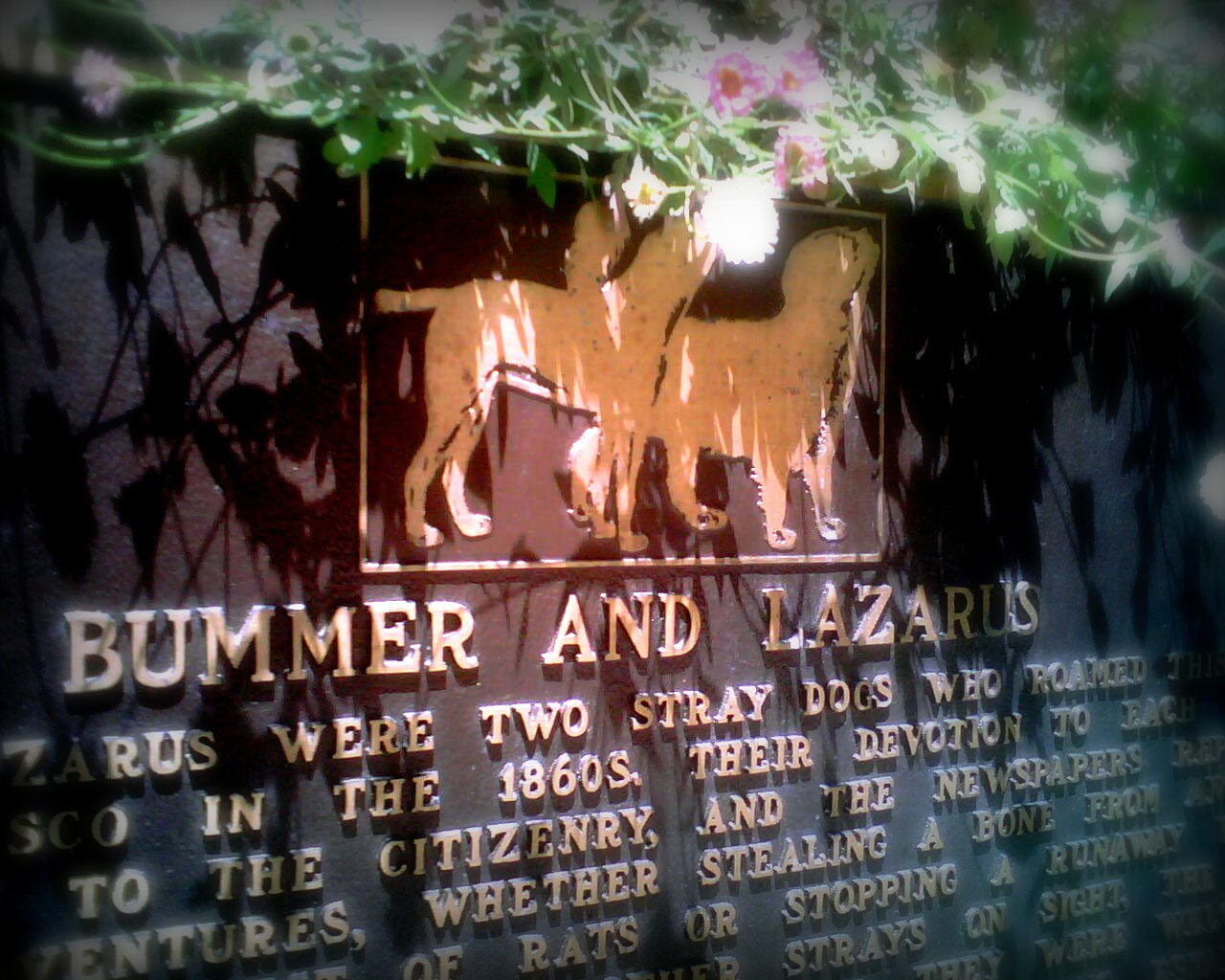
ITEM ONE: The story of Bummer and Lazarus, San Francisco's most famous pooches.

ITEM TWO: The "informal settlement"-watching blog Squatter City, written by the author of Shadow Cities.

ITEM THREE: Mexico City's mayor tries to push vendors off of the streets, but meets opposition from "a 63-year-old ex-con and great-grandmother."

ITEM FOUR: More radio hijinx from BLDGBLOG and DJ/rupture.

ITEM FIVE: The Washington Post asks "can globalization for for the world's slums?"

ITEM SIX: Will South America's first eco-city be built in rising-star Bogotá? Chances are good.

ITEM SEVEN: More from Colombia, where the previously mentioned HiperBarrio project continues to improve the city. For more on that resurgent city, click here.

See? Urbanism salad. Just like I promised. Check back over the weekend, as more of the Neighbor's Manifesto will be posted.

(Photo from Flickr user Dunstan Orchard.)

8.06.2007

A Beautiful Day in the Eco-Hood


There has been a good deal of babble recently on Where about eco-cities: Dongtan on Chongming Island outside of Shanghai; Foster's and Koolhaas' dueling megaprojects in the UAE; Treasure Island in San Francisco. These are great, high-profile examples of the beginning of this new fad. Mayor Livingstone has also recently proposed an eco-hood for London, to be built in the Thames Gateway. This project was brought to my attention by a recent article at Globe-Net that asserts the importance of eco-cities in the fight against climate change. The author beats the dead horse about how more than half of humanity is living in cities for the first time, but highlights the important point about most of the urban growth occuring in the slums of metropoli in developing nations.

While the UAE proposals are out in the desert, Treasure Island and the Thames Gateway project will both be built within the existing urban fabric of their cities (albeit at relatively remote locations). While it's too early to say what the number will be in London, San Francisco's eco-hood will designate a full 30% of its housing units as below market rate. Granted, "below market rate" is a warped term in the Bay Area, but this gesture sets an important precedent. Eco-cities like those listed above have the potential to start a movement, but if they are to gain any real legitimacy as a way of fighting climate change, they must consider more than just the natural environment. If slums represent the largest growth sector in urban areas, eco-cities must address the socioeconomic environment of the cities in which they are built.

It would be lovely if developers all over the world took a stand and developed eco-cities for their own moral or ethical reasons. That, of course, is not going to happen. The plans in the works right now exist because there is a growing demand for such developments. The onus for mandating economic diversity in these new developments falls on those creating that demand. The desire to move to such a place may, for some, be rooted in self-inflating or trendhopping impulses. But for most, I'd be willing to bet, there is a real desire to do their part to "save the world."

Eventually, eco-city dwellers have to ask themselves: what kind of world are we trying to save? If the answer is that it's just their own tiny bubble world, eco-cities are doomed to be obnoxiously superfulous tokens of an upper class so completely self-absorbed that it literally managed to forget the existence of the world around it. "So what?" you might ask. And rightfully so; reinvestment in central cities by the upper and middle classes was supposed to save our cities. What happened, instead, was gentrification. The poor were pushed out as the rich moved back in, and now the GAP, Citibank, and Starbucks alternate street corners in Manhattan while the city's homeless shelters overflow. "Big deal, life sucks, that's how it goes."

But that is not a world-changing attitude.

It's hopelessly idealistic to think that we can provide safe and affordable housing and create livable urban areas for people across the economic spectrum in the First World, much less the Third. Back in 2005, UN-HABITAT warned that "governments will have to take the lead in building some 96,150 housing units per day if the world hopes to avert a massive urban crisis in the near future" (emphasis added). But is it any less idealistic to think that, through our own ingenuity and some hefty innovation, we can change the course of the natural process of climate change? One could argue that we know that we can change the climate since the problem exists because we created it. To that I say: we created the slums, too.

There are no fingers to point now -- poverty has been around as long as human society. But if efforts to fight climate change have reached the level where we are preparing to change the way that we build (architecture is the slowest of the arts, after all), we have to take a good, hard look at our motivation. At it's heart, the green movement isn't really about trees, floods, or solar rays. It's about people recognizing the fact that they are part of a larger ecosystem (in a very natural, non-kumbaya way) and learning how to stop working against that system -- and working against themselves. Cities are the greatest achievements of mankind, so there is great potential for them to be the solution to the environmental challenges that face us today. We just have to remember that everyone around us is part of that environment.

(Photo from Foster + Partners.)


Links:
Eco-Cities – Building Better Cities for the 21st Century (Globe-Net)

Two Billion Slum Dwellers (Forbes)

World Faces Prospect of Teeming Mega-Slums (Common Dreams)

7.30.2007

What's in a Name? (Or: Car-Free on the High Seas)


To discuss San Francisco's redevelopment plans for Treasure Island, one must first confront the name and its legendary implications. It is an evocative piece of nomenclature, conjuring up iconic images of towering pirate ships, buried chests filled with gold of an unearthly shimmer, skulls, crossbones, and all that jazz. But the little island in the middle of the 'Frisco Bay is not at the center of any pirate legends, glamorous or not. It does, however, have its own rather unique and storied history.

Built from dredged silt to host San Francisco's 1939 Golden Gate International Exposition, it was supposed to be converted to an airport after the expo, but the Navy bartered Mills Field, now the site of SFO, for the island. The Navy decommissioned the base in 1996 along with the Presidio, and since then it has been used as a mish-mash neighborhood largely populated by students and low-income residents.

All that is set to change, though, thanks to the recent approval of a plan by Skidmore Owings and Merill to turn Treasure Island into one of the first (if not the first) car-free communities in the United States. And what better place to try such an idea out than an isolated island in one of the most environmentally progressive cities in the world? Indeed, the concept of a car-free community going up anywhere seems almost too good to be true; but in the US, the birthplace of the autoculture? Treasure Island is taking on a whole new kind of legend.

What makes this plan so exciting, I think, is that it doesn't appear to treat the environment as a token. It joins the ranks of other eco-cities like SOM's Chongming island development in Shanghai, in the recent push to plan cities that encourage (or even mandate) eco-conscious lifestyles (see Planning Cultural Values Part II). From SOM's website: "Housing is designed at a density as high as 100-units per acre—enough to support ferry service while allowing the majority of the island’s acreage to be dedicated to a variety of open spaces. The plan designates these to include wetlands capable of filtering the island’s gray water, bike and hiking paths, and a large demonstration site for organic gardening." It's holistic eco-urbanism.


In real estate, location is everything. But what is a good location? This is a classic urban development conundrum. If a location is too good, if it is already intensely desirable, trying to build there comes with a whole slew of extra problems. Building in iconic locations, trying to borrow the status of a famous building or public space or district, can be a nightmare for developers -- as anyone who has tried to build anywhere in San Francisco recently has likely learned. The more impressive the location, the harder it is to try something new there.

Treasure Island, then, poses a very rare opportunity indeed. It is a spot rich with history and blessed with a very iconic name. To see this megadevelopment taking shape in a way that takes cues from the site's intangible contextextual elements to create an iconic place is very exciting. The island is flat and small, but the design is anything but. The buildings and streets are carved out by the wind, and the enterprising architecture pays subtle homage to the modern, streamlined buildings that made up most of the Exposition for which the island was created. That island has always showcased leadership and ambition. Now that legacy is being interpreted in a new and exciting way.

And as for the name? The new Treasure Island might not have much to do with pirates or burried gold. But creating a car-free oasis in the middle of one of the largest urbanized areas in the world? Sure sounds adventurous to me.

(First photo from GGIE.com; second from SOM, see link below.)


Links:
California Redevelopments Move Forward (Architectural Record)

Bending the Grid (SOM)

If a green utopia on Treasure Island sounds far-fetched, dreamers have a plan (SFGate)

7.19.2007

Planning Cultural Values Part II


Early on in the mission statement of the Ninth Malaysia Plan is the line "There is a danger of the country possessing first-class infrastructure but third-class mentality." As I started to talk about yesterday before the weather intervened, Malaysia's plan for developing a first-class mentality puts some hefty pressure on the country's urban planners. The challenge: plan to encourage a culture of knowledge acquisition.

As the Ninth Malaysia Plan illustrates, the country has grown a great deal over the past fifteen years or so. The government's commitment to education is, indeed, apparent -- the numbers suggest admirable. Secondary school attendance rates jumped 17 percentage points, while the country's Ministry of Education managed to slightly decrease the number of students per classroom and improve the teacher-to-student ratio. The importance of education and the growth of knowledge-based industries is evident throughout the mission statement (which is admittedly all that I had time to read...it's a solid overview, and the plan is rather long).

Of course, the government is using a set of religious principles called Islam Hadhari, which "emphasises development, consistent with the tenets of Islam with focus on enhancing the quality of life through the mastery of knowledge and the development of the individual and the nation; the implementation of a dynamic economic, trading and financial system; and the promotion of integrated and balanced development that creates knowledgeable and pious people who hold to noble values and are honest, trustworthy, and are prepared to take on global challenges."

Even still, while having a state-sponsored religion will make it easier for a government to direct cultural values, the idea of creating physical plans -- street grids, public spaces, civic amenities -- that literally attempt to re-organize the priorities of the people who live in a city is a pretty fascinating concept. While in the case of Malaysia it is easiest to see this taking shape in the bustling capital, Kuala Lumpur, the way that the Ninth Malaysia Plan describes its goals (or "Thrusts," as they are referred to in the doc) the most interesting cultural planning could likely take place in the countryside. The Second Thrust, which aims to raise the country to a "first-class mentality," specifys that "a special focus on raising the standard of schools
in the rural areas."

One of the big stories in the planning and architecture circles of late has been the emergence of very large-scale eco-cities, like the one planned for Chongming island just northeast of Shanghai or the flashier dueling proposals of Sir Norman Foster and that Koolhaas character in the deserts of the United Arab Emirates. These gargantuan developments make no secret of their chief ambition: to make people live in an environmentally-friendly way. These examples represent values-based urban planning at its zenith, and I bring them up simply to show the potential for what can happen when a rapidly developing nations sets its sights on accelerating growth by using city planning to directly improve society. If gleaming, compact Knowledge Accumulation Villages designed by Diller Scofidio + Renfro and Jean Nouvel start popping up in the Malaysian countryside at some point in the next few years, don't act surprised.


Links:
The National Mission (Ninth Malaysia Plan)

China's eco-city faces growth challenge (BBC)