Showing posts with label revitalization. Show all posts

4.10.2009

Considering Programmed Housing, Continued

Yesterday, Where featured a post about a proposed development in Albany that would provide affordable urban artist housing while providing valuable cultural services to the existing community by having the residents create and teach free and low-cost art classes, building a community service program into the rental agreement. But artistic development is not the only service that could be programmed into a housing development. In fact, when tax revenue is being used to stimulate the economy and efficiency has become the golden rule, programmed housing stands to give taxpayers a lot of bang for their buck by tackling multiple social problems at the same time.

Foreclosures have become headline news over the past year, and affordable housing has rocketed from being an oft-maligned political quagmire to being an oft-maligned political quagmire in the national spotlight. Public opinion of public and affordable housing is, as Where has argued before, not anywhere near as high as it needs to be at a time when millions of people are in dire need of a place to stay. The central problem here, from a PR perspective, seems to be that Americans assume all residents of public housing are lazy, riding on the government's coattails to avoid working or paying rent. Of course, access to jobs is one of the central reasons for why people actually need affordable housing, particularly in urban areas. Irony is, as the saying goes, a bitch.

To complicate matters further, the Brookings Institution announced the results of a new study on what they have termed "job sprawl" earlier this week. The study confirmed what many already knew: jobs have followed people out to the suburbs. Nearly every city in America has seen its share of the total metro population shrink drastically over the past half century, and now Brookings has hard numbers to illustrate just how drastically this has affected those cities' share of the job market, as well.

According to the study, the Virginia Beach-Norfolk metro area has the highest percentage of residents working within a mile of the city's central business district, at just 36.4%. New York City, with its infamous hyper-concentration of office space, only managed to come in second with just 34.8% of the metro workforce commuting to its CBD each day. That means that, in the best cases, only a third of people are working in downtown areas, which inevitably have the highest concentration of transportation options.

Transportation is the glue that binds these two problems -- a lack of affordable housing and access to increasingly spread-out job opportunities -- together. Affordable housing is only useful to workers if it is available in a location that allows them reasonable commute times to places where jobs are actually available. Many people in the States are finding themselves rather suddenly without a job or a home, much less the funds to drive around the city looking for either, or to drive an hour each way every day to work a part-time job for $8 an hour (if that).

With the need for affordable housing at an all-time high and urbanists hoping for a stimulus-funded urban renaissance, it only makes sense that we should be presenting decision makers at the Federal level with projects, like Albany's Academy Lofts, that can weave solutions to multiple problems together as efficiently and creatively as possible. Programmed housing has the potential to provide job-seekers with affordable housing while simultaneously providing them with an opportunity to continue building work experience, through participation in community programs, while they continue their search for paid gainful employment. Not only that, but since the work done at programmed housing developments would be on-site, transit costs would be accordingly lowered for residents.


The arts are an obvious starting point, but there's no reason why housing developments couldn't be built around legal clinics to provide students fresh out of law school (and saddled with the accordant debt) with a chance to cut their teeth, or around community centers offering technology classes and computer repair services. Programmed housing could be easily tailored to be double assets; by placing such developments in targeted urban neighborhoods where a lack of certain services was identified, these developments would help both the new residents and the existing communities toward economic recovery.

Programmed housing may not be a sure-fire scheme (a potential downside: turnover could make for some very ineffective services), but tying solutions to jobs, housing, and transit challenges together -- particularly in urban areas -- is certainly the most effective way to use stimulus funds. If we're not talking about multiple solutions at once, we're not really talking about a solution at all.


(Photo from Flickr users The Voice of Eye and your_nostalgia, and from Where@FFFFOUND!. The originals can be viewed by clicking the photos.)

7.21.2008

Urban Sandboxes

CEOs for Cities recently relayed an interesting story from USA Today that has some interesting implications for older, depressed urban centers as Gen Y and the Millennials gear up to make their mark on history:

Tulane's applications almost doubled from 17,572 pre-Katrina to 34,100 this year. As one Loyola's vp of enrollment told the paper, "Students know they are coming down to have an adventure. It's a great time to be part of something... the rebirth of a city."

NOLA and other struggling burgs -- think Detroit, Pittsburgh, St. Louis, and Baltimore, or even smaller cities like Canton, Reading, and Flint -- together provide a unique opportunity in their hard times. These are the urban sandboxes, the cities that present young people trying to prove their mettle with the opportunity to do so in new and interesting ways. Desperation breeds innovation out of necessity.

Previous generations have tried and blundered efforts to turn Rust Belt and Northeastern cities back into growing, productive urban hubs. We now know that stadiums, riverwalks, and high-end condos have a limited (if any) effect on cities. What is encouraging about the surge of interest in New Orleans is that the challenge of repairing the city is so blatant, and so thoroughly un-glamorous (try as Brad Pitt might to change that).

Perhaps this is an early sign that the next generation of urban innovators gets that top-down, aesthetic-focused efforts aren't what improves a city; indeed, the "fix downtown and the neighborhoods will follow" theory is proving itself to be pretty weak over time. Could the interest in the Big Easy mean that tomorrow's civic leaders are now planting the seeds, as college students and recent grads, for a reversal of this process?

Besides -- if Millennials can fix Detroit, the "Greatest Generation" mantle may be up for grabs.

(Photo from Flickr user Alex Summer. The original full-sized color version can be viewed by clicking the photo.)

1.31.2008

Coexisting and Coworking

Contrary to naysayers' and pessimists' early warnings, distance in the wired world is decidedly not dead. In fact, as has been pointed out a gazillion times already, the revitalization of many urban cores in the US and around the world has coincided with the miraculous rise of the internet and wireless technology. But why have people not retreated to mountaintops as was feared at the onset of the internet era? If you can have a creative and fulfilling career from anywhere, why not work from a rustic cabin overlooking a placid lake in a bucolic wood?

Blech. Boring.

A recent post on coworking (a trend that I am particularly enamored with) at Coroflot's Creative Seeds Blog inadvertently highlights why the internet has pushed people closer together rather than pulling them apart. Coroflot's lays out the options for those who don't have a formal office -- temporary cubicle, cobbled-together home office, isolating coffee shop -- and then explains that none of these environments has "the most important quality of the ideal creative workspace: other creative workers with whom to interact. It's well understood that good ideas and good creative work flow almost never flourish in a vacuum, and yet increasingly we are asked to make them do so."

Cities are more diverse, active places. They are larger and thus, by default, contain more possible answers to any question of location. Thus, for someone who is free to work anywhere, cities provide the most enticing environment. By living in a city, a creative worker has the opportunity to change up their daily workspace. There is always the option of moving out to The Sticks, but when The Sticks compete on a level playing field with the urban core, guess which one usually wins out?

There's another fact that's been repeated a gazillion times over the past few months that may provide a hint: for the first time in the history of civilization, half of the world's population now lives where?

(Photo from Flickr user MathieuCoste. The original full-color version can be viewed by clicking the photo.)


Links:
Your Dream Office is Just Over There: Co-Working and the Instant Creative Community (Coroflot's Creative Seeds Blog)

10.09.2007

Civic Crowdfunding

As technology becomes increasingly ubiquitous, the internet is fast becoming the new Agora. The social functions of the public square are being transferred into cyberspace, and we are being forced to come up with new ways of doing things in cities. Public discourse is the perfect example; urbanites, once able to voice their opinion in the public square, are finding a new voice online. City governments have a real opportunity, then, to tap into public opinion and get to work on citizens' real concerns.

One of the most interesting web 2.0 developments has undoubtedly been the rise of crowdsourcing, and now by extension, crowdfunding. A particularly interesting and grassroots-y example of crowdfunding comes from the site Sellaband, which allows music lovers -- whom Sellaband refer to as "believers" -- to pool their money with other believers to help artists, who submit their music to the site, fund a trip to the recording studio. This method breaks a band down into 5,000 "parts," which are each sold for $10. Once $50,000 has been raised through the sale of these parts, Sellaband provides the artist with an A&R professional to guide them through the recording process. The full amount must be raised before the recording process can begin, so this turns both artists and believers into music evangelists, spreading word of the fund-raising effort to friends, neighbors, co-workers, etc.

It would be great to see something like this applied to neighborhood, or even city-wide improvement projects to create a kind of civic crowdfunding. The Sellaband method makes a great deal of sense since it pools money from a large number of people who then provide free marketing and PR. By tapping into peoples' passion for where they live, city officials and even developers can enliven the civic discourse by using internet technologies. Just imagine the potential of a site where people didn't just complain about local problems, but offered feasible solutions and invited their neighbors to get involved in getting real results. City Hall could even have an agreement whereby it provided a city official in a related office to help guide a fully-funded neighborhood project through the implementation.

If it sounds pie-in-the-sky, you might be surprised to hear that there are already somewhat similar programs in several cities. Seattle, for instance, has its own Department of Neighborhoods, a city department that deals with neighborhood projects and services. The SDoN even has a matching grant program that helps groups of Seattleites to fund projects that address the problems they have identified within their own neighborhoods. From their website: "Funds are limited so it's a competitive program. Applications are considered during specific funding cycles and the highest rated applications are awarded funds." From the sound of it the ratings come from a government body, but this looks like an early form of civic crowdfunding.

Next we turn to Minneapolis' Neighborhood Revitalization Project (NRP), which is "an investment program based on truly empowering residents by bringing them into the priority-setting process of the city. It is based on the belief that the empowerment of residents and the mobilization of untapped resources, energy and creativity can make our collective desire for a better future a reality. Neighborhood based priority setting, planning, and implementation are NRP's core. Residents and other neighborhood stakeholders create Neighborhood Action Plans (NAPs) that describe the neighborhood they want in the future and the goals, objectives and specific strategies that will help accomplish their vision. NRP completes the empowerment process by providing funding to each neighborhood to help implement their approved NAP."

The Neighborhood Action Plans seem to be another form of primitive civic crowdfunding. While the funding structure is still traditional (read: external), it is neighborhood residents that are creating the plan for their neighborhood (I knew someone had to be doing this already) and setting the priorities of the plan. Will everything that these plans address work out as residents had hoped, or even in their favor? Probably not. But it would be foolish to suggest that developers and/or City Hall always gets it right when trying to "fix" neighborhoods. There is a certain amount of risk involved in a program that asks lay citizens how their neighborhood should be improved -- but there is a wealth of unprofessional expertise, as well. After all, planners may know best how to move traffic efficiently through a theoretical neighborhood, but residents understand the idiosyncrasies and unplanned tics of their neighborhoods better than anyone who doesn't live there.

Springwise, the bloggy arm of Trendwatching.com, had this to say in a recent profile of a software crowdfunding site: "In addition to a marketplace for software development, microPledge reckons its site will come to be viewed as a free market-testing service to gauge the reception for new software products and features. Interesting example of the intention economy at work: when consumers have to put their money where their mouth is, it's a pretty good bet you can believe what they say." If you extend this argument to neighborhood crowdfunding in cities, it holds up quite nicely. The risks of trusting what some might term "non-experts" are mitigated in crowdfunding by the wary wisdom of the consumer. Neighbors are more likely to ignore flashy-but-ineffective revitalization projects, choosing instead to fund the kinds of improvements that will raise an area's quality of life in all of the little ways that legacy-laden city officials can overlook.

Little bits add up. That's what crowdfunding is all about.

(Photo from Flickr user djpiesas.)


Links:
Sellaband

Seattle Department of Neighborhoods

Minneapolis Neighborhood Revitalization Project

Crowdfunding software projects (Springwise)

9.05.2007

Build, Rebuild, Build Anew

One of the best articles written about New Orleans' progress (or lack thereof) two years after its tango with Katrina has come from within the Crecent City, itself. Nola.com's article by Doug MacCash, entitled Architectural Soul of the City at Stake, discusses in great detail the efforts of preservationists to save the city's pre-hurricane architecture; and that label is very deliberate, as there is a general push to save anything, be it from the 1800s or the 1960s, that survived Katrina and the resulting floods.

MacCash's article has particular resonance because it so very subtly ties New Orleans' architectural soul to its overall civic soul; indeed, the city's identity, now in crisis, is intrinsically tied to its built environment. New Orleans faces the intractable problem of having to build, to rebuild, and to build anew. That is to say, NOLA must replace destroyed buildings (build) without further damaging -- and trying to maintain -- its legendary sense of place (rebuild) in a way that avoids painful, regressive kitsch (build anew). This explains the desire to save everything -- no matter the architectural style -- that wasn't truly irreparably damaged.

John Magill, a historian with The Historic New Orleans Collection, is quoted in the Nola.com article as saying "There are so many houses lost. Nobody can comprehend what's gone." This quote is particularly telling because it refers not to Garden District mansions or classic Victorian shotguns, but to the so-called "slab city" neighborhoods built in the post-war era. Magill's lamentation is for the brick-veneer bungalows that can be found blanketing suburban tracts from Seattle to Atlanta, but that "meant a great deal to the people who lived in them." The point being made here is that what has been decimated in New Orleans is not just a physical vernacular, but an emotional one as well. A page of the city's cultural story has been savagely ripped from the binding.

But the name of the game on the bayou is Resilience, and the destruction of New Orleans has presented a dream scenario for architects and urban designers. Visions for the city's future have not been scarce, though traction with public officials, unfortunately, has been. Still, they continue to come pouring in. Most recently, Thom Mayne's National Jazz Center and TEN Arquitectos, Hargreaves Associates, and Chan Krieger Sieniewicz's reimagining of the downtown riverfront have added some lustre to the city's architectural news roster.

Of course, the reality is that these projects could quite possibly fizzle out like their predecessors. "Still," a NY Times article on the proposals points out, "the scope and creative ambition of these projects suggest how architecture could someday be vital to the city’s physical and social healing. Both seek to transform dead urban areas into lively public forums, employing powerful architectural expressions of a democratic ideal."

New Orleans hasn't been a center of contemporary design since "contemporary" refered to the kind of flowery aesthetic that makes today's historicists salivate. In the wake of an event that has changed the very way in which the city thinks about itself, there is a chance that this could change. In fact, while the artistic merits of modern architecture (as with any style) will forever be argued, with its clean lines and frank honesty modernism is (metaphorically speaking) exactly what the city needs

Trahan Architects have come up with what may be the most enticing endorsement of modernism in the new New Orleans with their impossibly sleek update of the city's most beloved piece of vernacular: the shotgun house (pictured above). If built, this house would be a new, flood-conscious building that could easily nestle into a newly cleared lot (build) that draws from the city's architectural and cultural tradition (rebuild) in a way that is neither chintzy nor dishonest (build new). This is democratic architecture at its best.

People will always be wary of buildings built in newer styles of architecture because they suggest, whether it's true or not, that the places around them are changing. But New Orleans is a city that can not afford to deny change, and it can likely be agreed that, after Katrina, it would be particularly bullheaded to do so. Modernism is certainly not the answer to every problem facing this city, and shouldn't even necessarily be the primary architectural mode in the city's reconstruction. But embracing innovative and progressive architectural values, in a place where architecture is so vital to the civic character, can help to bring about important changes in a city desperate for a new raison d'être. The people of New Orleans cannot rebuild simply for the sake of doing so; the hurricane has given them an incredibly rare chance to create a built environment and a community that together form something greater and stronger than the insular, stagnant city that they had before.

It's time to consider building change into the vernacular.


Links:
Architectural soul of the city at stake (Nola.com) (found via Life Without Buildings)

Two Infusions of Vision to Bolster New Orleans (NY Times)

Trahan Architects (Photo credit)

8.16.2007

WEEKEND READING: August 11-17, 2007

This edition of Weekend Reading is all sorts of random. It's like urbanism salad!

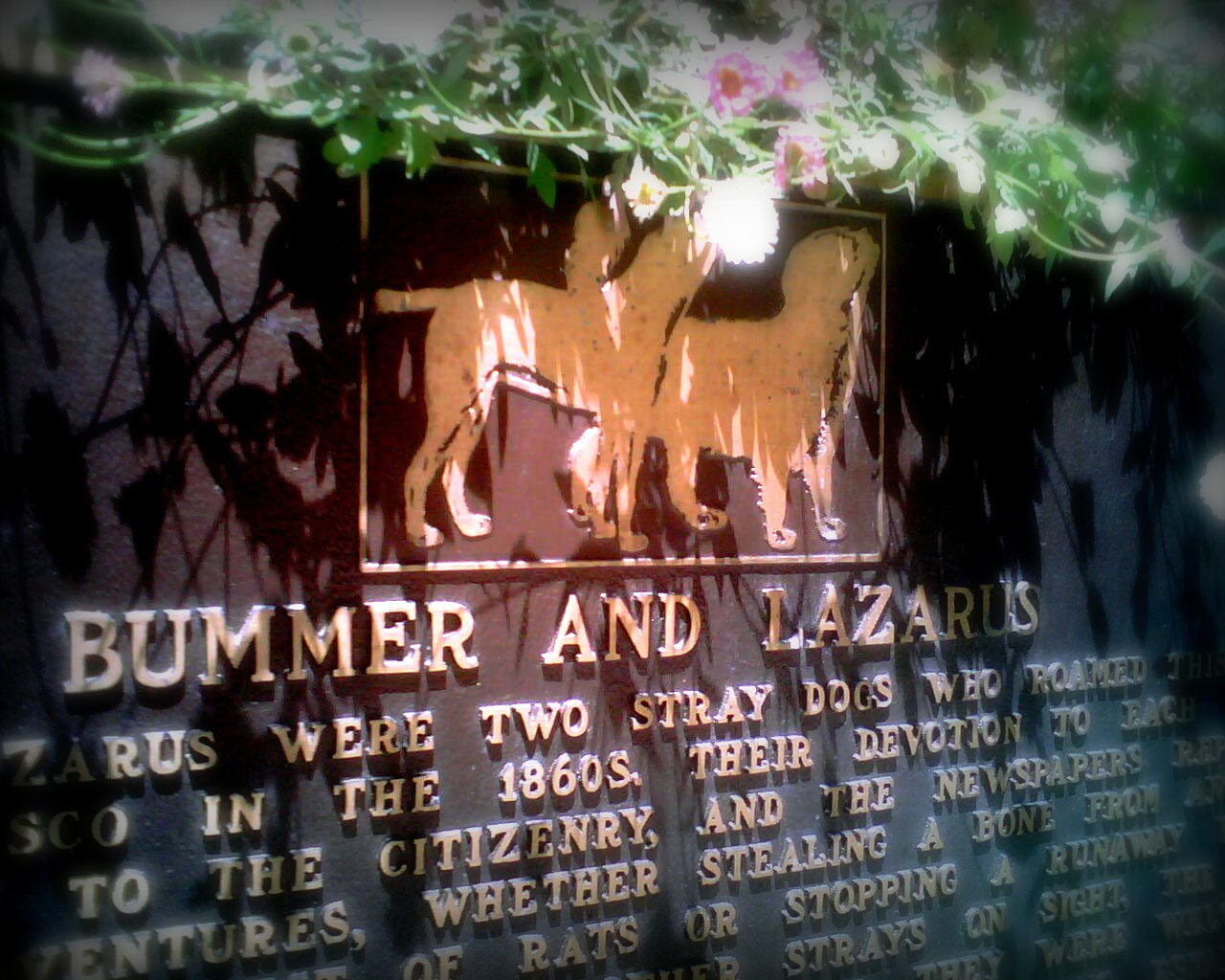
ITEM ONE: The story of Bummer and Lazarus, San Francisco's most famous pooches.

ITEM TWO: The "informal settlement"-watching blog Squatter City, written by the author of Shadow Cities.

ITEM THREE: Mexico City's mayor tries to push vendors off of the streets, but meets opposition from "a 63-year-old ex-con and great-grandmother."

ITEM FOUR: More radio hijinx from BLDGBLOG and DJ/rupture.

ITEM FIVE: The Washington Post asks "can globalization for for the world's slums?"

ITEM SIX: Will South America's first eco-city be built in rising-star Bogotá? Chances are good.

ITEM SEVEN: More from Colombia, where the previously mentioned HiperBarrio project continues to improve the city. For more on that resurgent city, click here.

See? Urbanism salad. Just like I promised. Check back over the weekend, as more of the Neighbor's Manifesto will be posted.

(Photo from Flickr user Dunstan Orchard.)

8.10.2007

Detroit Rising?

If someone asked you to come up with the least likely place for a major urban development project in the US, what might you come up with? I'll take a wild guess and say that, a few quips about East Saint Louis and Newark notwithstanding, most people would suggest good 'ole Detroit.

That assumption being made, here's some pretty interesting news: a consortium of developers is redeveloping a 1,200 acre (1.85 square mile) neighborhood on the east side of Detroit by building 3,000 new homes and rehabbing the 230 still left from the area's glory days. The developers will be using a number of smaller local builders to achieve this goal over the next decade, and what's even better: from the images released thus far, it looks like the neighborhood won't be an embarassing suburban bubble inside the city limits for the blatant purpose of increasing tax revenue. The architecture is modest, but respectable. Stately, almost.

Better yet, it would appear that the density for the new neighborhood could be relatively high. Some basic math: if you add the 230 existing homes to the 3,000 home total and divide the number of housing units (3230) by the number of acres (1200) you get 2.69 houses per acre. This is fairly low, but according to the New Far Eastside Detroit website, "[the neighborhood's] non-housing needs have been identified as schools, recreation, green space, parks, police, fire, retail, commercial, infrastructure etc. Discussions have begun to influence positive changes in these areas." The citywide average for Detroit is 4 housing units per acre (by compairison, Chicago's is 7.9). Being that the development area is bounded by four commercial streets, this sets aside a good deal of land for non-residential development. With the potential addition of parks and other public spaces, schools, and public facilities, the housing density is likely to increase.

The US Census Bureau puts the average American household at 2.59 people, so the population of the neighborhood -- which is larger than Detroit's CBD -- will be somewhere in the neighborhood of 8400 people. Even if only 20% of the total land in the overall development were non-residential, the density of residential land would be about 5675 people per square mile. But if you look at the first phase of development, dubbed "Fox Creek" -- which, with more than 650 new homes, will nearly quardruple the number of housing units in the entire 1200 acre neighborhood upon completion -- you'll find a housing density of around 4.7 units per acre. If all of the residential development in t he neighborhood is built at this density, the residential components of the New Far Eastside will hold about 7790 people per square mile. The citywide average from the 2000 Census is 6853.5 ppsm (which is, sadly, pretty good for an American city).

That's not too shabby for one of the nation's largest urban prairies (click the pic at right to see a Google Maps satellite view of the neighborhood in its current state).

Speaking with the friend who sent me the link to the Detroit Free Press article about this project -- he being the biggest Motown booster you'll ever meet -- I was told that "the only reason this is even happening is that the neighborhood borders Grosse Pointe," a wealthy suburb across Alter, which serves as the city's easternmost border. And isn't that a novel concept? While most American cities' revitalization efforts work from the center out, Detroit -- after decades of sluggish downtown renewal efforts that are just now starting to make headway -- is starting at the edges, using the affluence of neighboring suburbs as a promotional tool to push development inward. (A quote from the developer in the Free Press article: "You're going to still think you're in Grosse Pointe...This project is going to be what the city definitely needs.")

There's a saying in most cities that goes something like this: "Only in (insert city here)!" But in Detroit, probably one of the most fascinating (if downtrodden) cities in the world, that saying tends to be especially true. As my booster friend once said, half-jokingly, the Motor City has been ahead of the curve of every negative trend in American urban areas since the early 20th century. Hopefully, by working against the grain, Detroit will be able to break its streak.

At any rate, this project is a start.


Links:
New Far East Side Detroit Community Page

From Vacant to Vital (Detroit Free Press) (first photo credit)

6.11.2007

(Still) Made Here: Support


The last of the three subtrends of (Still) Made Here has a much more straightforward connection to urbanism. Support is about "the importance of community...[and] supporting one’s neighborhood, one’s city, one’s region, to regain a sense of place and belonging and to safeguard future access to the special and original, vs. the bland, the global and the commoditized." What the Trendwatching.com folks are talking about here is brand loyalty, with geography as the brand.

A big part of creating an attractive public identity for a neighborhood involves canceling out worries about the perceived hassles and drawbacks of urban life. One of the main complaints about urban life (and suburban life as well) is that traffic and congestion will make life more difficult. While city governments can encourage walking and transit usage all they want, this is not enough. Creative solutions must be found to make life at least seem simpler.

Pop to the Shops, which is covered more thoroughly in the TW report, is one of these such solutions. This online service allows residents of select cities in South Wales to shop at small local businesses for fresh food and other products and have them delivered straight to their door. On top of chipping away at perceived congestion problems by eliminating a shopper's time spent traveling to and from the grocery store while simultaneously raising the quality of the food they are eating, this service rather brilliantly taps into the story component from the previous subtrend. Even after the novelty wears off, living in a neighborhood where fresh produce and milk are delivered to your doorstep every few days still earns bragging rights. In other words, it's something that people will tell their friends about, and something that their friends will then look for themselves.

Support for independent, locally-owned businesses has always been a part of urban life. In The Death and Life of Great American Cities, Jane Jacobs described patronizing the shops that were owned and operated by her neighbors. Neighborhoods are only as strong as the communities that are formed within them. Communities, then, are joint ventures between groups of people who live within close proximity to each other to make something beautiful out of their surroundings. Again, I'm getting overly clinical, but if you consider all of the people in a community to be partners within a joint venture, it becomes easier to see why stengthening ties between the residential and commercial interest-holders is a vital part of creating the kind of place where people want to be.

People take to local stores. Coffee shops, restaurants, convenience stores -- all of these things become very important (if taken-for-granted) pieces of their neighborhoods' urban fabric. This happens because no one is going to brag about their neighborhood Starbucks or McDonald's. Well, I suppose there are probably exceptions to that rule, but I'd be willing to bet that the number of exceptions is by no means large enough to create buzz around a city neighborhood. So to promote local businesses in any way -- especially by helping them to compete with global conglomorates by connecting them to their customers through the internet -- is to improve the health of the neighborhood overall.

======================

To sum up this little exploration of the (Still) Made Here trend, I've paraphrased the questions posed by TW's editing team to entrepreneurs to make them more applicable to the marketing/public perception problems facing many urban neighborhoods. These are questions that, I hope, can be used by neighborhood groups to examine what people like about their neighborhood, how to tell its story in a captivating and compelling way, and how to get that story out there, into the proverbial ether. "Asset-based" planning has been a part of the planning vocabulary for a while now. The next step is to realize the potential of the intangible -- the cultural story of a place -- to neighborhood revitalization. And so:

Who might enjoy knowing more about our neighborhood, and would be interested in accessing our neighborhood's history, from an eco or ethics angle? How could we embed our cultural story to the public's perception of our neighborhood?

Is there an opportunity in creating a bold statement piece (manifesto, etc.) or turning an aspect of our neighborhood's current reputation into a distinctly local play, including a compelling local story? Who can we partner with to help us highlight this part of our neighborhood's story?

Can we promote unique and obscure local businesses, helping our neighbors to tell our cultural story to others in a more compelling way? Should we create new and/or innovative services that do this, if many local businesses are similar to those found in other, nearby neighborhoods?


Links:
(Still) Made Here (Trendwatching.com)

Pop to the Shops

Part I: Eco and Ethics

Part II: Story and Status

6.07.2007

(Still) Made Here: Story and Status


While yesterday's post examined the (Still) Made Here trend from the Eco and Ethics angle, today's looks at another subtrend that Trendwatcher.com's editors call Story and Status. In their words: "An obvious example of the link between locality and story/status is the perception of location-specific quality."


Location-specific quality is hardly a new concept in urbanism. However, it is most commonly used to attract tourists. Think about the French Quarter with its penchant for decadence, or Temple Bar's hybrid cultural/drinking scene, or Ginza with its blinking, frenzied energy. The previous references are to New Orleans, Dublin, and Tokyo, respectively, though the fact that you most likely didn't need clarification there speaks to the success of these places in positioning themselves as authentic and unique. But places like these can sell their story with minimal effort; they are veritable monoliths. Perhaps they just got lucky, but that's neither here nor there. What other neighborhoods must figure out is, "how can what is already here or has been here in the past help this place to become better in the future?"

In TW's report, the first part of Story and Status is titled "Inspiring global production trends: quality made here." The case studies include high (percieved) quality goods made by companies such as Ermenegildo Zegna and Rolex. These companies operate smaller factories or workshops, overcoming the challenge of higher production costs for skilled labor and materials by charging much higher prices than the competition for their product because they have earned a reputation for quality. So if we set up an analogy where neighborhoods are the factories and workshops, and a distinct "sense of place" is the product (I admit this is a cynical way to view communities, but bear with me), then the high production costs are the ills associated with aging architecture and infrastructure.

City neighborhoods are already status symbols in most places. If you live in Los Angeles, for example, you can identify yourself as being from The Valley, Hollywood, or Watts and get completely different reactions. By associating ourselves with a certain place, we are associating ourselves with the cultural story that has been created about that place, and that cultural story is the quality that will allow a place to overcome its challenges. To increase investment in a community, neighborhoods can focus on the most exceptional aspects of their local culture (which can be just about anything) in order to craft a favorable cultural story. And in a society where "individuality is the new religion" (credit TW) it seems that marketing a neighborhood's most unconventional aspects would be the best way to go about promoting it.

Here, though, we come to the problem of gentrification and one of its most infamous side-effects: culture drain. When neighborhoods become popular for their distinct local culture, the fear is always that scads of yuppies, hipsters, and other fad-crazed demographic groups will invade, price out current residents, install a Starbucks and a Gap, and erase the culture that made the neighborhood popular in the first place. It's Chinatown as "CHINATOWN™". Also: it's gross. Also also: it has happened far too many times already.

The second part of Story and Status is "Purchasing ingredients for a story." And this, I'm afraid, is where I'm at a loss for compairisons. City neighborhoods cannot go out and purchase a unique history (though they can work toward creating one in the future by fostering progressive and creative communities. Keep Austin Weird would be one famous example of this sort of long-term planning.) Instead, cities must do what is commonly referred to as Asset-based Planning, taking, as suggested above, existing assets and positioning them as engines for neighborhood revitalization.

The "Purchasing ingredients" section does provide this interesting quote: "[We've] seen a rising interest in the truly different, the obscure, the undiscovered and the authentic. These new status symbols thrive on not being well known or easily spotted. They don't tell a story themselves, but require their owners to recount the story." So unconventional neighborhood features, then, can be used to either puff up a place's civic reputation or can be kept vague and slightly mysterious in order to give residents a sort of edge. (This would certainly explain all of that whining New Yorkers do about how they miss the good old days, when getting mugged was part of the daily routine.) Or whole neighborhoods could, themselves, be the quietly tucked-away spots that provide residents with secret satisfaction (though I'm not sure how you'd pull that off.) Either way, this concept seems to provide a way for neighborhoods to sidestep the culture drain process while still improving their local communities. As for how that would all play out, well...

Again, I ask: any ideas?

(Photo from Flickr user Anole.)


Links:
(Still) Made Here (Trendwatching.com)

Keep Austin Weird

Evaluating neighborhoods in terms of assets of all kinds (Rebuilding Place...)

Part I: Eco and Ethics

Part III: Support