Showing posts with label latin america. Show all posts

4.04.2008

WEEKEND READING: March 29-April 4, 2008

First things first: MONU has put out a Call for Submissions for their upcoming issue on "Exotic Urbanism." Sounds freaking brillaint. Now, on to this week's cream o' the crop.

ITEM ONE: New-ish blog Boredom Is Always Counter-Revolutionary with a cutting rant about advertisements, architecture, and envisioning the city of the future.

ITEM TWO: Lee Bey has his own cutting rant this week, this one zeroing in on race, crime, and public housing in Chicago. Spot-on.

ITEM THREE: Switching gears a bit, MNP's post on suburb-eating robots will blow your mind and tickle your funny bone. (Photo credit)

ITEM FOUR: Interchange blogger Scott Page on DIY Urbanism and the upcoming Wicker Park Bucktown workshops in Chicago.

ITEM FIVE: CS Monitor examines Hugo Chavez's plan to build a Venezuelan Brasilia of sorts. Welcome to Caribia, the 21st Century Socialist City.

ITEM SIX: Some eye candy from The Map Room -- a collection of late 19th and early 20th century maps of Latin American cities.

ITEM SEVEN: More humor to cap things off this week. The Onion features an hilarious exposé on the aristocrization of gentrified neighborhoods in American cities (via Super Colossal).

Adios, compadres. See you next week!

12.07.2007

WEEKEND READING: December 1-7, 2007

Back to business as usual this week for Weekend Reading. Thanks again to Colin for taking over during November, and thanks once more to all of the guest bloggers who helped to keep Where chugging along during NaNoWriMo!

ITEM ONE: It's BLYGAD 2.0! Tumble Like You Give a Damn, folks.

ITEM TWO: The Architectural League of New York has put out a call for entries to its Young Architects Forum competition for 2008.

ITEM THREE: In the past, little attention was paid to South America and its blossoming cultural scene. Not much has changed, there, but Line of Sight dug up a great article from a 1916 New York Times on the subject.

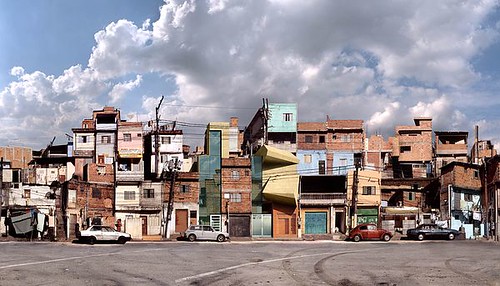
ITEM FOUR: Subtopia has a post called "Squatter Imaginaries" that contains some of the coolest images you'll ever see. (photo credit)

ITEM FIVE: Giant scale model of a partially destroyed downtown = kickass display for your living room.

ITEM SIX: The Future of Cities on what Jane Jacobs might have thought of Facebook.

ITEM SEVEN: Things Mag starts a recent post off with some interesting ruminations on destruction and redevelopment in the UK. Much link love follows.


'Till next week, happy surfing.

(Photo from Flickr user shadeofmelon. The original full-color version can be viewed by clicking the photo.)

10.16.2007

New City, Old Urbanism

Cities in the New World followed a relatively simple logic that involved gridded streets and a central public space. In both North and South America, the evidence of this development pattern is most readily apparent in smaller towns and cities, where grids remain regular and humanly scaled, and town squares and plazas mayores are alive and well. Urban development has largely erased or obscured the original layouts of larger cities on both continents, but the real difference between the impact that the form had can best be seen in how they build cities today.

In North America, for instance, the meandering suburban road, splintered with cul-de-sacs, has become the favored layout, while South American suburbs often maintain the urban grid, often extending the original further and further into the hinterland. Even more than the grid, though, the plaza mayor is encoded in the DNA of Latin American cities. Since the conquests of the Portuguese and the Spanish began reshaping the continent through colonization and subsequent urbanization, every settlement -- from the smallest of towns to enormous cities like Buenos Aires and São Paulo -- has been centered around one of these compact public spaces. So while contemporary North American towns and neighborhoods are usually built around retail clusters, when it is time to build a new city down South, the plaza mayor remains the central feature.

The image at the top of this post is an aerial photograph of the central area of Palmas, Brazil. Founded in 1989 after Brazil created the new state of Tocantins by separating the northern and southern territories of Goias, everything about this city is new. Still, as the aerial shows, the central feature of this rigidly-plotted micropolis (pop. 187,000) maintains the traditional form of the South American city, with an unrelenting grid and a visibly dominant central plaza that plays host to several important government offices.


It is, by all photographic accounts, a very green and spacious place. By all written accounts, it's also one of the most economically robust cities in the country at the moment. But cashflows and palm fronds aside, what earns Palmas its reputation as a modern-day Brasilia are its public buildings. Hubris is immediately visible in Palmas' architecture. The government house and administrative buildings spaced evenly across the massive plaza mayor are a delightful and at times shocking mix of modernist elegance and Las Vegas kitch. In short, the Brazilians have done it again: they've built a capital from scratch.

As an outside observer, it seems to me that Palmas might be the most Brazilian of Brazilian cities as this southern juggernaut enters the 21st century struggling to gain more than just a regional foothold in the global economic/power structure. After all, Palmas is a city that remains true to tradition while making it seem distinctly modern. The eccelctic plaza and broad, tree-lined avenues look fresh and exciting, even though they are variations on a theme started in the 1500s (or earlier, depending on how you look at it). The architecture and the sheer expansiveness of the place are daring and ambitious in and of themselves. Palmas is a city with something to prove, and a plan on how to do it.

Really...just look at it.


(Photos from Panoramio users jpncerrado, GILMAR QUEIROZ, Rodrigo Goncalves Luz, and Ronaldo Mitt. Don't forget -- clicking on the images takes you to the full-color originals.)


Links:
Palmas.org

Boom time in Brazil (BBC News)

10.12.2007

WEEKEND READING: October 6-12, 2007

It's been a busy week for this blogger, so the Weekend Reading list will be a bit shorter than usual.

ITEM ONE: Part IV, aka "The World's Worst Blog," put up a public poll to determine the three Best Archiblogs of 2007. Where has been nominated. Feel free to vote for it, if you so choose. ;-)

ITEM TWO: The new issue of The Next American City features this great article about the ripple effect war causes on crime, which happens to be available online.

ITEM THREE: City of Faded Elegance points us to the new edition of the Virginia Quarterly Review, which has a ton of great content on contemporary South America.

ITEM FOUR: Aussie blog Pigs Will Fly reports on so-called Sustainability Streets. The formula is quite fun: Mulch (learn), Sow (plan), Grow (do), Harvest (teach).

ITEM FIVE: Planetizen features a great post about a new museum in Salt Lake City that focuses on the ever-changing nature of the city.

Have a great weekend!

(Photo from Flickr user LeggNet.)

10.05.2007

WEEKEND READING: September 19-October 5, 2007

Lots of good stuff over the past few days. Here at Weekend Reading, it's an eight-item week!

ITEM ONE: A great story -- from the BBC of all places -- on the relationship between the American military base at GTMO and the city of Guantanamo, Cuba.

ITEM TWO: A disturbing letter from a freedom of speech/human rights activist in South Africa over at Squatter City.

ITEM THREE: Speaking of South Africa, the Lincoln Institute's new newsletter is out, and it contains a really fantastic overview of the current situation in Johannesburg.

ITEM FOUR: Another CEOs for Cities national meeting has come and gone, and their blog features this great list of the ideas that were bouncing around last week.

ITEM FIVE: A new economic pact to connect South American cities could potentially lead to "widespread deforestation and the eventual loss of the Amazon jungle within three or four decades."

ITEM SIX: Richard Rogers on public space, Pompidou, and how he almost became a cab driver.

ITEM SEVEN: Project for Public Spaces founder Fred Kent analyzes four of New York's most visible public spaces for the NY Times.

ITEM EIGHT: Lets wrap up with some imagery. This week saw the work of photographer David Schalliol (covered in one of Where's very first posts) featured on things magazine and Archinect. (Photo credit)

If you enjoyed that really comprensive profile of São Paulo a few weeks back, don't miss Item Three. Comprehensive profiles are kind of awesome, as a rule. This is no exception.

9.24.2007

Why Do We Build Cities?

Against all odds, more than half of the citizens of New Orleans returned to their broken city after Hurricane Katrina to try to repair their homes and their communities. The process has been notoriously difficult, as the media continues to report, yet New Orleansians press on, living in FEMA trailers or under tarp roofs and trying to make sense of the legal nightmare of applying for aid.

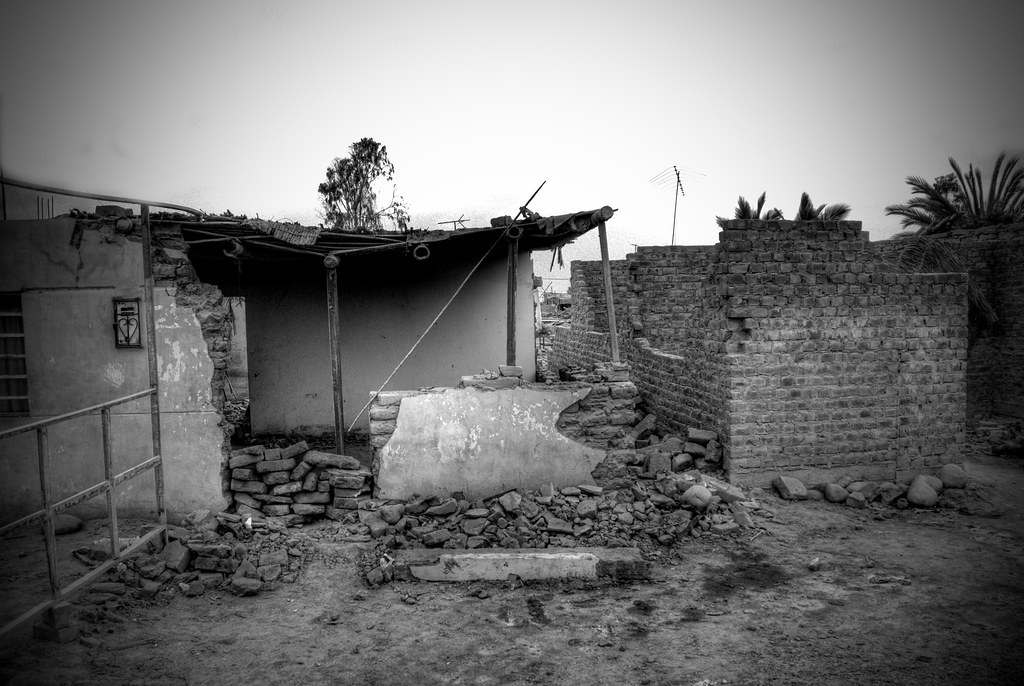
Meanwhile, down in Pisco, those who lost their homes in the recent earthquake are starting to rebuild their adobe houses without any kind of supervision or safety regulations, Peruvian officials worry. At least part of the motivation is economic, as one can only build on the land that one owns or can lay claim to. These people need shelter, and they're addressing that need. But with the government promising aid and training for people rebuilding their homes, there is the suggestion that there is some other motivation, something below the surface, that is causing people to rebuild so quickly.

In fact, the rebuilding processes in both New Orleans and Pisco raise some interesting questions about the nature of urbanism. Why do these people rebuild instead of moving elsewhere? And if a city must be rebuilt, why start over in the same place? Why not build a new city in a place less prone to, say, flooding or earthquakes? What's the reasoning behind trying to rebuild a city that has been knocked down?

There is a social aspect to urbanism that underscores all of the other motivations for urban development. People, as has been well-documented by sociologists, generally like to be around other people (at least in close proximity, even if there is no direct interaction). Still, we generally think of cities merely as concentrations of power (both economic and militaristic) instead of what they are, literally: concentrations of people.

If our settlements can be leveled by natural forces regardless of size, and if their economic structures can be so easily toppled, why don't we all live in small towns or villages? They'd probably be easier to rebuild. They wouldn't be such a hassle to manage. In fact, one could make a convincing argument that a society made up of small towns, even operating with current technology, would be more sustainable than one composed of large cites.

So why the heck do we build cities, anyway?

A few weeks back, a research consortium with participants from Harvard and Cambridge Universities (among others) shared some interesting new findings from the excavation site at Tell Brak -- findings that seem to tell us a lot about the origins of urbanism. The researchers have found, by analyzing fragments of pottery scattered around what was essentially a core city, that the urban area around Tell Brak was developed in an organic way that suggests an entirely different reason for the founding of mankind's earliest cities.

Traditionally, the founding of these early cities has been attributed to various kings and religious authorities. In an article about the new findings, Scientific American quotes researcher Jason Ur: "Kings were quick to take credit for founding cities...We're taking royal inscriptions at their word, which could be a bad thing to do."

The informal growth of Tell Brak seems to suggest that, at their very beginnings, cities were founded because they provided a strong social network. This undoubtedly created economic and military power as early cities grew, but the original impetus was simply for people to gather in one place in order to improve their lives in some way (the researchers acknowledge that individual motivations were likely diverse). So Tell Brak illustrates at least one compelling argument for why we build large, impressive urban centers: we just like to be around each other.

In wrecked cities like New Orleans and Pisco, the large majority of citizens don't return because they look forward to the immense challenges of cleaning up environmentally devastated lots, tearing down the shards of their old homes, and rebuilding from scratch. They return because they are looking to rebuild the social places that existed before their city was ruined. They rebuild for the same reason that anyone builds in the first place.

They just like to be around each other.

(Photo from Flickr user mateollosa.)


Links:

Pay Heed to New Orleans' Plight (Associated Press)

Citizens in Pisco, Peru Informally Build Adobe Houses after Earthquake (LivinginPeru.com)

Ancient Squatters May Have Been the World's First Suburbanites (Scientific American)

Researchers rewrite origins of the urban sprawl (University of Cambridge)

9.06.2007

Typing Utopia

An excerpt from the article on São Paulo highlighted in last Friday's Weekend Reading post:

But while the city of enlightened tropical urbanism – housing blocks with masses suspended over open breezeways, free-form plantings, walls of vertical wood blinds, beautiful decorative ceramic brises-soleil and elaborate mosaics – is occasionally visible [in São Paulo], it was overtaken by incremental failures to live up to the promise. The sunny future imagined in the 1950s succumbed to the repression of the 1960s and ’70s and the economic disasters and neo-liberalism that followed. Today the disparity between inconceivably rich and unimaginably poor is creating a new cityscape. A simmering low-grade siege mentality has become an everyday fact of life, and as a result the city is gradually obscuring its confidence behind multiple layers of improvised urban fortification and strategies of avoidance. Sampa is increasingly segmented, festooned with surveillance cameras and a boggling variety of gates, barriers, photoelectric tripwires and enclosures defended by an army of private security guards. If left unchecked, warns Brazilian anthropologist Teresa P.R. Caldeira, this metastasizing de facto topography of exclusion and suspicion will lead inevitably to the implosion of modern public life and the values of civil society.

This evolving mess, which nobody planned and no one wants, is the crux of Angela Detanico and Rafael Lain’s Utopia font. Trained as graphic designers and practising as artists, the duo have created a pictographic alphabet (which can be downloaded from their website4) in which the upper case is represented by silhouetted glyphs of Niemeyer or Niemeyeresque architectural icons and the lower case by some of the more grimly prosaic elements of contemporary Sampa. Using the font, typing even the most harmless text can become an exercise in creating unintended disorder and blight. In the end, the reality of the street scrimmage between public and private trumps the best intentions of any planner.


Welcome to CyberSampa:


Links:
Detani Colain

8.03.2007

WEEKEND READING: July 28-August 3, 2007


Ok, so...I have, like, somewhere in the neighborhood of 20 articles in my Google Reader that are basically doomsday predictions for American infrastructure. None of them will be linked to in Weekend Reading. Short list, though...

ITEM ONE: A great piece on Xanadu in the Middle East and the American dust bowl. How are they connected? Oh, just follow the link and you'll see...

ITEM TWO: Planetizen Interchange features a great post from Ali Modarres about the severe abuse of the word "community" in contemporary planning and architecture.

ITEM THREE: The world is shrinking, y'all. Or it's going to soon, anyway.

ITEM FOUR: There are two great articles on superurbanist Charles Landry in the news this week.

ITEM FOUR AND A HALF: Here's the other one.

ITEM FIVE: Mexico City joins the list of Latin American cities (Curitiba, Bogotá, Medellin) aiming to re-define the image of urbanism in that region. (via CEOs for Cities)

ITEM SIX: Newsweek's feature story says everything I've ever thought about Dubai. Only it's about Abu Dhabi. Go figure.

ITEM SEVEN: Finally -- and this isn't really related to urbanism -- the FCC has proven, once again, that it's clueless. Or well-bribed. Either way, it's disgusting and disappointing.

That is all. Have a great weekend!

(Photo from Flickr user James_Ting.)