Showing posts with label shrinking cities. Show all posts

7.18.2011

The Upside of Shrinking

Photo Credit
Last month, Newsweek produced a list of "dying" cities in the US with "bleak" futures based solely on population loss over the past few decades. For the Love of Cities author Peter Kageyama made quick work of the dismantling of this rather lazy list over at The Infrastructurist: "As human beings," he notes, astutely, "we stop 'growing' in our early 20s, yet we hardly think of a 25-year-old as dying — still, at a cellular level, they are dying in the same way that these cities are dying. Losing population is not the same as losing hope, losing purpose, or losing life."

The loss of population does not guarantee a continued slide toward obsolescence. Conversely, an influx of educated creative types does not necessarily result in an economic boom. Everyone has the potential to be creative, but not everyone is cut out to start (and successfully run) a business. The entrepreneurial spirit is something that needs to be sparked, and then cultivated. On the list of things that can serve as that spark: watching an exodus from a place that you love. In the above-linked Burgh Diaspora post, Jim Russell shares a story about Doug Dwyer, a former First Data employee who chose to stay in Boulder when his employer moved to Atlanta. The decision to stay required Dwyer to "think like an immigrant," and he has since founded a company, Mocapay, that employs 20 people.

When it's possible for the upwardly mobile to leave, those who stay behind by choice are bound to be more invested in their cities. These passionate people are some of the greatest assets that a city can have, and the fact that there are fewer other people around inherently makes it more likely that these passionate residents will bump into each other, share ideas, and perhaps start something exciting--as long as shrinkage is managed through smart urban planning to maintain some level of density, and to preserve downtown areas as places of economic and intellectual exchange. Especially when large areas begin to empty out, it's important to think about how to encourage interaction.

In a recent promo video for the new book Living in the Endless City, Saskia Sassen was asked what makes a city successful. She answered that "It’s their incompleteness that gifts them their longevity. A city does not become obsolete." Population loss does not equal death: it's just part of the process of rebirth.

7.24.2008

The Worst Cities...?

While Monocle and Forbes and everyone else in the mainstream media argues about what cities are the best to live in, Where was recently introduced to a site that's coming at urbanism from a slightly different perspective. Worst-City.com is home to what appears to be an entirely subjective (and often absurd) list of the sixty worst cities to live in on the face of the earth. The intro paints a pretty accurate picture of what to expect from the rest of the site:

"The world is very, very, very big. There are some wonderful places on its surface. Fabulous sun-kissed beaches with miles of golden sands. Wonderful mountains with crystal steams cascading down into tropical paradises. There are also some horrendous cities populated by a subculture of thugs and gangsters. Sadly this website is about the latter locations. Here you will discover some of the most vile and violent places to leave. So read on and be prepared to be shocked."

The list ranges from the obvious (Chernobyl, Brazzaville, Baghdad) to the completely befuddling (Paris, Seattle, Barcelona), and takes a whack at everything from Milwaukee to Bangkok in between. The site is filled with bons mots like "When it was built most Parisians hated the Eiffel Tour - that's why they named it Eiffel - means Awful in French!" and is entertaining as long as it's read with several large grains of salt and a hefty suspension of disbelief. All in all, it's a mind-bending international adventure that's worth a lazy afternoon.

Enjoy the ride...

8.31.2007

WEEKEND READING: August 25-31, 2007

Even though blog posts in the urbanism 'osphere have been down recently (blame last minute summer vacations and the start of the fall semester) the quality of articles and posts has been pretty high. This week was another good one.

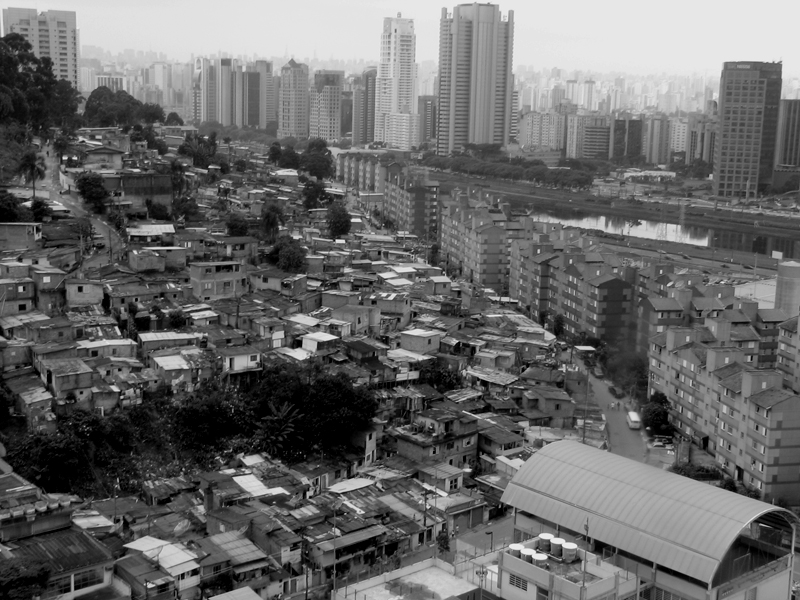
ITEM ONE: A large, thorough, and eye-opening account of life in the hypercity of São Paulo.

ITEM TWO: Some interesting musings on the shallow nature of the shockingly new city of Shenzhen and the loss of culture in China.

ITEM THREE: anArchitecture discusses the emerging problem of shrinking cities -- in Second Life.

ITEM FOUR: The difference between Tokyo and Little Rock? Broadband access. (Well, that's one difference, anyway).

ITEM FIVE: Spacing Wire marvels at the way design and art seem to be woven through every aspect of life in Barcelona -- right down to the (gorgeous) lightposts.

ITEM SIX: Police crack down on Geneva's squats, and airoots fears for the future of the city's underground culture.

ITEM SEVEN: Miami is in a bit of a pickle. 23,000 condos for sale, with another 25,000 under construction. Talk about market oversaturation...

Have a great weekend!

(Photo from Flickr user mariana_dias.)

5.11.2007

WEEKEND READING: May 5-11, 2007


Where is back! And it's Friday! That's enough good stuff for two consecutive exclamation points!!

First off, there have been a lot of big plans being made for cities across the US (New York, Los Angeles, Seattle) over the past few weeks. WorldChanging has a great article on NY2030 that has really made me reconsider my anti-congestion pricing stance. This week also saw the announcement of a comprehensive plan for Boston.

Cultural/ethnic diversity is something that is discussed often in urbanism, but biodiversity doesn't get nearly as much air time. The UN Convention on Biological Diversity, held in Curitiba, Brazil, is looking to change that, and suggests that cities are the solution to significantly reducing global warming-caused biodiversity loss.

Youngstown, Ohio, has been popping up in recent discussions about shrinking cities. Here is an article from the Wall Street Journal that discusses the city's plan for "smart shrinkage" -- a plan that includes actually removing underutilized neighborhoods and buildings and returning them to their natural state. This seems like a pretty important idea in the US, where a city's success is based entirely on growth.

There are two pieces of Conscious Urbanism-related stuff that I've been meaning to get around to for weeks and have finally decided to just stick into Weekend Reading. Don't let my laziness fool you, though -- these are great reads on turning streets into shared space and innovative chilrdens' programming in the inner city.

Not to name drop LA twice in one post, but I remember reading fantastic urbanism mag The Next American City's first issue when it came out several years ago...back then, only a handful of articles were available online, but one of them was a piece on the movement to restore the Los Angeles River (pictured above in its current state.) I was excited to learn that the City Council just gave this project unanimous approval.

That about wraps it up for this week. Where will be back full-time (which henceforth shall mean "five times a week") on Monday (5/14). This week I'll be looking at the Community 2.0 movement and how it's changing the world around us. Sounds fun, right? See ya soon

(Photo from Flickr user dmperkins.)