
7.05.2008
Colbert on Skyscrapers
"We need to build big buildings with high asses and huge tits!"
Architectural commentary at it's most entertaining...possibly ever.
(via)

7.03.2008
Parks, Public Space, Political Theater, and a Picnic
 The Village Voice reports today about a recent event led by one of Where's favorite American provocateurs, Reverend Billy. The Rev led a lively picnic-cum-protest in New York's Union Square, one of my all-time favorite urban public spaces, which is apparently under the threat of having its lovely Neoclassical pavillion turned into a private restaurant. While I'm not at all opposed to public-private partnerships as an option for reviving parks and public spaces in need of the funding and attention, the idea that one of the most popular and attractive parks in the country's largest city (which also happens to be one of its richest) needs privatization is absurd. Which leads to the conclusion that privatizing any part of it would only be done out of greed or incompetence. Let's hope this idea dies on the vine, eh?

(Photo from Flickr user safety dawn!. The original full-sized color version can be viewed by clicking the photo.)
6.29.2008
6.26.2008
The New WalkScore
The popular Gmaps mashup, which made a big splash in urbanism circles last year when it debuted, has a fantastic new color-coded map of Seattle up on their site. Hopefully this is a sign of things to come. I'll be waiting anxiously for the Chicago map.
6.25.2008
Electri-City
 From the look of things, the zero carbon high tech eco-city of 2030 might not really look that different from the boring old present of 2008. Innovative minds are coming up with new ways of harvesting power from just about everything, reducing the need for crazy-looking turbine towers or solar-paneled skylines. What happens if everything becomes its own source of energy? Obviously, this seems like a Green pipe dream, but speculate for a moment. What might humanity do with a global surplus of power?
In the meantime, we can marvel at the creative thinking below and wonder if, one day soon, our curtains might be powering our laptops and televisions.
So where might we be getting our electricity from in the near future?
Our toilets? (Architecture.mnp)
Our walls? (Jetson Green)
Our clothes? (MIT News)
Our curtains? (Electricpig)
Our sidewalks? (core77)
What are some common, overlooked aspects of the urban environment that might be able to generate usable energy if harnessed in a new way? With suburbs densifying and evolving and becoming more self-sufficient nodes in polycentric megacities, the potential seems endless. So many people, so many opportunities for a volt or two.
(Photo from Flickr user Tobers. The original full-sized color version can be viewed by clicking the photo.)
Chicago El Stories
So here's an interesting art project: Chicago El Stories is an installation at the Armitage Brown Line stop in Lincoln Park that pairs photos of seemingly unimportant sites around the city with audio files of peoples' memories and stories about the places. It's an interesting way of showing how the urban environment is littered with personal experiences, and how the city can be so many different things to so many people.
6.24.2008
The Secret City
What if you woke up tomorrow to learn that your country's political leaders had built a 2,702 square mile (7,000 sq km) city -- a lavish new capital, constructed in secret? If it sounds too fantastical or even conspiratorial, consider Myanmar, where the ruling junta has managed just such an architectural coup.
6.23.2008
Wisdom of the Buck
In honor of the Buckminster Fuller Institute's week of events honoring their namesake (take note, New Yorkers), a quote from the architectural luminary:
"Pollution is nothing but the resources we are not harvesting. We allow them to disperse because we've been ignorant of their value."
-- B. Fuller
More @ core77.
The Urban President
What I find most impressive about Barack Obama is his ability to speak about the Bush administration's bungling over the past eight years that so clearly outlines the need for a different approach. As I listened to his speech to the US Conference of Mayors, I found myself shocked -- dumbfounded, even -- to hear a presidential candidate speaking about urban issues in such plain and ambitious terms. That a presidential candidate would talk the talk about metropolitan- and regional-scale economics, mass transit and high-speed rail, and the specific ways that the war in Iraq hurts individual cities and neighborhoods, is almost hard to believe after eight years of secrecy, corporate carte blanche, and a complete lack of focus on anything that actually matters to peoples' day-to-day lives.
"Neglect," Obama quips, "is not a policy for America's metropolitan areas." Word.
If you like the clip above, check out the full video on the US Conference of Mayors website.
6.20.2008
 Chicago mourns the loss of a prominent street artist...
(More from Wooster)
(Photo from Flickr user BigPictureProject. The original full-color version can be viewed by clicking the photo.)
6.19.2008
Three Short Urban Navigation Blogedankens
 No prizes this time, but I do encourage you to leave comments if these exercises lead to any interesting answers...or more interesting questions. Click the links to see the inspiration for each thought experiment.
Blogedanken #1: Imagine that your city were like Venice; where would the Grand Canal be located? What streets would remain streets, and what ones would be sunken to form the city's canal network? Create a corresponding map. Does this map tell you anything about transportation and infrastructure networks in your city? How could such a map be used to plan transit lines, or a park system?
Blogedanken #2: If someone asked you to write a guide to your city for visitors that didn't want the tourist experience, where would you send them? Determine 5-10 places and/or experiences that you consider essential for the un-tourist in your city. Now create a walking-tour route that connects these spots in a way that creates a meaningful way -- a way that can direct the visitor's interpretation of your city. Compare your route to a map in a typical tourist guide. How do the two differ? What does this tell you about the way that you have experienced the city, yourself? What has your city taught you?
Blogedanken #3: Cities are very much about paths. Numerous networks of people, information, and physical infrastructure create a massive web often referred to as the urban fabric. Almost every city has one or two once-crucial cords in this web that have faded from prominence, or even disappeared completely. Imagine that you are creating a virtual guide, using GPS and voice recordings, to one of these defunct lines in your city. How have the areas around this forgotten path adapted since its decline? If they have not adapted particularly well, speculate as to why that might be. Based on what need the path and its surrounding infrastructure originally served, what currently vibrant paths through your city could become deserted or forgotten in the future? How might this be averted?
(Photo from Flickr user Damiel. The original full-color version can be viewed by clicking the photo.)
6.10.2008
Chicago: Creative Capital?
 Fast Company's Fast Cities 2008 list (which is about a thousand times more coherent than last year's) came with a delightful cherry on top for this blogger, as it named Chicago the "Creative Capital of the Universe." Being from Milwaukee (Chicago's little brother to the north) and currently residing in the Windy City, I found this exciting news; Chicago has long suffered from what you might call Second City Syndrome, always trying to get out from under New York's shadow. (For the record: we don't really think of Los Angeles as a real place, so we're still #2).
All About Cities' Wendy Waters wrote a post tonight questioning whether or not the title was quite accurate; indeed, her assessment of the title's pithy, attention-grabbing nature is right on: it would be boring to read another article about New York or San Francisco being the most creative. But there's more merit to the title than you might think if yer not from 'round these parts.
I'll turn to Paul Graham's recent essay, "Cities and Ambition," for my defense. In his highly enjoyable piece, Graham asserts that cities that act as hubs of ambition have a way of communicating with people; New York says to its residents, "You should make more money;" Silicon Valley says "You should be more powerful;" Cambridge says "You should read all of those books you've been meaning to read." Chicago is most certainly an ambitions place -- it's the Emerald City of the Midwest, the Mount Olympus of Flyover Country. All (rail)roads lead here, so to speak. But after reading Graham's essay, I had trouble picking out exactly what Chicago was saying through its citizens' ambition.
"Creative Capital of the Universe" hit me like a brick in the face. Of course! Chicago says to its citizens, "You should be more interesting." The city is a domestic melting pot, pooling people from a region that is typically overlooked and underappreciated. We of the rust belt and great plains cities flock to Chicago to prove ourselves. Chicago's Second City Syndrome is a great asset; a city that is constantly trying to prove itself, after all, demands that its citizens do the same. And because of the slight sense of inferiority, Chicago is less pretentious than other global hubs like New York, London, or San Francisco. That lack of pretention has the power to erode fear of the unknown; Chicago has always understood that, to make big headlines, you need to take big risks.
In a world as spiky and competitive as the one that we live in today, it's pretty much impossible to claim that one city can claim to be the creative capital. But in terms of big headlines, Chicago seems to have inspired exactly what it was hoping: controversy. Screw being rational. Be more interesting.
(Photo from Flickr user kellyhafermann. The original full-color version can be viewed by clicking the photo.)
Links:
US City of the Year: Chicago (Fast Company)
Chicago: Creative Capital of the Universe? (All About Cities)
Cities and Ambition
Information Overload
Hyperlinks, RSS feeds, Google News, Wikipedia, Technorati...
The amount of information that flows through a web savvy person's brain these days is staggering when you take a step back and observe. Eventually, one can get to a point -- a sort of "information overload," if you will. It gets to be too much to take in. There are too many interesting tidbits, too many convenient coincidences, too many inputs, period. Blogging, as a form of writing that takes that constant stream of information and tries to somehow decipher or make sense of it (albeit a tiny bit at a time, while, ironically, adding to the tsunami) can literally become overwhelming.
Scratch that. This is not a hypothetical. Blogging has become overwhelming. I hope you'll bear with me through this rather indulgent post; perhaps I'm just as narcissistic as the general populace seems to believe bloggers to be, but I feel a strange urge to explain why this blog has, despite several promises to the contrary, remained mostly dormant for the past two months.
In short, the constant flow of media got to be too much. At some point, sifting through hundreds of news items and blog posts and articles and videos every day stopped being enjoyable and started to feel like a heavy weight on the shoulders. Blogging, when not for profit, should at least be fun, and Where became more of a responsibility than an exciting project, for a while.
Excuses aside, I do intend to get things up and running again, but every time I try, the thought of putting together a long post with multiple sources gets a little...exhausting. No joke. Perhaps I started to take this all too seriously. That's always a surefire way to make yourself miserable, isn't it?
So I ask Where's little community of regular readers to bear with me over the next few weeks as I try to sort things out and get back on the blogging horse. I'm taking a cue from BLDGBLOG, Pruned, and Landscape Urbanism, and Where will be featuring more short, informal posts (though they will be titled and archived in the sidebar) while I work back up to 1000+ word entries.
Where's coming back. It's just taking longer than anticipated...
5.28.2008
Urbanffffinds 029
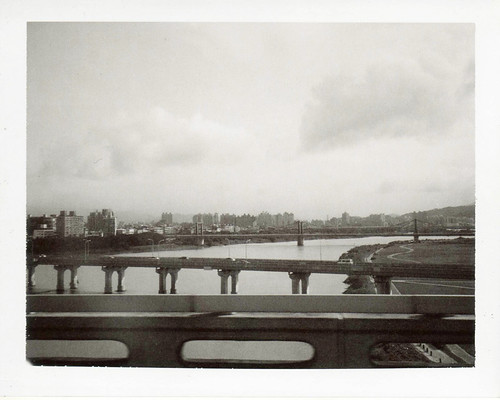


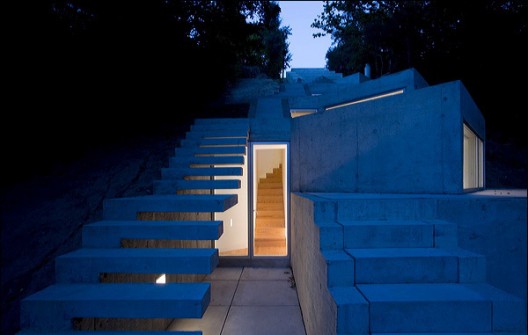
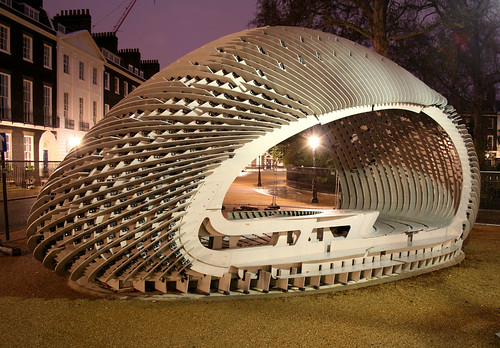


Where will return soon. It turns out that this blogger needed a longer hiatus than originally anticipated. Fresh ideas have built up to an unbearable level, however, and an outlet is required to relieve pressure on the brain, so to speak. Regular posting (including Weekend Reading and Urbanffffinds) should resume within the next week.
5.06.2008
New York, Paris, London...Vegas?
 Fast-forward a bit. Let's say that it's 2050, since that seems to be a popular year for speculation these days. You're living in a stylish downtown penthouse a few blocks from a gleaming transit station servicing three different high-speed lines. You work in an office building as a Chief Innovation Officer -- not a light title to carry, by any means -- for a major technology firm. One day after work, you take a train a few miles west of the bustling commercial hub where you work to a rapidly-gentrifying neighborhood to meet a friend at a sunny sidewalk cafe on a dense street filled with shops and new condos. You are living the American Dream, with a beautiful home and a fantastic job in the heart of a dynamic urban center with its finger pressed firmly against the pulse of globalized culture. You are a proud resident of one of the world's Great Cities, capital letters required.
Now, imagine that that city is Las Vegas.
It sounds like science-fiction, no? But, in a recent post written from the American Planners Association convention in Sin City, California Planning & Development Report contributor Bill Fulton argues that Vegas is on the track to claiming a spot on the shortlist of the most exciting urban places on our already highly-urbanized planet. While your initial reaction may be something along the lines of "Say whaaaaat?" (mine certainly was), there is something very refreshing -- even inspiring -- about this idea.
Fulton's argument, in a nutshell: "Vegas is a not-too-subtle reminder to planners about how great cities are really created: You stuff vast amounts of money into a tiny space for decade after decade until the mixture of wealth, commerce, entertainment, and culture becomes so combustible that it finally explodes. Paris, London, Tokyo, San Francisco, Chicago, New York – all were built on this model."
There are so many ways to poke holes in this idea, which is oversimplified almost to a fault, and in fact this post was intended to do just that. But soon after the writing began, I realized that Fulton's speculated future for Las Vegas was far more interesting (not to mention uplifting) than much of urbanism discussion today. Contrast the idea of Vegas, one of the least sustainable cities in the country, as changing its tune and reinventing itself with the Die-or-Be-Drowned harping of James Howard Kunstler, a pundit whose bullheaded pessimism and truly shocking lack of imagination have just about made him a caricature of himself. Mr. Kunstler's tireless drumbeat: "Our gigantic metroplex cities will prove to be inconsistent with the energy diet of our future. I think our smaller cities and towns will be reactivated. We are going to be a far less affluent society."
Perhaps what's missing from the debate over how cities will deal with climate change is something as simple and extraordinarily difficult as optimism. After all, the combination of wealth, commerce, entertainment, and culture is, when you boil it down, mostly what accounts for the rises of cities like New York, Paris, London, and Tokyo. But there was more to it than just a healthy skeleton; there was meat on them bones, so to speak. These Great Cities were places that generated potential as much as they generated wealth. Many millions of people moved to these cities not on the promise of a better future, but on the hope thereof.
The city of Indianapolis is easily one of the least-interesting large cities in America, if not the world. But there is a pride of place there nonetheless, and on several occasions I have read or heard discussions about how to make Indiana's capital a "world-class city." What if talking the talk is an effective way to learn how to walk the walk? The verdict is still out on Indy, but look a little to the west for an idea of what could be. After all, a good deal of Chicago's greatness came from early residents, who were famous for their ability to bluster and boast, claiming greatness long before it was actually achieved (which, incidentally, earned Chicago its most famous nickname: The Windy City). These boosters and bright thinkers pushed and shoved their city into greatness, and without them Chicago would likely be a very different place today.
So who says that Vegas can't become, as Fulton suggests "the next New York?" While it would seem like a miracle to most of us living today, stranger things have certainly happened, and in less time. Thomas Friedman wrote in a recent column for the NY Times that "[Americans] want to do nation-building. They really do. But they want to do nation-building in America...They want our country to matter again. They want it to be about building wealth and dignity — big profits and big purposes. When we just do one, we are less than the sum of our parts. When we do both...no one can touch us."
There is a palpable desire in this country for very real and serious change (notably reflected in the presidential candidates' impassioned adoption of that very term in the current election season). Who are we to look to to shape how we think about the future? People like Fulton...or people like Kunstler?
(Photo from Flickr user Christopher Chan. The original full-color version can be viewed by clicking the photo.)
Links:
APA Conference: Love It Or Hate It, Vegas Is A Great City In The Making (CDPR)
Suburbia's End? (Richard Florida)
Who Will Tell the People? (NY Times)
5.04.2008




5.02.2008
WEEKEND READING: April 26-May 2, 2008
 It's back! Did you miss it? Hooray for Weekend Reading.
ITEM ONE: First things first -- Jane Jacobs' birthday is coming up this Sunday. In her honor several cities around the US and Canada are hosting "Jane's Walks," free guided neighborhood tours. Whether or not you are living in a Jane's Walks city, make sure to get out and stroll around your neighborhood at some point this weekend.
ITEM TWO: Attributos Urbanos presents an awesomely thorough glossary of contemporary urbanism terminology. (via atlas(t))
ITEM THREE: CEOS for Cities on how homogeneity hurts innovation.
ITEM FOUR: NASA releases spectacular high-res images of cities at night, seen from outer space. (via The Map Room)
ITEM FIVE: Straightforward title for a great Planetizen post: Neighborhoods Are Building Blocks of Civic Life.
ITEM SIX: Jetson Green takes a look at deconstruction (material salvaging) and the green benefits. Video included!
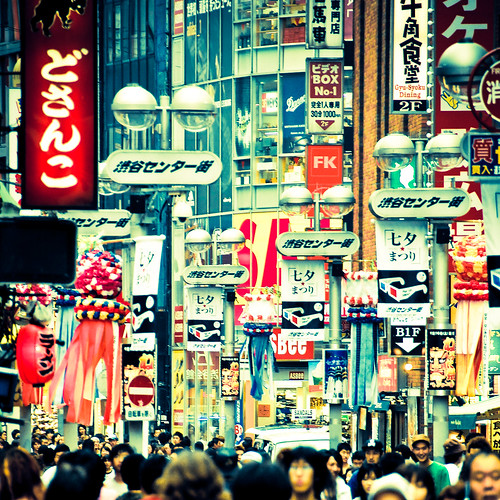
ITEM SEVEN: We'll wrap up with some more watchable goodness. 'But it's supposed to be reading,' you say? Rules are made to be broken. Check out Peter Zumthor discussing his absolutely brilliant thermal baths in Vals (pictured).
(Photo from Flickr user Bau TW. The original full-color version can be viewed by clicking the photo.)
Gender Rolls of Cities

Today while taking silly internet quizzes about which Classic Leading Man and Classic Dame most matched my personality (don't judge), I noticed something interesting and, perhaps, subliminal. In the Leading Man quiz, choices for what kind of town to live in and what kind of dwelling were generally urban. The Classic Dame's choices for where to live, however, were exclusively suburban and/or rural.
This reminded me of an interesting contrasting example of urban gender associations. A map created for Richard Florida's new book, Who's Your City, shows the gender imbalances in cities across the United States. In contrast to the urban/rural perceptions associated with classic movie stars, older, grittier, more densely populated cities (aka more urban places) typically have much larger concentrations of women as compared to men. While San Francisco, Charlotte, and perhaps Minneapolis provide notable exceptions, women seem more likely to live in places like New York, Philadelphia, Chicago, and DC, while men dominate the populations of more auto-dependent places, like LA, Dallas, Las Vegas, and Phoenix.
I wonder where that discrepancy might come from.
Links:
The Classic Leading Man Test
The Classic Dames Test
The Singles Map (Richard Florida)
Subscribe to:
Posts (Atom)