5.27.2011

WEEKEND READING: May 21-27, 2011

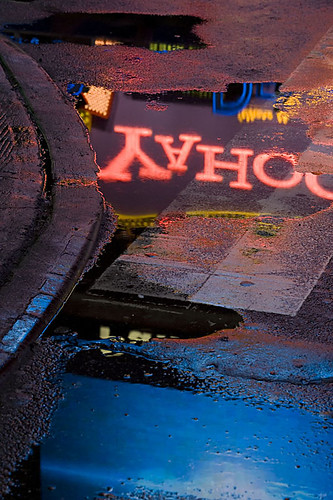
Photo credit: saracino
Heading into a much-needed long weekend. Memorial Day means extra reading time!

ITEM ONE: Anyone who's familiar with the unique joy of finding an easter egg in a video game will love this week's leader--check out Repudo, a new app that turns the city into one giant easter egg hunt.

ITEM TWO: Humans are just so darned clever.

ITEM THREE: The Space Liberation Manifesto is a call to arms for anyone who wants to see digital public space protected from the kind of every-flat-surface-gets-a-sign mentality that has turned public space in the physical city into one long commercial break. (via @bruces)

ITEM FOUR: Nicolai reviews Rem's Cronocaos show, which is on the Bowery until next Sunday. Choice quote: "In the realm of preservation, as in so much else, we seem to have become a world terrified of too much direct contact with reality."

ITEM FIVE: Michael Maltzan actually makes Los Angeles sound palatable in an essay excerpted from his new book No More Play over at Design Observer. (The Iwan Baan pics don't hurt.)

ITEM SIX: Caleb Smith, aka the man who walked every street in Manhattan, shares one of the most meaningful (and under the radar) historical sites for him on the island he knows so well.

Weekend Reading is very multi-media this week, I'm just realizing. So enjoy the reading...and watching, and listening! Back next week with more urban-y goodness.

5.25.2011

Cartographic Diversion: An Illustration of Density

With 166 people per square mile, Honduras is in the middle of the pack as far as national population densities are concerned. But what would it look like if you packed every single Honduran into one city? As it turns out, it might look a lot like New York: both contain approximately 8.2 million people. Below are images of the administrative borders of the five largest cities in the US mapped onto the nations that most closely mirror their populations, all at the same scale. No big point to be made...just an interesting distraction for a Wednesday afternoon. Enjoy...

New York City: 8,175,133 -/- Honduras: 8,249,574

Los Angeles: 3,833,995 -/- Congo: 3,686,000
Philadelphia: 1,526,006 -/- Gabon: 1,475,000

Chicago: 2,695,598 -/- Oman: 2,845,000

Houston: 2,099,451 -/- Lesotho: 2,067,000

5.22.2011

Why Las Vegas is (Probably) Not the Next Detroit

Photo credit: chepenicoli
A recent post at MarketWatch suggests that Las Vegas could be on its way to becoming the next Detroit, a metropolitan mire populated mostly by those who can't afford to leave. Indeed, the two cities share some striking parallels: both are industry towns, Detroit for auto manufacturing, and Vegas for gaming tourism; both cities experienced intense booms, Detroit at the start of the 20th century, and Vegas at the end of it; and both have been hit hard as their boom economies experienced extraordinary challenges, with Detroit facing the decline of domestic manufacturing and Vegas facing the decline of the domestic pocketbook.

But Las Vegas has a key advantage that Detroit does not share: it is dependent on an industry that is rooted in place. You can drive a car (or a factory) right out of Detroit, but Vegas succeeds because of its concentration of spectacle and excess. Vegas has long competed successfully with casinos in other cities. Atlantic City and Reno are one thing, but in the past couple of decades casinos have become popular plug-the-hole-in-the-budget schemes for cities around the US. (Even Detroit has put a lot of its downtown-revival eggs into the casino basket).

This competition has driven Vegas to become a center of innovation for the tourism and hospitality industries: it succeeds not because it is a center of glittering decadence, but because it is the center--the hub that other glitz-burgs model themselves after. The product here is a place-based experience, and that's a lot harder to outsource.

But MarketWatch also notes that Sin City has been well-trumped as the world's largest gaming center by Macau. While this fact is nothing to sneeze at, gambling tourism is not a zero-sum game considering the limits imposed by distance--that old, inconvenient truth that keeps Thomas Friedman up at night. Macau's new-found financial supremacy can be attributed more to the rise of Asian economies than a loss of interest in the Strip. Vegas remains the premier gambling center in North America, and it hardly seems likely that the good people of Omaha and Altoona will start hopping flights to the South China coast en masse any time soon.

A one-horse town will always be economically vulnerable, and the city should continue its efforts to diversify. Las Vegas' reliance on such an unstable industry played an undeniable role in magnifying the impact of the foreclosure crisis there (when your income shrinks, vacations are often the first thing to get cut from the budget). Still, don't bet against a comeback. "What happens in Vegas, stays in Vegas" turns out to be a surprisingly apt summation of how the city's economy functions. It may be tacky and garish, but that's part of the fun; Las Vegas is a city that cannot be separated from its Brand. The place is the product.

5.20.2011

WEEKEND READING: May 14-20, 2011

It's a week full of revivals. Weekend Reading is back. In truth, it should never have left. Apologies. My Google Reader is overflowing, so most of these are a bit older; we'll catch up soon enough. Anyway, let's get to it—

ITEM ONE: Top billing goes to a guest post by Utazó over at Polis (the ace blog run by former Wherebloggers Peter & Katia) on gentrification and demographic shifts in the Józsefváros district of Budapest.

ITEM TWO: The fabulous Nina Simon writes about Case by Case, an experiment by the San Diego Museum of Natural History that invites museum-goers to affix post-its with questions, comments, etc. to cases containing un-labeled historical artifacts. It gets the artifacts out on the floor faster and helps staff develop exhibits that are more responsive to visitors' interests. Would love to see someone develop an app for doing this in a public space.

ITEM THREE (& 1/2): Richard Florida presents new info supporting his argument that happier cities are more economically prosperous, while Jay Walljasper suggests that neighborhoods with common shared spaces are happier neighborhoods. Happier neighborhoods = happier cities; more proof that Americans need to re-learn the importance of sharing.

ITEM FOUR: Where's friend Mimi Zeiger (@loudpaper) writes at Places about the creative use of posters, pamphlets, and guides in activating the urban environment.

ITEM FIVE: Fascinating article in re:Place about public space in West African cities. Strikes me as especially interesting that the main form of urban social space in Accra is the street—this is also often said of New York. (Union and Madison Squares are nice, but the real action is on the sidewalks).

ITEM SIX: Edwin Heathcote slays ridiculous city rankings (a la Monocle's whitebread circus of a livability list) in The Financial Times. Certainly among the best articles I've read on the subject.

ITEM SEVEN: Flavorwire rounds up a "Retrospective of Interventionists and [Museum] Crashers." Not even the Met is safe from DIY/participatory urbanism. Bwahaha! (via @fastcodesign)

ITEM EIGHT: I've been doing analysis of the data from the @IfUD's By the City / For the City  over at our project blog; add our feed to your RSS reader, there will be a lot of interesting stuff coming over the next couple of months.

Got suggestions for next week? Tweet them to @thewhereblog!

5.16.2011

The City is Meant to be Experienced, Not Mourned

As a very new New Yorker last summer, I took to spending extended periods perusing the Census of Places that Matter, a crowdsourced database of significant locations around the five boroughs. When I stumbled upon a promising entry for Florent Morellet's legendarily-eccentric, eponymous diner (founded in the Meatpacking District before it was The Meatpacking District), excitement quickly turned to disappointment when a Google search turned up a New York mag article written just before Florent closed in 2008.

In the article, Morellet is unapologetically forward-thinking. "I came to New York for the reason everyone comes to New York," he explains: "because it is the city of changes. People forget this is what they love about New York. They get old, they get grumpy. They get … nostalgic.” (The article's author notes that 'nostalgic,' here, is uttered "with the same distaste [Morellet] uses when talking about Republicans.")

It is hard to be nostalgic in New York, a city that contains such an intense agglomeration of people, filled with their own desires, beliefs, ideas, customs, and all of the expectations that come with those things. Density creates a permanent sense of ephemerality, and the pace of churn in New York grants the city its most unique characteristics while simultaneously earning it a reputation as a place that renders each individual totally anonymous. To try to hold onto a moment here could drive a person mad.

Still, people try. One can't help but raise an eyebrow upon finishing the article about Florent's closing and reading the first reader comment: "This is why I left New York. Because the great New York that once was is no more." New Yorkers, you see, bemoan their losses as frequently and passionately as they proclaim their love for the city.

I was reminded of Morellet's line about nostalgia by developer Jerry Wolkoff's recent announcement of his plans to raze the building that houses 5Pointz, Long Island City's graffiti mecca, to make way for two condo towers. As 5Pointz is one of my favorite places in the city,  this was difficult news to hear. But Wolkoff has always intended to re-develop the 5Pointz building; the fact that such a place even exists in its current condition is a small miracle in post-Giuliani New York. And while I (and no doubt many others) would like to think I'd choose to preserve the more artistic and culturally-productive use of the site if I were in Wolkoff's shoes, we can hardly hold it against a developer that he is acting like a developer.

The 5Pointz team tweeted a response not long after the news broke that seemed to echo the sentiment expressed by erstwhile MePa scion Morellet: "This is nothing new to us. The show must go on!" And it will. New York has seen countless cultural icons rise and fall. The loss of a cherished community hub is nothing new here, and while it's easy to proclaim the death of the city as we watch individual sites crumble and fade, to do so inevitably robs us of some amount of time in which we could be enjoying the city as it is. While the 'right to the city' is well-discussed, we too often forget that we are not owed anything by the city. We are welcome to take part in it, but we can expect nothing more of it than what it happens to be. The city, as Beaudelaire wrote, "changes shape, alas, faster than a mortal's heart."

How can we ever expect a city to stay the same? It has been pointed out frequently enough that the preservation of the built environment often winds up pricing out the communities that were so strongly associated with them as to make them beloved in the first place. Does it not seem strange that, while we fight to preserve buildings, we experience the city much more intimately in individual stores, galleries, classrooms, temples, and other spaces that are virtually impossible to preserve? And that we then spend a great deal of collective energy mourning those places once they are gone?

Certainly, architectural preservation is not without significant importance. Nor is it possible to totally avoid missing a place that we loved once it is gone. Even the determinedly un-nostalgic Morellet must miss his restaurant and, more importantly, the community that it created. But it is an entirely different thing to miss a place than to mourn it. We can miss something swiftly, but to mourn takes time. The city is unsentimental; it does not mourn us when we leave. Demographics shift; people are priced out, and then back in; everything changes--and in New York, we're surrounded by everything, all the time.

If you focus on the city that was, you will miss the city that is. How we choose to interact with our cities is entirely up to us, but I believe that the city is meant to be experienced, not mourned. The scenery may change, but the show, as they say, must go on.

4.06.2010

Whupdate


Long time no see, friends. No, Where's not coming back, but I did start a new blog. This one is heavier on the images and lighter on the text...in fact, there really isn't any text. Just images. It's a photoblog called Eighths of a Mile. RSS-ize it! I promise that it won't suck.

Also, if you're looking for more Where-esque fixes, I'll be popping up twice monthly henceforth with more characteristically verbose fare over at Next American City. Post #2 just went up on Friday.

And finally, Where alums Peter Sigrist and Katia Savchuk's blog Polis continues to churn out awesome urbanist content (saw the recent Archinect nod - way to go, guys!) Amidst their team's top-notch writings, Where's long-dormant Urbanffffinds feature recently popped up again.

Pictures, words, and more pictures. If you still miss Where after this, you should probably talk to your therapist about it, because you may need professional help. Wink wink.

1.15.2010

Tweekend Reading II


Where's Twitter following grew by two thirds this week...an impressive jump, but I know there are still some stragglers out there. The site is extremely fun, and truly a very social form of the much-vaunted (but often-lacking) "social media"...there are many urbanism tête-à-têtes to be had. Come join! And if you're already following, I'd definitely appreciate it if you'd consider alerting your friends on this fine Follow Friday.

TWEET ONE: Just saw a forlorn banner for Chicago 2016. In this weather, makes me wanna go to Rio.

TWEET TWO: Best map of the year so far - Netflix patterns by city: http://bit.ly/4VY8tf Thanks @tombellino!

TWEET THREE: Urbanffffinds: http://bit.ly/8tnOb0 (Archive here: http://bit.ly/50Xa10)

TWEET FOUR: Great post on the importance of diversity in small groups; seems reasonably scalable http://bit.ly/8O2Nfz

TWEET FIVE: Hilarious/ridiculous promo vid for miami megascraper proposal. INNOVATION! CREATIVITY! lol... http://miapolis.com

TWEET SIX: Just found this review via @storefrontnyc's tweet archive: http://bit.ly/YUgCg Current status: salivating.

TWEET SEVEN: Streetviewing: These bldgs feel very contemporary...despite the fact that they are obvs from the 60s/70s http://bit.ly/6r11Lr

TWEET EIGHT: Deeply fascinating; secret Moscow metro?! Wow! > RT @atlasobscura Off limits: Places around the world you can't get into. http://is.gd/5ZPFp

TWEET NINE: Religion has always been good for architecture; I wonder if there are any lessons we can learn from that fact to apply to public bldgs...

TWEET TEN: 2010: A view from the past. http://bit.ly/6O43ur

That's all for this week, folks. If you have a Twitter account (or are thinking about creating one - do it!) you can follow Where @thewhereblog. If you're staunchly anti-Twitter but still want to keep up with Where's daily urbanist musings, you can subscribe to the RSS feed of my tweets. See you around!

1.08.2010

Tweekend Reading


Quite a few of you have begun following Where over at Twitter this week, and it's been great to see the response so far. Still, there are plenty of you who have yet to take the plunge...so for the next couple of Fridays, Where will be taking a ride in the Wayback machine and reviving an old tradition to promote a new venture. Weekend Reading is [temporarily] back in action. Bon appetite!

TWEET ONE: RE: http://bit.ly/8jcVQE - Chicagoland's share of $70 billion: $2,221,977,358. RTA+CTA combined budget shortfalls in 09: $145,000,000.

TWEET TWO: So brilliant and well-executed, it's almost frustrating: http://bit.ly/7qX4PD (Don't miss the map!)

TWEET THREE: Favorite trend of the moment: pop-up museums, a la http://bit.ly/KD71h and http://bit.ly/p3VDs. Anyone know of other examples?

TWEET FOUR: Reading about burbs of STL cannibalizing each other by giving free land to wal-mart. Ah, schadenfreude. Hello, old friend.

TWEET FIVE: Streetviewing: Darth Vader's playground http://bit.ly/6ieQUH

TWEET SIX: Ooooh, I wanna try this with city grids: http://bit.ly/8pldGL

TWEET SEVEN: Koolhaas is on Twitter! Too bad he never updates...I'd love a regular stream of architectural dadaist fortune cookie messages.

TWEET EIGHT: From http://bit.ly/5aRNUx: Prediction for 50yrs out - "Online communities start physical communities;" Cities of Common Interest?

TWEET NINE: Urbanffffinds returns! http://bit.ly/8jBAkB found via @urbanmatt. Archive here: http://bit.ly/50Xa10 (Find a great urban img, @ it over!)

That's all for this week, folks. If you have a Twitter account (or are thinking about creating one - do it!) you can follow Where @thewhereblog. If you're staunchly anti-Twitter but still want to keep up with Where's daily urbanist musings, you can subscribe to the RSS feed of my tweets. See you around!

1.04.2010

Twittwhere

Hi RSS-followers. I've been dragged, semi-reluctantly, into the Twitter arena...and it's turning out to be kind of fun. Consider this blog micro'd. The handle is thewhereblog. Tell all yo' friends.

8.31.2009

That's All, Folks!

After a pretty solid run of two years, five months, ten days, and 470 posts, the pull of new projects has forced my hand: it's time to say farewell to Where. I'm not much for long goodbyes, but I do want to thank all of this blog's longtime readers for their interest and their input. Perhaps, a few years down the line, it will be time to blog again, but for the foreseeable future, Where will be inactive.

For those of you still looking for a regular urbanism fix, several Wherebloggers will be continuing or launching their own blogging efforts elsewhere. To wit:

Peter and Katia will be launching a new blog today called Polis.

Mario will continue posting at his existing blog, Mañanarama.

And, while I'm not planning on doing any blogging, I'll be doing some behind-the-scenes work for the site MoveSmart.org, so I encourage you to check out that site as well.

Here we are at the end. Thanks again for a great run. Adios.

8.26.2009

Dharavi III: The Rules of the Game

This is Part Three in a series looking at Dharavi, a mostly informal township in Mumbai often referred to as Asia’s largest slum, and the government’s controversial plans to redevelop it. With billions of dollars on the table, tens of thousands of homes and businesses at stake, and the global spotlight shining bright, this case of contested urban space is worth a deeper look.

“The early residents of Dharavi recall that when they entered the area from Mahim station, they had to build an access path themselves as there was no road. People placed rocks on the marshy ground, covered it with mud, and created a dirt road… Today, that same dirt road has become Dharavi Main Road.”
Rediscovering Dharavi by Kalpana Sharma, p. 25

"My vision would be that it would be transformed into one of the better suburbs of Mumbai – it will be forgotten as any kind of slum – there will be state of the art modern amenities and a lot of happy people living in Dharavi."
― Mukesh Mehta, “Slum in Way of Mumbai’s Progress,” BBC News, 21 March 2007

***
In my previous post, I brought up what becomes obvious to anyone who’s taken even a cursory stroll through Dharavi: that describing the area as one big “slum,” a term that is officially sanctioned and almost universally accepted, is deeply problematic given the ground reality.

Packaging Dharavi with this label is very convenient, however. Not only does it condemn the area as an unacceptable space, but one that needs emergency rescue ― an idea not-so-subtly reinforced in a slide Mukesh Mehta likes to feature in his presentations that shouts, “Support Our Slums,” emphasis on the “SOS.” Ostensibly, the Dharavi Redevelopment Plan is a “win-win” slum rehabilitation scheme that will provide slum dwellers with adequate housing and amenities subsidized through commercial development.

Up close, it’s clear that calling it a welfare scheme is a dangerous euphamism. In fact, the plan enables the government to repossess a luctrative piece of land occupied by a poorer population in order to efficiently clear and resell it, while affording those in the way the minimum possible space and benefits to make this politically feasible. This not only allows large corporate conglomerates to maximize the land’s commercial value (leaving a hefty profit for the state, of course), but also squeezes the poor out of a central piece of land to make room for middle- and upper-classes and “cleans up” Mumbai to make it attractive for upper classes and investors.

The decision to redevelop Dharavi as a township creates the regulatory and administrative conditions for this to take place efficiently. Although taking a holistic approach to Dharavi is necessary for planning things like infrastructure and transport networks, in this context it allows land appropriation to take place in one fell swoop, sets up an authority to organize the process, and makes economic exploitation maximally convenient by limiting contendors to big multinationals and dividing land into convenient pie slices – a “readymade project with a potential to net in excess of USD 1.5 BN” as Mukesh Mehta put it in his presentation.

Authorities have manipulated the rules and regulations governing the area’s development in order to maximize and facilitate commercial development. They have limited the population eligible for rehabilitation to those who can prove residence prior to 1/1/2000 (previously 1/1/1995) and live on the ground floor (70% of Dharavi homes have more than one floor, which means 35,000 families according to one informed estimate!). They abolished a clause that typically requires the consent of 70% of affected households for slum rehabilitation projects. They modified the Development Control Rules (DCR, 1991) to allow the project to demolish non-slum areas, like government-built housing and private property, in the service of a "public purpose." They declared Dharavi a "difficult area", on which basis they raised the Floor Space Index (Floor Area Ratio) to 4 from 1.33, meaning that developers can build for-sale space at a rate of 4 :1 relative to rehabilitation area. This represents a profit in the billions of dollars, while experts have proven that the project could be subsidized through development at an FSI as low as 0.25.

Dharavi was initially a marshy swamp. Over generations, those who inhabited it acted as land developers by gradually creating landfill, pathways, and residential and commercial space. This incremental development is the only reason that the area is habitable in the first place. Besides physical development, this homegrown growth has been a huge creator of affordable housing and jobs, not to mention cultural capital and social cohesion. Yet, rules and regulations are not amended to recognize this investment and functioning system or to support local economic growth. On the other hand, the rules of the game are happily and briskly changed when it benefits the other players.

Dharavi was ignored when it was on the periphery of the city (The city’s main water lines initially plowed right through Dharavi without serving residents. It was only to prevent nuisance and contamination when people understandably hacked into the line to access water that the government provided this basic service.) Now that the Bandra Kurla Complex has re-oriented Mumbai’s financial compass and land values are high, it’s a convenient time to want to help. It’s the kind of charity that comes with a price tag.

(Dharavi 2014 image from Mehta's presentation at the Urban Age conference, SOS image and sector map from his "Slum Free Dharavi" presentation.)

7.24.2009

The Attraction fo Free


Everyone likes to get free stuff, even when it's junk -- like brochures and keychains at a trade show, or a reusable bag from your local market. Retailers and businesses give out free things as a marketing ploy, to build rapport and disseminate information. Another form of free comes in the newspaper ads, with the buy one get one free coupon, or the holiday giveaways (think Black Friday.) These giveaways are designed to attract patrons to a certain retail location in hopes that they will spend more moeny, come back more often, and essentially support the business. It seems to work as my mailbox is inundated with these coupons nearly everyday.

So, with my tabletop covered in coupons and freebie offers, I began to think, how can Rustbelt cities and cities with declining populations use the idea of free to attract new residents. The goals seem similar, stores need people to come in and buy their assorted goods while cities need to attract people to come and start businesses, raise families, and pay city taxes. Perhaps these cities could create marketing campaigns targeting young creative entrepreneurs by offering buildings, land, space, tax breaks. After all, the Rustbelt is, if nothing else, is rich in land and space, just look at Flint.

There exists a whole class of creatives out there who would love to start their own businesses but can't due to the burden of large overhead costs especially in business hubs like NYC or Chicago. Rustbelt cities in conjunction with the internet's world wide marketplace offer very low overhead costs. However, in order to make these individuals pack their bags and move to a new city that they know little about and attempt to form some type of business, they need incentive. Businesses take time to start, and by offering entrepreneurs free rent, you are granting them time to learn the city, be inspired by the city, and establish their own business' in the city.


The real power of a program like this comes in the formation of a community. Once the idea catches on and creatives begin to take to he plunge into the Rustbelt, stronger and stronger creative communities will form attracting more and more people to the city. This can be seen in the reformation of the DUMBO neighborhood in NYC from a burnt out, unattractive block, into a vibrant community of artists and professionals. David Walentas, a NY developer bought up a huge portion of the Dumbo neighborhood in the late 90's then enticed an array of artists to take up residence by offering free rent for an extended period of time. The artists attracted the professionals and soon the neighborhood was bustling with a diverse group of New Yorkers. So the question is, can this work on a national if not global scale with the Rustbelt and other declining cities?


(Photo from icanhascheezburger, Corine Vermeulen-Smith, and NYT The original full-sized color version can be viewed by clicking the photo.)

7.18.2009

The New High Line

Photo of the High Line pathway

The High Line is an elevated park that runs along a portion of Manhattan's west side. It was once a railway, in use from 1934 until 1980. As vegetation took over, it became an informal and (not completely) inaccessible greenway above the streets. Neighborhood residents Joshua David and Robert Hammond started Friends of the High Line in 1999, hoping to save the structure from demolition and build support for the park idea. The city approved funding in 2004, and the lower section (from Gansevoort to 20th Street) opened in June.

Photo of trees and benches along the High Line

The park was designed by James Corner Field Operations, Piet Oudolf, and Diller Scofidio + Renfro. It is made up of pathways that weave through the original train tracks, as well as diverse plants inspired by those that grew in the absence of maintenance. The city plans to continue the park along the Hudson Yards to the Javits Convention Center. According to Mayor Bloomberg, the first section has sparked considerable neighborhood development, with more than 30 new plans now in the works. The Whitney Museum is building an extension by Renzo Piano at the Gansevoort entrance.

Photo of plantings along the High Line

On a recent visit, I was impressed by the High Line's varied landscape and playful atmosphere. It offers a different perspective on the city, where things come into view that are usually hidden from street level. The path moves along and through buildings, creating excitement in the discovery of new environments.

Photo of the theater onto the street at the High Line

The architecture is kind of slick, but it also has a relaxed, inventive feel that plays well against the seasoned ruggedness of its surroundings. I really like the idea of including the original train tracks. This might be even better if their continuity could somehow be maintained. They currently seem like set pieces rather than historically integrated parts of the neighborhood. I loved the rolling chairs on tracks, and the vegetation is tough and beautiful. The spectator windows onto the street (or into the park) are an interesting concept, framing everyday life as entertainment. However, I'm not sure the frames and stepped seating add much to the view, and they seem to draw energy away from the path. These opinions, however, are especially inconsequential in light of the overall greatness of the park.

Photo of rolling chairs on tracks at the High Line

The High Line is a wonderful part of the city's changing ecology, one that builds upon the old in shaping the new. I recommend starting with the exhibition Mannahatta/Manhattan: A Natural History of New York City at the Museum of the City of New York. It includes detailed reconstructions of the island before modern development, giving a sense of how our current moment fits within the area's unfolding story.

(Photos by Peter Sigrist)

7.08.2009

Coming Back to the City


The American city has taken quite the rollercoaster ride over the past 70 years. For the half century following World War II, anti-urban sentiment managed to keep pace with the United States’ unprecedented affluence, creating glistening suburban landscapes that surrounded increasingly troubled urban cores. Eight of the ten largest US cities in 1950 recorded their historical population peaks that year (only New York and Los Angeles continued to grow after that census).

This trend has reversed itself in the past couple of decades, of course, and most cities have benefited from the newly widespread appeal of urban living. As Mark Twain reminds us, though, history tends to rhyme rather than repeat itself, and the rebirth of cities is no exception.


A few months ago, Marc described a phenomenon he called Earbud Urbanism. Contemporary technology as epitomized by the iPod, he wrote, now allows us to replace our actual surroundings with personalized content, one sense at a time. Kazys Varnelis made a similar point last week, just before the 30th anniversary of the Sony Walkman. The Walkman, he wrote, symbolizes the recolonization of US cities just as boomboxes (perceived as “sonic assault devices”) symbolized the height of urban tension and decay.

Why, then, did cities become more appealing in the 1980s and 1990s? Perhaps Earbud Urbanism contributed by making it easy to ignore the unsavory elements of urban environments. In the 19th and early 20th centuries, cities teemed due to lack of choice: If you wanted to do certain things you needed to be in the city. Now, our choices have increased exponentially, and comparatively few people truly need to be located at any one place in order to do something. Everyone’s loved ones are just a virtual arm’s reach away, consumer products can be delivered to some of the most remote places on earth, and one can practically run a business without rolling out of bed. The physical locations of jobs seem to follow people to where they’ve decided to live, instead of the opposite.

Perhaps the suburban fortess mentality of the postwar era gave way to a subtler kind of fortress mentality. The affluent who have chosen to return to the city have come back on their own terms, not the city’s. Many inhabit condos that are sealed off from the surrounding urban environment, with plenty of parking infrastructure to facilitate driving everywhere else. The same high-end chain stores, also with ample parking, have even filled in the formerly industrial spaces of many cities (Chicago’s Clybourn Corridor, for example). And when we do have to venture outside of our comfort zones on foot, of course, we have our iPods to keep us company.


(Photo from Flickr user fensterbme.)

7.04.2009

Suburbs Survival

Cities have been getting a lot of attention lately with the majority of earth's population residing in dense urban cores for the first time in history. There seems to be a growing consensus that cities are the way forward and that suburbs should burn in hell for destroying out beautiful countrysides, our farmlands, and promoting unsustainable lifestyles. So how do we resurrect the suburb or make it better? Are we planning on disassembling them and using the material to build new urban dwellings or are they going to become abandoned and sit empty? Is there a way to think about the burbs differently that will lead to a new lifestyle or a renewed sustainable energy?


To survive long-term, the suburbs will likely have to become more community oriented and organized. This century thus far has proved to be about social and sustainable movements. Two movements the suburbs can embrace to improve their chances of retaining and attracting citizens are intense car sharing programs, and intense community farm programs.

Typically, neighborhoods center around some type of public space, whether that be a park, an elementary school, or another type of community-oriented structure. These centers could act as transport hubs, where car share programs are initiated. Programs like carpoolconnect.com can help people find rides and coordinate with neighbors to accomplish errands and daily tasks. Perhaps it seems extreme, but if the suburbs want to kick their negative wrap, they are going to have to show they can compete with cities on transportation and social interaction.


Suburban farming has become a big thing as well. Though urban farming has attracted much of the attention because of its extreme conditions, many suburbanites have been converting their yards into mini-farms and, in some cases, turning a profit. Many organizations have popped up to promote the transformation of turf lawns to lush homestead farms, most famously Fritz Haeg's Edible Estates. His organization has inspired a new breed of farm and a new brand of agriculture. Companies are beginning to form around the country with the intention to lease and cultivate neighborhood lawns. Weekly neighborhood farmers markets could be held at the community center with the majority of produce and added value products coming from within the neighborhood.

When it comes down to it, the suburbs need to bolster their sense of community interaction in all areas of their citizens daily life from transportation methods to food choices to live/work arrangements. The suburbs aren't going to just disappear, so hopefully in the next few years we as a society will develop some new suburban living models worth promoting.


(Photo from The Shift Home and the author. The original full-sized color version can be viewed by clicking the photo.)

7.03.2009

Informality, Enhanced


Why is it that so many of the people out there studying/analyzing/writing about new urban trends, new technologies, new social configurations, etc. are either well past or fast approaching midlife?

xxx

Watching academics (or worse: bureaucrats and business gurus) try to keep up with the frenetic pace of our present-day spatial, cultural, social, etc. milieus can be a sad sight. Pro Thinkers struggle like parents or marketeers or morning TV hosts to stay current and swank and therefore (allegedly) relevant.

They are quick to embrace buzz working concepts, and just as quick to dump them.

xxx

To make matters worse, even regular people like you or me have a hard time upholding concepts, just like we do keeping relationships, tastes, personal aims, political allegiances and attention spans. We consume our concepts like we consume our everydayness.

xxx

The problem is that a number of these concepts could actually be useful and significant. They are unfairly — even irresponsibly – deemed tired, passé, fizzle; superficially exhausted and then dumped.

xxx

One of the poor bastards in this bunch is the notion of "informality". After a brief, guilt-driven stint of Western academic and media focus on the subject, at the moment informality sounds as old and worn as French Theory. Something to roll your eyes over.

xxx

I don't want to redeem anything or anyone here. I just don't think ideas should be treated as disposable objects. Ideas always linger and creep back up when you least expect it.

It's only fair that we're tired of hearing the same stuff from the same people, over and over again. OK. But that doesn't mean that everything that needs to be said has been said.

xxx

Right now, more than anything else, I have some basic, intuitive, poorly-shaped questions. I guess they're mostly questions for myself (given my comment track record on this blog):

- Can anyone actually pin-point "informality"? Or is the notion simply elusive and any attempt at this futile?

- Is the concept itself inadequate? Particularly considering there isn't an actual divide between formal and informal, that they are both the same thing: reductive categories that try to organize and make sense of functional and active by-products of our (Modern, global) development schemes and efforts.

- Do we really have to keep opposing the "informal" to the Western-developed-organized-etc.-etc. or can we maybe start understanding it as a mirror modernization, as the crooked limb of Modernity or its bad twin?

- Instead of considering it an absence of logic, can we accept informality as a logic in itself, with controls and hierarchies and orders and struggles and changes and growths?

- If we want to emphasize the historical breach and inequality of modernizing processes, why not simply try to analyze and describe how unequal types of development are crashing up against each other and invading each other as a result of globalization, instead of making it an Us vs. Them thing? There is no Us vs. Them. We've all been smeared.

- Beyond aesthetics, isn't informality ugly (scary even) because it reveals too much about our dirty, insecure, two-faced Modern selves?

- How about picturing an enhanced version of the informal? One that isn't primitive or picturesque or exotic, or at least not in its entirety. One that is inextricably related to whatever happens elsewhere: interconnected, active (sometimes aggressive), efficient and significant in its own right. One that we need not pity or fix, but understand.

Would anyone like to take a shot?

(Photo by Pablo León de la Barra. José Rojas at House of Gaga in Mexico City. From the Centre for the Aesthetic Revoluction).

7.02.2009

Agricultural Education in the City

Photo of Amanda Forstater with Saul livestockA public school in Philadelphia is training students in food production and environmental care on an urban farm. The Walter Biddle Saul High School of Agricultural Sciences is a magnet program with 600 students from throughout the city. Located in the upper Roxborough neighborhood, it includes a 130-acre farm with livestock, greenhouses, crops, and pastures.

Saul offers concentrations in Food Science, Floriculture and Greenhouse Management, Landscape Design, Animal Science, and Natural Resource Management. In addition to the agricultural program, students take a full range of high-school, advanced-placement, and college-level courses. The results are impressive. Saul's average graduation rate is 95 percent, with 80 percent going on to college. Other students start their own businesses or are hired into skilled agricultural jobs right after graduation.

Amanda Forstater, a 2009 graduate, recently gave me a thorough and enthusiastic introduction to Saul. Students begin with an intensive summer program, which provides training and experience with the different areas of concentration. This helps incoming freshman select a major and understand the kind of work that will be expected of them. They usually have a particular agricultural career in mind -- from local farming to designing parks, managing athletic fields, and caring for animals.

Photo of students with a cow and sheepDuring the school year, students work on the farm each day. Freshman and sophomores spend one and a half hours, while juniors and seniors spend two and a half. The jobs increase in complexity as the students acquire more training. There is a farmer who lives on-site and manages daily operations.

Students are encouraged to take on leadership responsibilities in school activities, internships, and the National FFA Organization (formerly Future Farmers of America, but renamed in 1988 to include all agricultural careers). Internships and job-training programs have been set up with the U.S. Department of Agriculture, the Schuylkill Center for Environmental Education, the Philadelphia Eagles, Somerton Tanks Farm, the U.S. Fish and Wildlife Service, J. Franklin Styer Nurseries, the University of Pennsylvania School of Photo of students pruning treesVeterinary Medicine, and many other local and national organizations.

Saul has established a Community Supported Agriculture (CSA) partnership with Weaver's Way Cooperative. This provides the neighborhood with local produce as well as education and employment opportunities. Students are closely involved in the process. They can also work for the school farm over the summer. It is common to see them operating tractors, milking cows, and growing produce year-round.

Saul students come from urban homes with little if any farming experience. The program is helping to reestablish links with agriculture that have been lost through years of migration to cities. Along with the Chicago High School for Agricultural Sciences, Saul is among the few urban agricultural schools in the country. Visits are encouraged, and based on Amanda’s glowing account, it's very much worth the trip.

(The first two photos were provided by Amanda Forstater. The photo of students pruning trees is from the W.B. Saul website.)

6.26.2009

Public and Private Space

Photo of the Four Horses Fountain in MoscowHaving just returned from Russia, I’ve been thinking a lot about public and private space. The country has been experiencing rapid privatization since the early 1990s. Many aspects of urban life, from transportation to housing to recreation, are becoming less public.

This isn’t necessarily a bad thing. Private space can encourage responsibility for quality maintenance. We’re usually more likely to repair and improve upon places we own than places we share with everyone.

According to the logic of privatization, public maintenance is best contracted to independent businesses. In a way this makes sense. It provides incentive for efficient work, and as long as high quality is a requirement, we should get intended results at lower costs.

So why do market efficiencies often result in low-quality public space? Strip malls, for example, or dilapidated waterfronts. I guess it has to do with our priorities, and how much we’re willing or able to pay. If public space isn’t valued, there will be little incentive for businesses to compete over insufficient funds allocated toward its maintenance.

We expect to pay more for higher quality cars and houses. But what about bridges, water, roads, and other public entities? Not that we should pay more than we get in return, but it seems that quality services indicate a well-functioning society. While I found the parks, trains, and streets of Moscow nicely maintained, I heard that some neighborhoods are filled with uncollected garbage, and that the metro system was built at the rest of the country's expense. It's important that the benefits of public investment are distributed fairly.

Supporters of privatization might argue that services should be purchased directly by those who benefit from them, so as to reduce the misapplication of public funds. In its most extreme form, this might involve gated communities providing their own infrastructure, tollbooths at every bridge and roadway, and people hiring private companies for protection from crime. This could be considered fair in the sense that services would be more closely related to the amount we pay. However, it is less fair that children from wealthy families should start out with such major advantages over other children in education, health care, and basic safety. While salaries in lower paying fields like teaching and the military might rise with private demand, their services would be controlled by those who could afford them.

Photo of Tsaritsino ParkIn looking for ways of maintaining public space, Russia’s experience with socialism could offer useful lessons. While there are many aspects of Soviet rule that didn’t work, there are others that continue to benefit city residents. These include accessible transportation, parks, and cultural resources. It will be interesting to see if Russia can draw selectively from capitalism without losing the advantages of its socialist legacy. At the very least, we can study these advantages and see if they might work in other cities.

Is responsible maintenance of public space possible? Working on this would be a sound investment in our quality of life. Of course, the money for public investment has to come from somewhere. This is a question for economists, but it also has to do with where we place our values. If we care enough to improve upon the quality of our surroundings, we can make this happen. It will be important to figure out what improvement would mean and how to go about it. If we make this a priority, things could get better sooner than we think.

(Photo of the Four Horses Fountain by Miroslava De Abreu Coelho. Photo of Tsaritsino Park from Flickr user initsownway1701.)